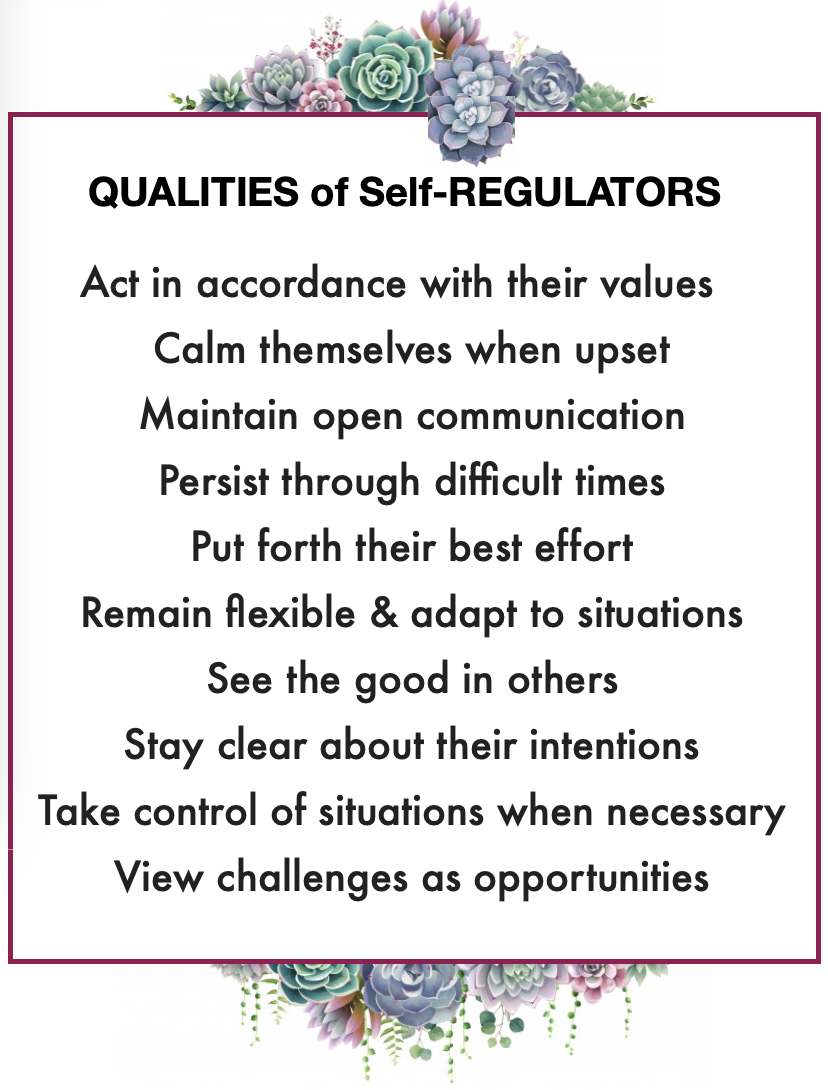
Self-Regulation – EXECUTIVE FUNCTIONS (#1)

PREVIOUS : Self-regulation & the BRAIN 

SITE : “Executive Function Deficits Tied to ADHD”

EXECUTIVE FUNCTIONING (E-F) (Adult Ego State) expresses
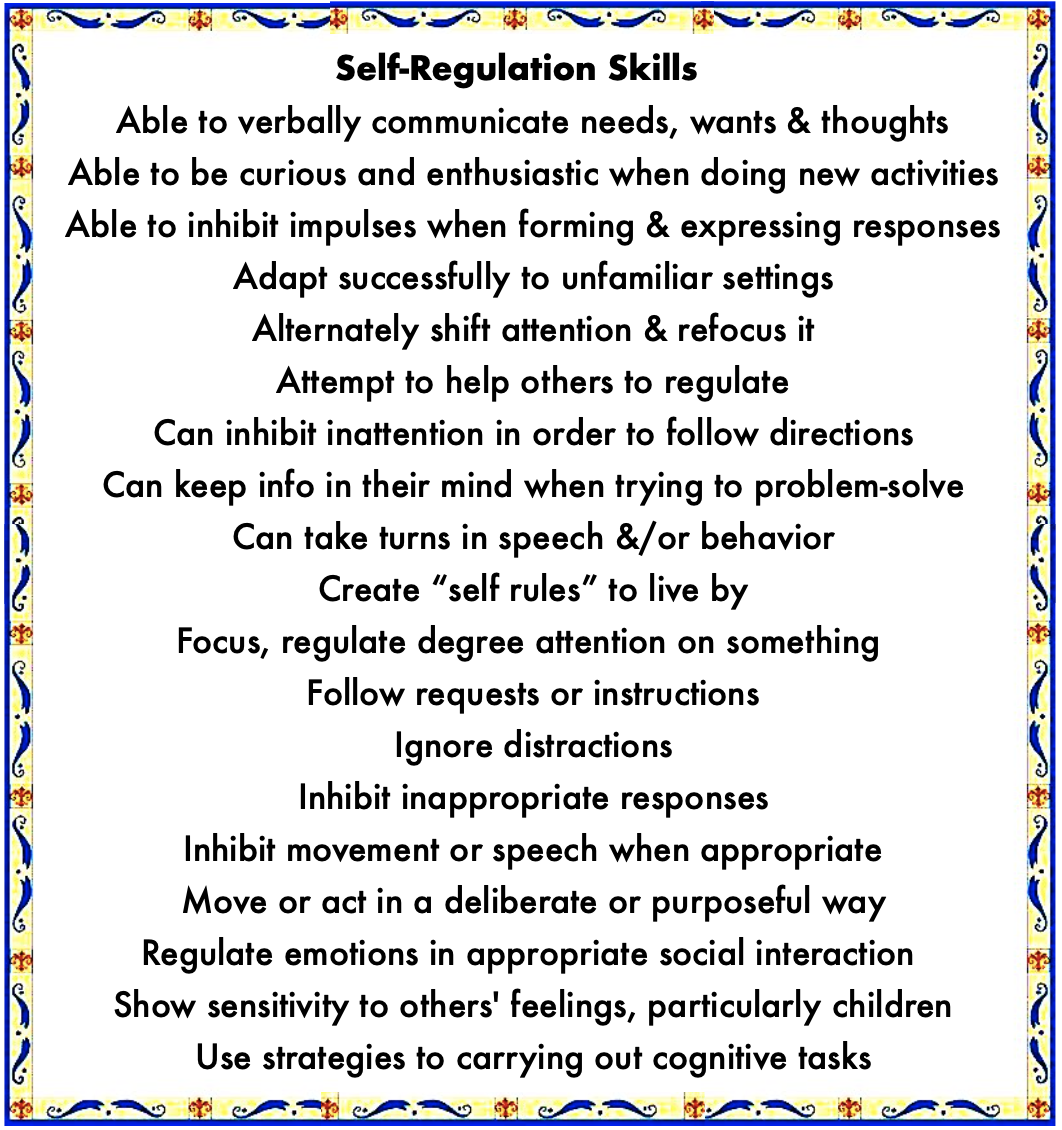
the True Self’s active, intentional aspects (free will). It’s the ability to focus attention, remember instructions, manage emotional reactions & actions, & organize our thinking.
AND
Self-regulation
is using these skills to control our behavior.  It’s one the Self’s major executive functions – to rationally change responses or inner states.

E-F basics are several aspects of thinking :  inhibitory control, working memory, & mental flexibility – which make intentional S-R possible. It’s a combination of :
(1) behavioral regulation  = inhibiting impulsive reaction, shifting or adjusting to changes in routine or task demands, & regulating emotional responses
(2) meta-cognition = organizing problem-solving approaches, initiating activities, & keeping information in memory.

Weak levels of these 2 skills are related to greater depression symptoms, interpersonal & work problems

Quality E-F lets us :
— adapt to changing situations
— break out of unhelpful habits
— consider alternative solutions (find a Plan B when Plan A doesn’t work out)
— remember goals & the steps needed to reach them
— resist distractions along the way….

Executive function is judged by the strength of these skills, & when used effectively, can improve our life. We’re not born with these 7 important skills, but are born with the capacity to develop them through the right experiences & practice.

SKILLS – Like a talented conductor, the brain combines Executive Functions into a harmonious symphony.  It can also be seen as our air-traffic control system, that assigns tasks to each skill. At best, these work together to ensure we function efficiently & effectively when completing daily activities.

In a neuro-typical person, they develop in chronological order :
Self-awareness (#1) starts around age 2, and by age 30 > Planning & Problem Solving (#7) will be fully developed.

❣️ Self-awareness : regular inner-directed attention – controlling who & what you’re paying attention to, staying on topic, filtering out un-needed thoughts, & moving from one activity to another as required

❣️Adaptability
It’s the ability to modify our responses & emotions according to what fits the situation we’re in – which means we can cope with change. It makes us more flexible when confronting views or opinions different from our own, so we can see issues from many different perspectives

❣️Attention
This allows us to focus on a person or task for some period of time, ignore distractions, & re-focus quickly when side-tracked. It helps us hear & understand instructions, focus well during conversations, & concentrate on longer tasks

❣️Emotional Self-Regulation : The ability to understand & accept emotional experiences, & act appropriately in response to them. Use the first 4 functions to handle our own emotional states in order to process & modify or alter how we ‘feel’

❣️Flexibility
This allows us to be open-minded, testing out new approaches, going-with-the-flow when things don’t go as planned. It also means seeing situations in more than one way, critical for perspective-taking, problem-solving & effectively cope with unexpected change

❣️ Inhibition : (self-restraint) the capacity to think before you act (scroll to: The Need for Inhibition)

❣️Metacognition
It’s thinking about our thinking – considering what we know & what we don’t know about a topic as we’re in the process of learning. It can be identifying a critical skill when studying, able to complete challenging tasks, & understanding new material

❣️ Optimism
This is having a positive attitude toward experiences, knowing we have options & possibilities. Also appreciating the ability to can calm ourself when feeling stressed, anxious or down. It allows us to keep our eyes on what’s in our control while bypassing situations that are not. Strong self-regulators consider ‘problems’ as opportunities to learn from & improve future efforts.

❣️Organization
This skill is about keeping material & objects neat & orderly. It includes creating a place for everything, having designated spaced / containers to store things, & cleaning up we go thru the day. It insures being able to find what we need when we need it
(More in Part 2)

❣️Persistence
This is the ability to keep moving toward our goals regardless of external or internal struggles, working through delays & roadblocks whenever they come up. It includes trying new strategies, continuing to work when a task is hard, & asking for help when needed – giving 100% effort to keep on track (More in Part 2)

NEXT : Executive Functions #2
SELF-REGULATION & the BRAIN


PREVIOUS : Self-regulation – Theory

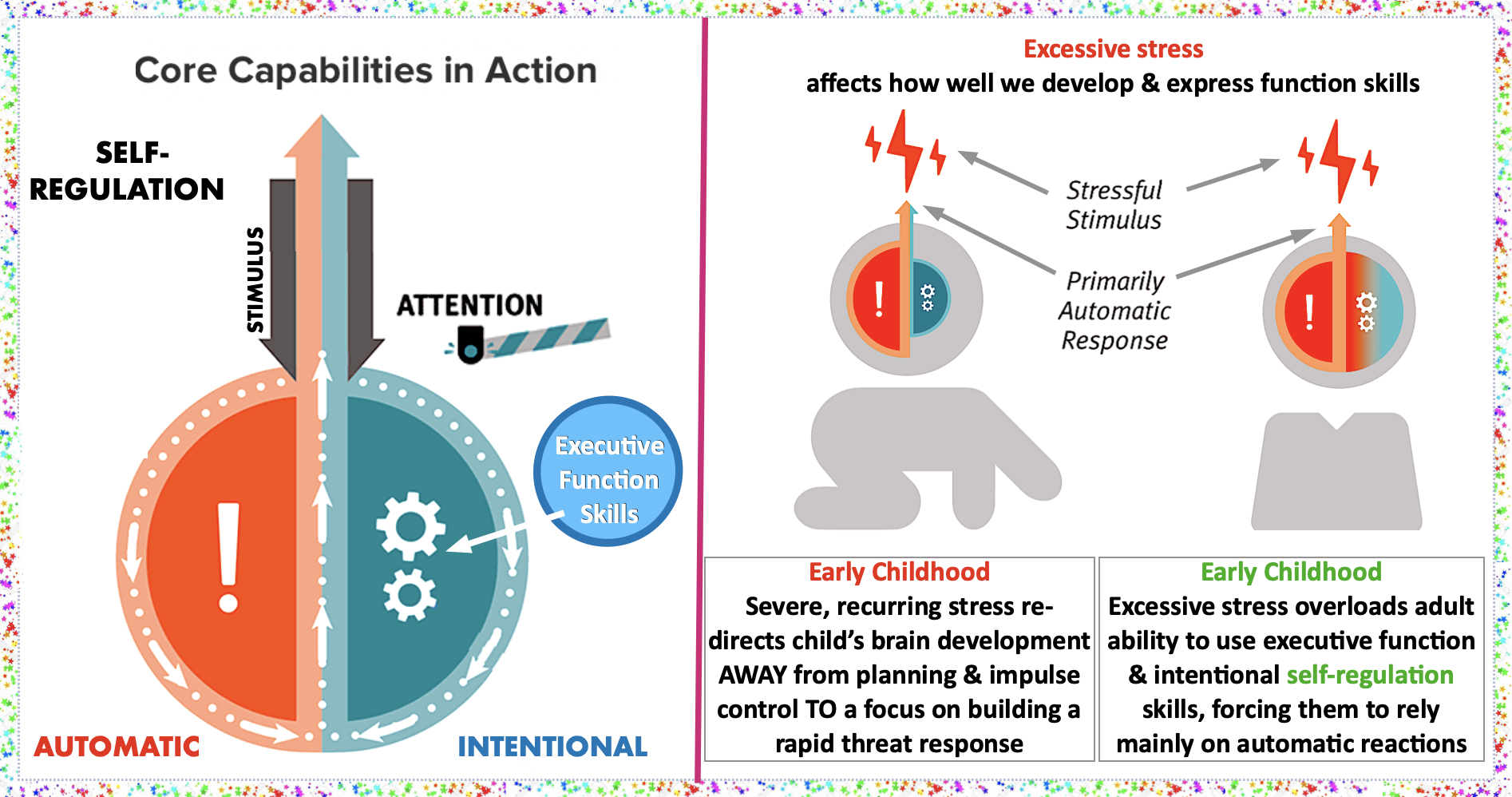
DIAGRAMS ⬆️ from Develop Executive Function & Self-Regulation Skills

SITE6 Scientifically Proven Ways To Boost Your Self-Control


Core CAPABILITIES

In the brain, self-regulation (S-R) includes 2 types of responses:
🔸Automatic = rapid, impulse-directed (“fight or flight”), needed for urgent or threatening situations, AND
🔹Intentional = conscious, deliberate, proactive, used to achieve goals.

Our brain has distinct mechanisms for knowing ourself, knowing how others respond to us, detecting threats from within the social group, & regulating actions in order to avoid being excluded from those groups. Adults need specific abilities to succeed in life & support the successful development of the next generation.
Neuroscience & psychology research indicate these include, but are not limited to:
▫️ awareness, ▫️ focus, ▫️ planning,▫️ cognitive flexibility –—> which maintain or shift our attention in response to different demands, or apply different rules in different settings (ability to revise plans in the face of obstacles, setbacks, new information or mistakes)
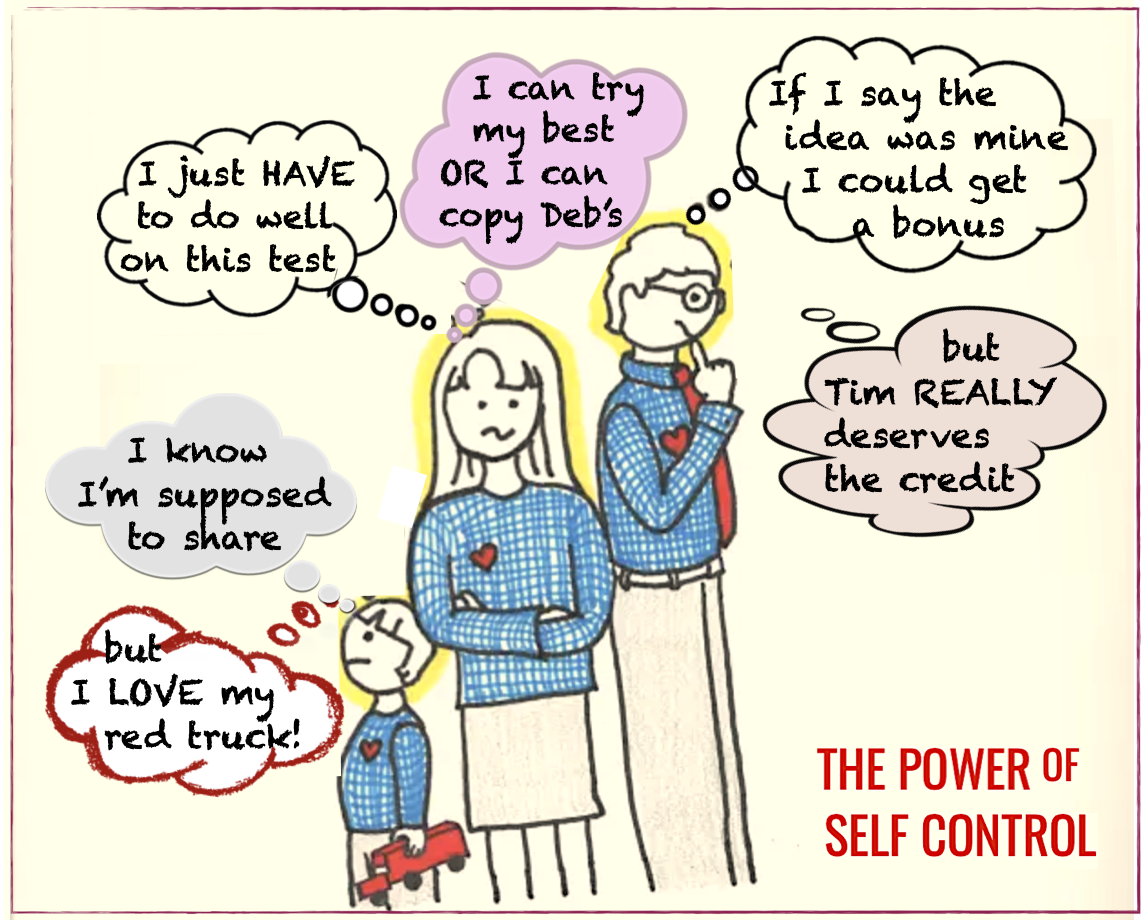
▫️ self-control —-> ability to set priorities & resist impulsive actions or responses

As adults, they help us to get & keep a job, provide responsive care for children, manage a household, & contribute productively to the community.
When such skills have not developed as they should, or are compromised by ongoing stressors, individuals & communities pay the price in physical, social & financial health   (MORE….15 pgs. from a Harvard study)

To scientists, these Capabilities are part of self-regulation & executive functioning.  Integrating them requires communication between the prefrontal cortex & other brain areas which are devoted to different mental functions. These parts connect up over time & with the right experiences, become progressively more efficient.

The 3 main areas of the PFC (pre-frontal cortex) that are particularly important to self-regulatory functioning are ventromedial PFC (vMPFC) including orbitofrontal cortex, lateral PFC, and ACC. Damage to these areas have shown the various ways such patients can’t regulate themself – they become aggressive, antisocial, or laugh inappropriately, are hypersexual or excessively overeat.

The ACC (anterior cingulate cortex) is known to be crucial for self-regulation from neuro-imaging & electro-physiology studies. When damaged, common symptoms are general apathy, a depleted emotional capacity, & trouble carrying out goal-oriented activities.

Attention is the critical gate-keeper to trigger intentional S-R. It’s ‘staying awake’, opposite of dissociated in-attention = having & using a sustained focus on specific things inside & around us. Also the capacity to stay focused on a situation or task – in spite of distractions, fatigue, or boredom.

FIRST the brain must recognize that a current situation (the stimulus) requires a response
THEN – the brain’s automatic self-regulation system
(ASRS) immediately launches a rapid-fire cycle of interacting neuro-transmitters, paying attention to the stimulus that’s presented.

NEXT – the intentional self-regulation system (ISRS) must act fast to determine what needs attention & prioritizing. It also quickly sends a signal to the ASRS to identify whether the initial response to the stimulus is the right one, or more careful thought / action is required.

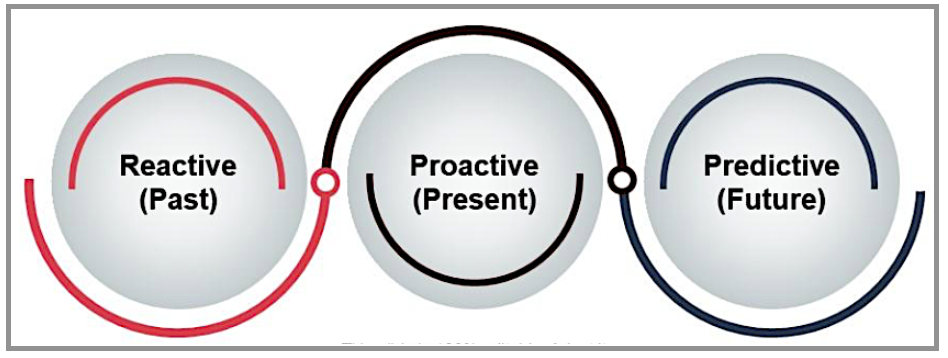
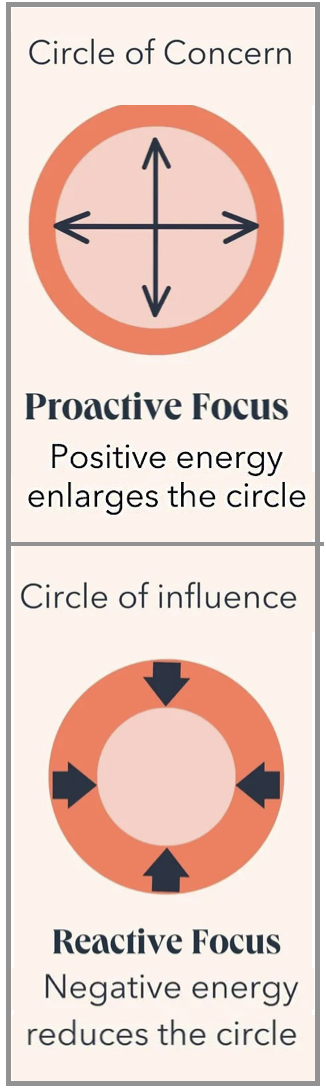
This cycle moves on a continuum between Reactive / impulsive behavior at one end  <——> to Pro-active / goal-directed behavior at the other.
🎯 The Pro-active system relies on fluid intelligence (current ability to reason & deal with complex info)  to connect the dots of various moving parts of a situation, & come up with a streamlined game plan.
⚙️ The Reactive system scrambles to reorient itself when the brain is caught off guard & needs to quickly problem-solve in a seemingly new situation.

Both are important adaptations to the person’s early environment, since quick responses are helpful when faced with immediate or constant threats. But when longer-term goals are more important than immediate concerns, proactive action-choices taking precedence.

This is because it continually generates predictions (“what ifs) that anticipate future needs relevant to accomplishing goals. Comparisons between options are made from basic information quickly extracted from available input, linking it with images that exist in the person’s memory.

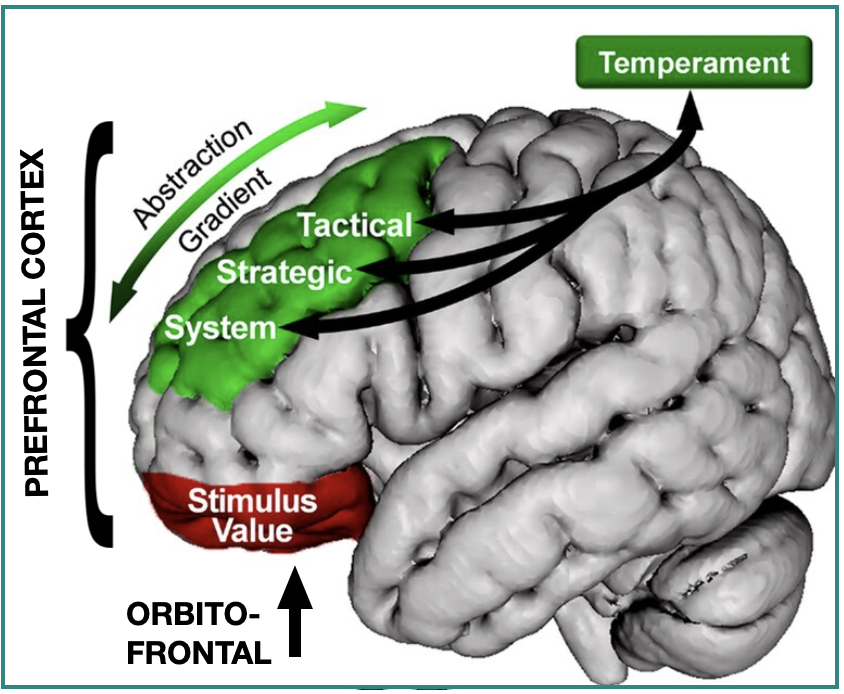
Self-regulation involves a balance between the orbitofrontal cortex – brain regions that represent the reward, importance & emotional value of a stimulus and prefrontal areas that provide our highest cognitive abilities – concentration, decision making, insight, judgment, planning, and the ability to retrieve memories. That balance is a vital part of being able to use our core capabilities – awareness, flexibility, focus & self-control.

NEXT : S-R &

SELF-REGULATION – Theory √

PREVIOUS : Self-regulation – Intro 


THEORY
Self-regulation
 (S-R) has received a great deal of attention from psychology, education, neuroscience & athletics. Research began with Albert Bandura in the 70s-80s. Since then, many others have developed models of S-R, (with overlapping aspects), which expand our understanding of this concept.
The term refers to internal states & processes linked to the regulation of attention, emotions, impulses, stress, moods, stressors & thoughts.

1. Self-regulation theory (SRT) says that we expend conscious effort to control what we think, say & do, trying to be the person we want to be, both in specific situations & in the longer-term.

S-R is especially needed when there’s a conflict of motivations (to run from a fire OR help to rescue victims), & also relates to creating beneficial actions, such as studying for exams. To accomplish one’s goals, developing S-R requires evaluating & taking charge of one’s choices, by monitoring, directing & regulating behavior.

Baumeister (2007) listed the main S-R components of goal-attainment-efforts in any area of life :
▫️ Standards  = develop a model of desirable behavior
▫️ Motivation = the ability to meet those standards
▫️ 
Monitoring = keep track of events & thoughts that cause us to ignore or betray those standards
▫️ Willpower = internal strength to control self-defeating urges

S-R is intertwined with Motivation, which are our beliefs & attitudes that affect the development & use of various mental skills (cognitive & meta-cognitive). It’s deliberately choosing to act – avoid slacking off or procrastinating – so we complete tasks when there’s no real or immediate external consequence.

It’s one factor that determines how well we succeed. Whatever other qualities we may have, a strong capacity to be self-motivating is needed to promote our sense of purpose, competence & self-esteem. (HOW TO….Use these on yourself!)

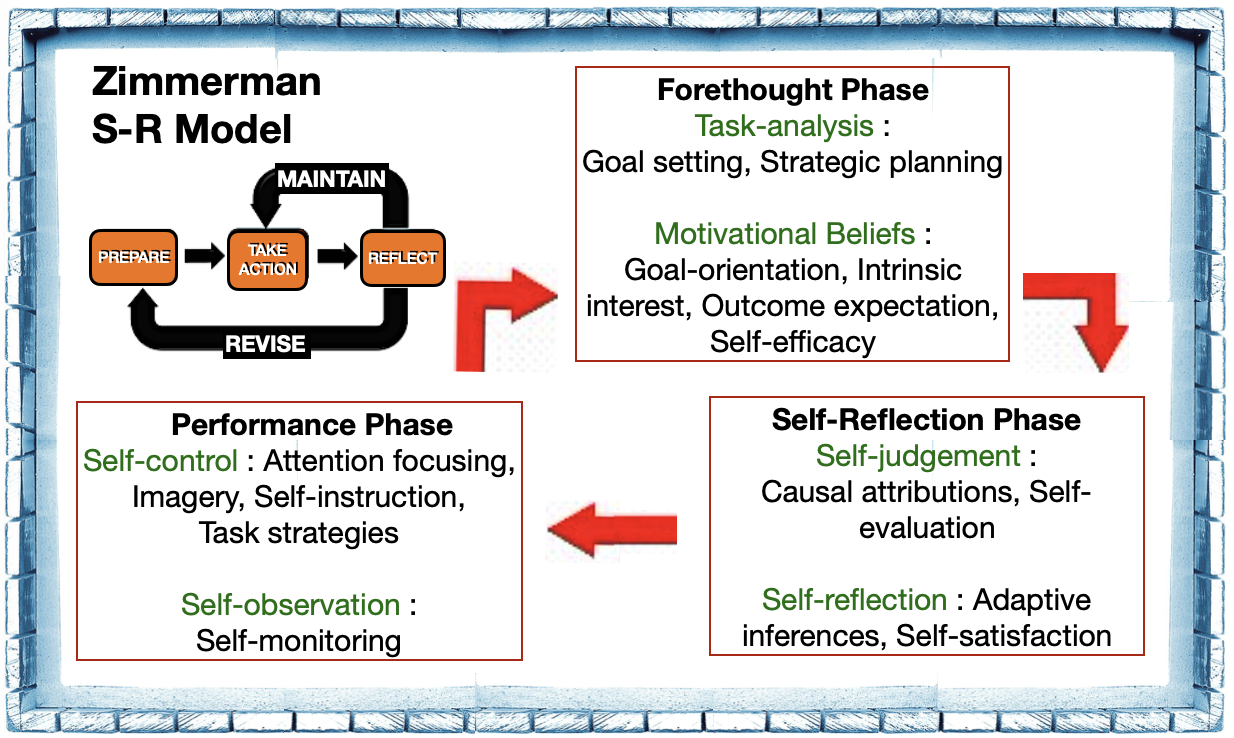
SIMPLIFIED : ➡️  The Zimmerman S-R Model consists of 3 aspects, forming a cycle which can be repeated as many times as needed until it becomes integrated & automatic :
‣Preparing, with forethought, what we want to do before we act
‣Taking Action,  what we do during a task or event
‣Reflecting. reviewing what we did, after an action. This should determine how we prepare before a next attempt. (MORE…. about each one)

2. An integrative approach to S-R research called Personality Systems Interactions (PSI) theory” analyzes personality architecture that underpins human motivation & S-R. It combines insights from cognitive science, motivation science, personality psychology & neurobiology into a single coherent framework used in self-management research.

➡️ Personality Development is listed from the simple (Level 1) to the complex (7), from biological TO the psychological, which progressively leads to more self-determination & personal freedom.

At the top, Self-management skills (7) are important self-protective factors, a human achievement which closely depends on the formation & healthy growth of the prefrontal cortex.

A basic assumption of PSI theory is that human motivation & personality are affected by a hierarchy of regulatory systems which act to maintain homeostasis. It includes:
a. Object recognition = organizing the visual world into meaningful perceptual units, which supports basic sensation. It specializes in detecting unexpected or incongruous things, from external & internal “objects of experience” (what seems to be present when having that experience).
b. Intuitive behavior control = activates the motor system not usually  conscious, letting us dive in to the task at hand. It triggers automatic physical activities, like driving a car, housework, taking a walk, working out….

4. The Self-Regulatory Model
S-R model ↘️ of illness-activity shows the interplay between a person’s interpretation of a health threat, their coping strategies, and appraisal of the outcome of treatment – a useful summary of the complex processes at work during S-R of any kind.

a. Stimuli are presented : something happens that provokes a reaction, (a thought, what someone said, receiving significant news….)
b. The person makes sense of the events, both emotionally (feeling it) & cognitively (understanding it)
c. The sense-making leads them to choose coping responses (what they do to manage their feelings about the stressor, & actions taken to address the event/ situation)

d. Sense-making [ (b) + Coping responses (c) ] determine the Outcomes (the person’s overall reaction & behavior)
e. The person then Evaluates their coping responses in light of these outcomes, deciding whether to continue using the same actions or change their approach. (MORE….)

«
NEXT
: S-R & the BRAIN

SELF-REGULATION – INTRO

PREVIOUS : Song “THIS IS ME”

SITEBlue Brain, Red Brain BALANCE is the Key

DEF
PHYSICAL – Our bodies have the capacity for self-regulation, such as heart rate rising & slowing down according to our activities. Also, the autonomic nervous system works – below our awareness – to regulate & balance many automatic functions. When any of these are out of balance, we experience internal symptoms & feeling out of synch with our environment.

PSYCHOLOGICAL : Self-regulation (S-R) also means being “in control of oneself by oneself” – the necessary steps taken to stay even-keeled.
It’s a person’s ability to consciously, deliberately monitor & manage reactions to their environment in appropriate ways, so they can navigate daily life successfully, more easily absorb info, feel good in their skin & generally get along well in the world.

Importance of S-R
Being self-regulated helps us use the right personal & social skills – at the right time – resisting self-defeating or dangerous responses to internal reactions & external aggravations. In its most basic form, being able to S-R allows us to  :
▶︎ 1. stay calm under stress
(the lead-up to a big event), & pressure (what we experience at that moment)
Stress moments are experienced when no one else is paying attention when we’re overwhelmed. Pressure is the tension we feel when a moment is important or uncertain to ua, & when we think we’re being judged by others.
▶︎ 2. bounce back from failure, disappointment or loss

More than many other skills, these 2 will successfully carry us thru life. They’re founded on self-esteem & strong resilience.
Having the ability to activate S-R gives us room to pause between a feeling & an action – the time to think things through, make a valid plan & wait patiently for the right outcome when necessary.
Children often struggle to implementing these options, & many adults do as well.

It’s easy to see how a lack of S-R causes problems in life. A child who yells or hits other children out of frustration will not be popular among peers, & face reprimands at school.
An adult who lacks self-esteem & self-confidence will have poor S-R skills, so have trouble handling frustration & disappointments. This can be expressed as anger or anxiety, & in more severe cases may become a mental disorder (depression, mild paranoia….)

AREAS to be Self-regulated
• Biological – related to the level of energy in our nervous system
• Cognitive – the mental processes needed for absorbing, retaining &  being able to use info : memory, attention, problem solving….
• Emotional – about pleasant & painful feelings

• Social – the child’s ability to use social cues to act in acceptable / appropriate ways, also known as social intelligence (SQ)
• Actions / Prosocial –
 as adults, how we behave with others around us with empathy – keeping up positive social connections

LEVELS of S-R Awareness (T.E.A.)
Mental = replace distorted / unrealistic beliefs (Stinkin’ Thinkin’) with healthy though patterns, use one’s executive function strategies to learn & to solve problems

Emotional = able to identify a variety of emotions (Es) as they surface, take responsibility for having those Es and for expressing them in healthy ways, recognizing that Es can dissipate or change

Physical = recognize physical arousal by sensations in various parts of the body, seen via body scans, or by successfully used strategies (deep breathing, NLP, biofeedback devices…..) – to calm down & return to a higher brain function (Adulting)

HEALTHY self-control is a fundamental human capacity, but must be learned, so Self-regulation (S-R) is a major developmental task of childhood. Ideally, the adults act as role models, providing a psychological framework for the child’s internal ability to regulate.
(SEE 7 posts re. unhealthy ACoA over-control)

In a safe environment – the infant learns that its needs will be met by one or more adults, within a reasonable time, so it learns to trust that a caretaker will come, help her/him to calm itself, & provide all its needs.

❣️ Consistently responsive adults help the child build the capacity to wait, because it knows it will be taken care of.

S-R skills can be taught. They develop gradually, so it’s important that parents & teachers have age-appropriate expectations for how a child is able to react to various experiences. Most children learn by imitation – observing how others regulate themselves, especially the important adult, but some will need more hands-on instructions & a lot of practice.

✴︎ Good self-control in childhood predicts better health, less need for addictions, better income, & less criminal offending – as positive outcomes in adulthood.

NEXT: Self-Regulation – S-R Theory

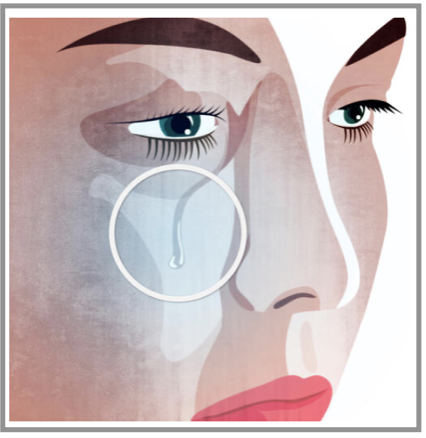
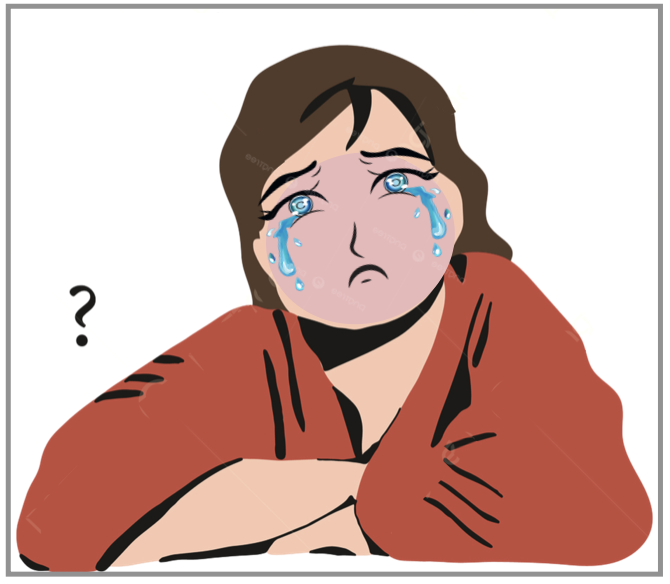
WHY we Need to CRY – Part 4

PREVIOUS : WHY we Need to CRY – Part 3

HUMOR :  “20 Reasons To Cry


Crying & Your Skin
Crying is essential for eye health.
As it turns out, practicing certain habits both during & after crying can make a difference in how your skin reacts.

Everyone’s crying style is different, but it’s not uncommon to have mild facial irritation after a good crying spell. One reason is that tears are isotonic (close to the normal saline used in intravenous (IV) fluids).  Tears have a pH of 7, which is higher than in our skin  5.5 or 6. Because of this difference – while short-term crying is not harmful – long-term exposure to tears can cause more irritation & changes in skin hydration, which can lead to wrinkles.

“pH” refers to “potential hydrogen”, the level of acid & alkaline base in a substance, on a scale of 0 to 14, from most acidic to most basic. Both drinking water & human blood have a neutral pH, around 7.

Shedding tears has an effect on your entire face. When crying, the blood vessels around the eyes, face & nose become dilated with increased blood flow, leading to swelling, puffiness & redness.
Afterward, to reduce irritation, help re-constrict blood vessels & reduce dehydration from loss of electrolytes, wash your face with cold water or apply a cold compresses over eyelids. Apply a moisturizer with squalene, ceramides, or hyaluronic acid. Always pat gently, never rub!

Some very easy, inexpensive ways to treat the skin around the eyes :  A slice of potato & a cucumber can help relieve swelling & reduce dark circles under the eyes. Start by applying the cucumber slices to your eyes for 5 minutes. Then, replace them with potato slices for 5 minutes. Repeat 2-3x. Cucumbers contain powerful antioxidants that reduce irritation, and potatoes contain an enzyme called catecholase that helps lighten skin.

Crying for No (obvious)
Crying is normal in certain stressful situations. But frequently tearing up without an immediate cause may be a sign of a serious underlying condition. If you’re crying every day during normal activities, you may have postpartum or general depression with excessive feelings of guilt or shame,  & /or thoughts of suicide or death.
If you consider self-harm or act on the compulsion, call your local emergency services. In the US, the National Suicide Prevention Lifeline is #988.
More rarely, other causes of uncontrollable tears include pathological laughing & crying which can come with Alzheimer’s disease, stroke, or other brain diseases.

When OTHERS Cry
If someone starts to cry in front of you, you may feel uncomfortable & either try to cheer them up, or have a negative reaction. If you let it show, you can make the crier feel weak, embarrassed, or misunderstood, even though may not mean to be unkind.
Instead – these are APPROPRIATE ways to RESPOND :
✴︎ Simply acknowledge their sadness & embarrassment, being compassionate about their feelings
✴︎ Respect their tears. Show you care by letting them release their pain – without interfering

✴︎ Don’t talk too much, or not at all.  Give them time to organize their thoughts. Don’t rush to offer advice – ever – & hold space for them to process feelings

✴︎ When they’re ready to talk, let them tell you about what’s going on without commenting. Be patient as you listen to why they cried & how they feel now
✴︎✴︎ Accept the way they respond. Don’t tell the how they should feel or push them to feel a different way !

Studies show that people with secure relationship attachments are more comfortable showing emotion. They may cry in normal & healthy settings, while those with insecure relationship attachments may cry at inappropriate times.
Those with clingy or dependent styles (anxious-preoccupied) cry more often & people who are avoidant & withholding in close relationships – are less likely to cry, trying hard to avoid tears.

Some people generally cry less than others, which can be appropriate for them, as they may express emotions in other ways, while still having healthy outlets for dealing with physical or emotional pain.

NEXT : Self-Regulating – CHILDREN

WHY we Need to CRY – Part 3

PREVIOUS :
Why Cry ? – Part 2

SITE : “Happy Crying – why does it happen?”


PURPOSEs for CRYING
1. Detoxify the body – The 3 types of tears are reflex , continuous, emotional. Reflex & continuous tears contain 98% water, but emotional tears contain stress hormones & other toxins. Researchers say that crying flushes these things out of your system

2. Dull pain
When you’re physically hurt causing pain, crying is a natural response. This can signal that you’re in distress & need or want someone to help you.  Physical pain causes the body stress, & crying can release stress hormone cortisol, which helps to recover from the experience.

Crying for long periods releases oxytocin & endogenous opioids, ie. endorphins. These feel-good chemicals help ease both physical & emotional pain, especially oxytocin which gives a sense of calm or well-being. Once released, your body may go into a temporary numbness, providing a time to heal.

3. Self-soothe
Crying is be one of the best self-soothing mechanisms. Researchers have found that it activates the parasympathetic nervous system (PNS), the physical part of us that helps the body digest & rest. However, the benefits aren’t immediate. It may take several minutes of shedding tears before you feel the soothing effects of crying. 2014 research also found that tears lower cortisol, easing stress.

4. Improve mood
Along with easing pain, crying – specifically sobbing – may even lift your spirits. When you sob, you take in many quick breaths of cool air. which can help regulate & even lower the brain’s temperature. A cool brain is feels better to your body & mind than a warm one., so your mood may improve after a sobbing episode

5. Recover from grief
Grieving is a process. It involves periods of sorrow, numbness, guilt, & anger.
Crying is particularly important during grieving episodes, because it can help to process & accept the loss of a loved one.

Everyone goes through the grieving process in different ways.
Depression is different than sadness – which is an emotion, while depression is a mental health condition. One symptom of depression is frequent crying.  Extreme or long-lasting crying which starts to interfere with your everyday life may need medical help.

6. Rally Social Support
From the time you were a baby, crying has been an attachment behavior.  As an adult, when feeling blue, crying is a way to let those around you know you need comfort & support. This article suggests that tears are a way to silently signal distress to people close by us.

This is known as an inter-personal benefit. This helps to build a social support network when the going gets tough. People tend to feel more empathetic to those who cry. A comprehensive research study of 7,007 participants found that people exposed to faces with-or-without tears were more likely to support those that were tearful.

Researchers propose that crying can be a form of social bonding for some. It seems that someone who is tearful is experienced as being ‘warm’, making the observer feel connected to them.
An other study showed that there are pheromones in tears that lower testosterone & aggression when smelled. So it literally changes how people react to you, a way of chemical communication.

It may also a truth check. EXP : If it’s inconvenient for me to help you, I might dismiss your complaints. But if you’re also shedding tears I’m more likely to take you seriously even if iI really don’t want to pay attention, because I know they’re hard to fake 😓(for most people).

7. Restore emotional balance
Crying does not only happen in response to something sad. You can cry when extremely happy, very scared or very angry, which can be your body’s way to recover from experiencing such a strong emotion. Researchers at Yale University believe that crying in those situations helps to restore emotional equilibrium.

8. To express joy
Crying isn’t only reserved for times when in physical or emotional pain. Many people also cry when extremely happy, including times of intense laughter. Leaking tears when you’re excited, touched, relieved, deeply grateful…..  – is healthy. This is common during positive life events such as a child’s birth or at weddings.

NEXT : Why Cry? Part 4

WHY we Need to CRY – Part 2

PREVIOUS : Why Cry – Part 1

SITE : ” Crying in your sleep”


3 TYPES of Tears

Crying is a way to help ensure your eyes stay healthy. According to the American Academy of Ophthalmology (AAO), tears help lubricate eyes & protect them from bacteria. The liquid product of crying can be divided into 3 distinct categories = basal, relax, emotional = with the first 2 being made up of 98% water. (MORE…..)

1. BASAL. These tears coat your eyes throughout the day, protecting the eyes by keeping out debris. Blinking helps spread them evenly over the surface of your eyes keeping them hydrated.  Tears transport oxygen & nutrients to the surface of your eyes,  improving your vision by sharpen your focus. To do their job, tears contain:  ☆ Water for moisture
Mucus to spread tears over the surface
☆ Oils for lubrication, toprevent tears from evaporating
☆ Antibodies & special proteins to resist infection.

2. REFLEX (Irritant / continual). These tears gush out of the glands under your eyebrow when you throw up, from peeling onions, perfume,  pepper spray, or getting debris in your eyes. They also flush out irritants to protect your sight.
They can get triggered by bright lights, & from hot or peppery stimuli to the tongue & mouth. They’re also linked with vomiting, coughing & yawning.

3. EMOTIONAL. Humans are the only species known to produce emotional tears.  This category is about empathy, compassion, attachment pain, & moral or sentimental emotions – serving a biological function by excreting stress-inducing hormones built up through times of emotional distress.

Emotional tears have a different chemical makeup than those for lubrication (types 1 & 2) – the protein-based hormones prolactin, adrenocorticotropic hormone, & Leu-enkephalin (a natural painkiller). When these receptors in the ANS are activated, the lacrimal gland is stimulated to produce tears, which can be very therapeutic, known as “a good cry”, a part of the healing process.

Because tears have a symbolic meaning among humans, they communicate our emotions to others. They can make us more open & available, which could improve relationships, because crying often connects people, whether out of grief, love, passion, or another strong emotion.

It seems that crying particularly helps to soothe us when combined with outside support & comfort.  In many cases it may make others be empathetic & compassionate toward the crier, softening their anger or unpleasant reaction that made us cry in the first place.

Get to sleep : When we cry, our heart rate increases & breathing slows, reducing oxygen to the brain, which leads to drowsiness. Crying takes a lot of energy & is hard on the body. But intense sobbing to vent trauma will relieve our body of countless toxins & hormones like cortisol and prolactin (which contribute to elevated stress levels), & so will allow us to sleep better.  (Quora…..)

On the other hand, insincere grief or dishonest remorse is sometimes called crocodile tears, from an Ancient Greek anecdote that crocodiles would pretend to weep while luring or devouring their prey.
Also, “crocodile tears syndrome” is slang for Bogorad’s syndrome, a rare reaction to recovery from Bell’s palsy,  when a faulty facial nerve regeneration causes the person to shed tears while eating.

NOTE for ACoAs : When in early recovery, suffering a deep loss, or when uncovering old trauma at any time, it’s absolutely normal & healthy to do a lot of crying, even on-&-off for months or years. As long as you’re getting the right kind of therapy, Program meetings & spiritual support, you will come out the other end of the pain tunnel much lighter & more grounded in your True Self.  Accept the process!

DRY EYE syndrome ( kerato-conjunctivitis sicca)
Symptoms range from mild, & occasional to severe and continuous. They include dryness, irritation, redness, discharge, blurred vision, & easily fatigued eyes.
It can lead to blurred vision, instability of the tear film, increased risk of damage to the ocular surface such as scarring of the cornea, & changes in the eye, including to the neuro-sensory system

It can be caused by age, and certain medications such as antihistamines, some blood pressure meds, hormone replacement therapy, and antidepressants.
It affects 5–34% of people to some degree, depending on the population, & seniors are affected up to 70%. (17% in China)

NEXT : Why Cry? Part 3

WHY we Need to CRY – Part 1

PREVIOUS : How to STOP Lying, #3

SITE : “Why can’t I cry even though I’m sad?”  (& How to cry if  you want to)


ACoAs :
For some
of us, allowing ourself to cry is very difficult – all our tears seem to be died up. They could molest, beat, belittle us, punish or made fun of as a cry-baby…. but early on we determined we would never let them see that they won. We had to “be strong”, had to pretend their abuse didn’t hurt…. so we swallowed our tears, & now we can’t seem to access them!

For others, as adults we seem to cry at the drop of a hat, whether at a sad movie, a big disappointment, being frustrated or very angry. All our accumulated pain is right on the surface, easily triggered.  Before recovery, one highly sensitive ACoA quipped : “I’m an emotional hemophiliac. Touch me & I bleed! ”

THIS set of POSTs is mainly aimed at the first group.
The reality is that we have tear-ducts built into our body for a reason!  just as the ability to feel emotions is built into our brain, from the amygdala, as part of the limbic system.
Among other things, this is part of our brain that automatically detects danger.
But since most ACoAs grew up in very dangerous families & environments, we had to be constantly on alert, hiding, placating or fighting. So it makes sense that our whole limbic system got overworked & then shut down. 

CRYING is a natural response to a range of emotions, from deep sadness & grief to extreme happiness & joy.  It’s an important safety valve, since tears release /expel endorphins like oxytocin. If you always suppress tears, you may not be able to express emotions in a healthy way – called repressive coping.

Physically, repressive coping has been linked with a less resilient immune system, cardiovascular disease, hypertension, auto-immune diseases…. Psychologically, not crying about painful emotions can lead to mental health conditions, including anxiety, depression, & dissociation.

Even though at first you might feel exhausted when the tears stop flowing, crying has long been considered beneficial. Its medical value has been known as far back as in Classical antiquity. Thinkers & physicians of ancient Greece & Rome asserted that tears work like a purgative, draining off impurities.

Today’s psychological thought emphasizes crying as a mechanism to release stress & emotional pain. It has also been shown to increase attachment behavior, encouraging closeness, empathy & support from friends & family.

Popular culture has always known the value of a good cry as a way to feel better – maybe even to experience physical pleasure – as proven by the millions of people who watched classic tearjerker films such as West Side Story or Titanic, among others.

Crying AMOUNT
Some people are more likely to cry than others. Researchers at the Tilburg University in the Netherlands studies crying extensively, & found that average amounts by country vary considerably. EXPs: pr. month : women in China only cry about 1.4x . Men in Bulgaria reportedly cry a mere 0.3x .

Averages in America are on the higher side  = pr. month : women cry 3.5x, men cry around 1.9 x .
Other research :  overall, US women cry 60% more than men, but experts aren’t sure why. It could be because men:
♛ Have smaller tear ducts
♛ Usually have more testosterone, which may inhibit crying
♛ Have less prolactin, a hormone that might promote tears
♥︎ Are often encouraged to not cry

What are tears made of?
The outer oily layer prevents tears from drying up too quickly, while the inner mucous layer allows the tear film to stick to our eyes, always coating the eyes around the cornea (clear outer layer of eyeball). The middle watery layer is the thickest, keeping the eyes wet, nourishing their tissues.

Tears are also filled with electrolytes, which explains their salty taste. Electrolytes are essential minerals with an electric charge, necessary to many bodily functions. They’re in our blood, sweat & urine. When we lose a lot of electrolytes via sweating, crying, or using the bathroom, we need to replenish them by drinking water & eating electrolyte-rich food.

NEXT : Part 2

How to STOP LYING (#3)

PREVIOUS : How to STOP LYING (#2)

⬅️ SITE : “Story Time: Honesty always pays

1. DECIDING to stop
2. MAKING a Plan

3. STAYING Honest
The more you you get into the habit telling the truth, the patterns in your thinking that lead to lies will be easier for you to notice. These include the Toxic Family Rules & Cognitive Distortions they lead to.  Stay awake for how you have been obeying these mental traps, which lead to lying – so you won’t automatically fall back into the lying-habit.

• Short circuit these patterns by learning ways to identify & soothe childhood anxiety at the root of lying. Develop a variety of strategies  you’ve practiced & often rehearsed – that’s put in place to help you cope when asked something triggering, so you don’t have to lie.
EXP : just smile & be silent, ask the other person about themself….

Do not ever be hard on yourself when you slip. The addiction to lying is a hard ‘habit’ to break. Go right back to being honest – like getting back to a diet, or getting up after falling off a bike….  Don’t give up or let the old patterns hijack your life again.

b. Honesty is a highly valued character trait across many cultures & societies. It’s developed through early childhood being in heathy smiles, & honed by consistently being strong in difficult situations – year in, year out. Let Truth  (a transcendent fundamental or spiritual reality) become your automatic response when faced with stressors in life.

• Recognizing honesty in others can be helpful when trying to live an ethical life. Who do you admire & respect?  Ask “What would Jose or Salima say in this situation?” & learn from them, applying your own way of doing things.

• Find other honest role models – bible characters, spiritual leaders, honorable characters in literature, philosophers, leaders of social movements….. No one can be honest sometimes all the time, but principled people pick themselves up & keep doing the right thing to the best of their ability.

c. Build good relationships.
The more regularly you tell the truth, keep your commitments & treat others with respect, the more they’ll trust you, which feels good. With   the right people, trust leads to great friendships, intimate relationships, & a feeling of belonging. It minimizes loneliness by being a part of community. Not hiding behind lies provides the opportunity to be accepted for who you really are – your True Self.

• It is never too late to become an honest person
• IF you’re with the right people – who are both intelligent & kind, you can disclose to them some of the things you’ve hidden
• If you’ve been lying for a while, it’s better to tell them as soon as possible, which can help to clean up misunderstandings & betrayals.

d. Get outside help
You might think you’re alone in your effort to stop lying, but there are people who have been through this & can be supportive. It’s tough to quit any addiction by yourself. Reach out to people who can provide good advice, as well as hold you accountable for reaching your goal.

• It’s not shameful to work with a skilled therapist. It’s worth talking with someone who has experience helping people who need guidance & validation that you can change a life-long parer. They can help to uncover some of the underlying reasons for this addiction, such as childhood neglect, sexual  &/or physical abuse, emotional manipulation…. This will be extremely valuable to help transition from frequent lying to consistent honesty

• Talk to the people you’re close to. Specific people will want to help you stop lying, even if they’ve been hurt by your dishonesty in the past. If you feel safe enough, tell your parents, siblings, or a close friend about your goal, so they can provide encouragement

• Join a support group. Sharing with other people who understand exactly what you’re going through is crucial. Look for an online groups that meets on line or in person near you.

NEXT : Song “This is Me”

How to STOP LYING (#2)

PREVIOUS : How to STOP LYING (#1)

SITE : about “Radical Honesty


1. DECIDING to stop

2. MAKING a Plan
a. Identify your triggers. To stick to your goal, it’s imperative to identify the People, Places & Things (PPT) that trigger you so you to avoid telling the truth. As they become clearer, you can either avoid situations that scare or anger you, or find better ways to deal with them.
☞ Do you tend to lie when feeling anxious about a task to project, to temporarily ease that emotion?
☞ Do you lie to specific people?  Your mate, so they won’t leave, parents or children so they won’t be disappointed, bosses to not get fired?…..

b.  At some point, telling the truth will put you in a situation you’ve always wanted to avoid by lying.  In ‘recovery’ you’ll have to own up to the times you didn’t follow the rules, admit you’re unemployed, didn’t get the part you auditioned for, or tell someone you are not actually interested in a relationship…..
Facing your uncomfortable emotions & consequences from others – is still truly better than lying because it strengthens your character & builds trust with other people.

• Be prepared for other people’s reactions. Maybe someone hearing the truth will make a negative comment or do something you don’t like. Even so, you can be proud of yourself for being honest, & that you’re handling problems with strength instead of the easy way out.

• Work on building trust with anyone who may not believe you at first. It may take a while before they’re sure about you, so keep working at it. Repairing damaged relationships is not magic. The next time you tell a lie to that person, you’ll are back at square one.

c. When faced with a trigger & you simply can’t be honest in the moment, it’s better to be quiet or change the subject. You are not required to respond to questions you don’t want to answer, or reveal information that’s private.

• If someone asks you a question directly you’re not ready to answer truthfully, it’s legitimate to tell them you’d rather not answer. It may feel a little awkward, but it’s still better than lying (OR over-explaining!).

• Avoid situations that have typically stir up the need to look good or important by lying – such as in group conversations where everyone brags about their accomplishments.

• Pay attention to physical ‘tells’ indicating you’re about to tell a lie. You might look down instead of at the person, feel your heart beating faster, or that you’re sweating a little. As soon as you notice, get yourself out of the situation so you won’t ‘have to’ lie.

d. Actively Practice telling the truth.  If you’ve been lying more often than not, telling the truth really does take practice. The key is to think before you speak, taking an extra second or so to decide if you can say something that’s truthful. It doesn’t have to be special, important or interesting. Just real! Remember, if you’re asked a question you can’t answer honestly, don’t answer, or deflect. The more you practice, it can become your ‘new norm’….

• Try practicing with strangers, or in an online forum. Telling the truth to people you don’t have a relationship can be freeing, since there are (usually) no consequences.

• With people you do know, practice by talking about neutral subjects you feel confident discussing. Offer genuine opinions about anything, give basic information about your weekend plans , or what you had for breakfast.

• If you have trouble talking about yourself – discuss the news, sports, philosophy, business ideas, a recipe you love, a favorite to band or show you want to see, your pet….. The point is to practice, practice, practice – saying things that are true.

NEXT : How to STOP LYING (#3)