MONEY MADNESS – AUTONOMY Worshipers (#2)

PREVIOUS : Autonomy Worshipers, #1

SITE : ” Pathological Demand Avoidance IS Pervasive Desire for Autonomy

AW = Autonomy Worshipers
LB = Love Dealers (in 6/07)
SC = Security Collectors
PG = Power Grabbers

1. Autonomy Worshipers (cont)
a. Freedom Buyers

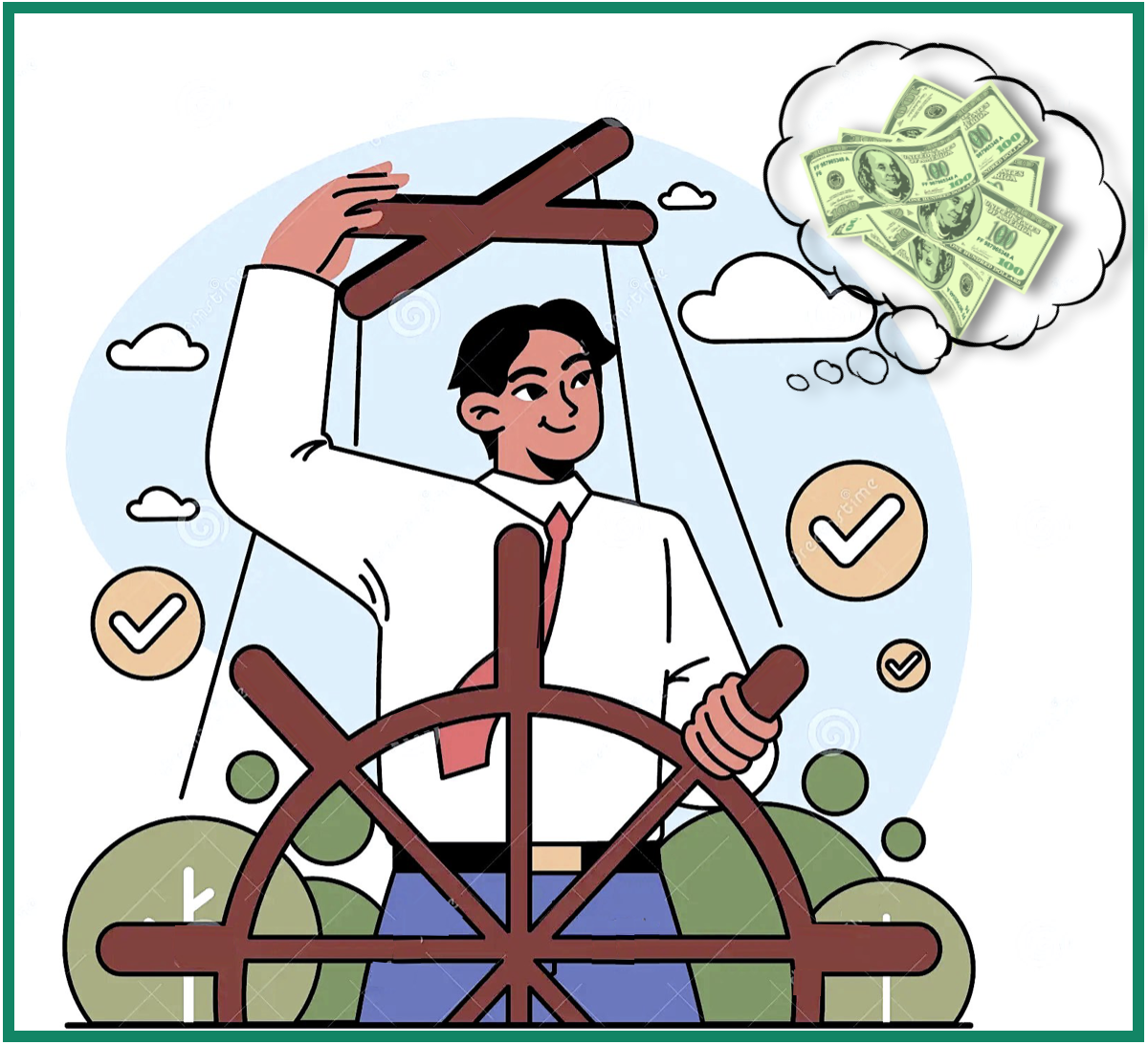
b. Freedom Fighters – this group sees money as an unnecessary evil – understanding that the hunger for greed & power is why some people actively manipulate & dominate others, restricting their freedom. Some AW turn their back on money & give-the-finger to the economic system – refusing to compete, while others actively rebel & try to destroy the system. Some express their aggression passively – by defying convention, with a lifestyle that scorns everything that money represents.

Others refuse to be in the rat-race from religious convictions, or feel guilty about their family’s affluence, or because they’re deeply satisfied  with the work they’ve chosen. Yet others are frustrate by family hypocrisy – the discrepancy between the high ideals touted by idealistic careers (doctors, clergy, lawyers, college profs….) vs. the selfish &/or immoral life their parents’ actually lead.

◆ Underlying issue – Their great fear is dependency but repress & deny an unconscious desire to dominate. EXP : Some entertainers who’ve made their fortunes appealing to the counter-culture – built an empire with their own ‘assistant / slaves’.

Even more than Buyers, Fighters feel alienated from mainstream society. They see the”establishment” in-group as enslaving & money-worshiping, & don’t feel it’s worth participating or being accepted. This can be a rationalization to hide feeling inadequate to qualify or compete

◆ Payoff – Dedication to a cause can provide alienated (young) people an identity & give their life meaning. They may feel shy & socially awkward, & sharing a common enemy could provide emotional reassurance & support. So rather than money & social acceptability, rewards could be camaraderie & companionship.

◆ Cost – Freedom fighting is mainly for the young & rarely a life-long passion. They’ve confused intense emotions with idealism – which ironically is a defense against feelings. Most become more cynical & conservative with age – deeply disillusioned by the impossibility of changing the world. They often end up angry, frustrated & bitter, because money was never the root of their problems.

♥︎ Families of FF also pay a high price, sometimes involved with expensive drawn-out legal battles to get their children out of cults which enslaved rather than provided real freedom from mainstream society.

In this category –  technocrats (believe in the elimination of $), freedom fighters, revolutionary activists, communal living advocates, members of the drug culture….

❇️ UNDERSTANDING Autonomy Worshipers
One consistent theme in their background is that dependency on others people & the world in early life was experienced as threatening rather than comforting or a safe way to connect.

Like love, security & power, freedom – in proper perspective – is a virtue.  It’s naturally expected that young people go thru a phase of “separation & individuation” –  a kind of rebellion to find their own identity.
In the best scenario – over ones lifetime – a person can go from needing to be independent (of family & established culture) to developing the ability to be inter-dependent without losing that hard won identity.

However, for those who insist with Frank that “I did it MY WAY” there are signs that the compulsion to demand freedom at any cost is an expression of emotional & social anarchy.
EXPs : 🔸 FL generally have a positive attitude
🔹Anarchists are angry with a chip on their shoulder

🔸 Freedom lovers (FL) resent any justice to themself or others 🔹Anarchists rebel just for the sake of it (thumbing their nose)

🔸 FL accept a limited amount of obligation good-naturedly if they can’t avoid it
🔹Anarchists rebel against any interference with their complete autonomy (elements of narcissism!)

More than anything, freedom represents the American ideal. But Autonomy Worshipers are out of touch with basis of their obsession – the inner child’s terror of being trapped . This personal blindness corrupts the concept by confusing freedom with license (selfishness), while ignoring the rights & freedoms of others.

NEXT : Security Collectors, #1

MONEY MADNESS – AUTONOMY Worshipers (#1)

PREVIOUS : Psychological Effects

AW = Autonomy
Worshiper
LB = Love Dealers (in 6/07)
SC = Security
Collectors
PG = Power Grabbers

NOTES :
🔺 The variability of Money MEANINGS
Although Goldberg & Lewis focused on the following 4 dysfunctional ways people deal with money, others could be added. Also, for some people, money can have more than one meaning, such as being both a Love Buyer & a Security Collector.
For others, as they age (mature ?) their way of experiencing & using money can change, so that a Security Collector may ‘evolve’ into a Power Grabber, but eventually end up an Autonomy Worshiper.

Whatever confusion or inconsistencies we may have in our dealings with money – one thing is sure : Like all complex patterns, money attitudes & behaviors are learned – because they satisfy a person’s specific psychological & emotional needs.
Positive & negative childhood experiences, culture & religious influences & individual temperament, combine to form our money attitudes. As adults, if our dealings with money are distorted & one-dimensional, they can be modified, even unlearned, so it can become a benefit to ourself & those around us.

🔻 The high price of HIDING.  Few people deal openly or easily with the topic of money, which is not unique to any one culture to time period. An old proverb from India states:  “Never make known one’s wealth, one’s remedies, one’s lover, where one has hidden money, the good works one has done, the insults one has received, nor the debts one has contacted.”

The inability to discuss money can contribute to a variety of psychological ills, generating such painful emotions & actions as depression, hate, paranoia & self-destruction. Whether in families, in business partnerships or intimate relationships –  the hurt feelings, resentment, disappointments, anger, frustration, suspicion – might have been avoided if money were not considered a taboo subject heavy with guilt & anxiety.

Money is one of the strongest motivators of human behavior, yet because it still has such a negative meaning to most people, they deny how intensely it affects their life. And so they suffer the consequences.
Modified from : “MONEY MADNESS” by Goldberg & Lewis.

Type 1. AUTONOMY WORSHIPERS  (AW)
Their main reason for earning money is to feel free & be free. The goal is to get away from the daily routine & restrictions of a paid job. Their burning desire is to live exactly as they want, so having money allows escape from the orders & commands coming from others causing the AW anger & resentment, buying time to pursue their whims & interest.

They have a live-&-let-live attitude toward others as well, & are angry when anyone tries to restrict them. They see Power Grabbers as potential enemies, Security Collectors as  ‘slaves” who willing give up their independence for money, & Love Buyers as pathetic.

AW fall into 2 groups
a. Freedom Buyers – those who see $$ as a way to escape an intolerable life of servitude.. They accept it a necessary evil, its accumulation a passport to freedom. The more one can accumulate, the less dependent they are on the structure & limitations of a job & the dictates of other people. With more money the less time they have to work, giving more opportunities to pursue their  interests. And it provides the clout to protect them from being pushed around.

◆ Underlying issue – an intense need to not be dependent – which is what they desperately want, perhaps unconsciously, but are use all their energy to deny & precess the wish.

◆ Payoff – attractive & charming, they’re interesting people socially because they have such unconventional lives, doing things others are too timid or rigid to try.

◆ Cost – they can turn into freedom gamblers, taking big risks to get money fast, & can end up with big losses. Others experience them as irresponsible & unreliable, causing partners & other associates pain & frustration. The price is constant dependency hunger, & with age isolation & loneliness.

In this category – Many writers, painters, poets, musicians & others in the arts

NEXT : MM – Autonomy Worshipers , #2

MONEY MADNESS – Psychological Effects

PREVIOUS : MM – Emotional Effects

SITE : The Psychology of Money….


✳️ MEANING of money (see Intro #3)
Personal VALUE 
Goldberg & Lewis (1978) suggest that money has essentially 4 emotion connotations, causing distortions in behavior :
☀︎ Freedom  – a necessity to acquire what you want
☀︎ Love  – an expression of, & substitute for affection
☀︎ Power – to gain importance, dominance & control
☀︎ Security – a primary way of staving off anxiety

Trouble is brewing when money is (mis)used to buy love, security, power, or when getting it is a goal rather than a reward.
EXP: Those who associated money with security tended to be hoarders, those who associated money with generosity tended to use money emotionally & compensatorially…..

BACKGROUND – There is research interest in “money genograms”, the social & emotional values attached to money originating in childhood family relations (Mumford and Weeks 2003). Childhood attitudes about money are usually shaped by parents’ financial habits as well as the family’s social environment – associated with stress or abundance.
Also, previous generations’ thoughts & beliefs about finances have influence, which may have been taught &/or observed by the child.  (MORE….)
(AI Overview – type  “Childhood attitudes about money” in google)

Based on our early life, our “money stories” are ingrained in the subconscious mind, so even though they are a major influence on how we feel about money, chances are we’re not even aware of them & how intensely they affects our adult financial behaviors.

DYSFUNCTION – Psychotherapists have noted highly irrational behavior of some people regarding their use of money, called “money neuroses”, with extreme kinds of worries. They state that money beliefs & behaviors are not isolated psychic phenomena but integral to the person as a whole, & a measure of underlying pathology. EXP : people who withhold money may also tend to withhold praise, affection or information from others.

Forman (1987) noted that of all the neuroses, the “money neurosis” is most widespread. Like all neurotic processes it involves fear & anxiety connected to unresolved conflict – expressed as maladaptive, self-defeating, irrational money behavior. Factor analysis work provided evidence of the four factors listed above – Freedom, Love, Power & Security – reflecting these specific money pathologies also identified by other researchers working in the area.

He argued that too many people have a simple equation like “money=love”, so the amount of money you spend on a person is proportional to the amount of love you have for them.
To help people identify their neurosis, Forman developed a general money sanity scale, a 20-item questionnaire, ranging  —> from 1 (strongly disagree) to 5 (strongly agree) <—,  assessing a person’s money sanity or the extent to which their attitudes to, & use of money is problematic.  (sample of Questions)

NOTE : Nearly all this work is based on case studies of middle-class people.  This was a cross-sectional study of a large European population group measured at a time of economic difficulty. Socio-economic & cultural factors could have influenced their results. FROM a UK study (2014).

High scores imply “insanity” or the presence of maladaptive money beliefs & behaviors. The dimensions do reflect the specific money “pathologies” identified by various different researchers working in the area. The scale gives a picture of many people are obsessed by money, thinking about it all the time, & of money being a powerful source of mainly negative emotions.
(CHART : Correlations between money attitude & money sanity factors)

EXP : re. Worried Spenders –  while some of the 20 items of the money insanity scale showed floor** effects (around 5 % or less of the sample said “yes” to the item),  a large number of studies endorse this particular money madness.
Over 40 % of respondents said they worried about spending money all the time (item 1), & half agreed they resent paying the full price in shops.  Nearly half – that they were flooded with guilt & anxiety when asking for money, over 1/3  felt anxious in spending money on themself, & 1/3 thought about money all the time.
** In psychological research,”floor effects = too hard” & “ceiling effects = too easy” refer to a large proportion of participants scoring at the absolutely lowest OR highest possible value on a scale.

NEXT : MM – Autonomy Worshipers, #1

MONEY MADNESS – EMOTIONAL Effects

PREVIOUS : Psychological Effects, #1


💲   💲   💲
While we like to think that our spending habits are rational & logical, the truth is that our emotions & psychology play a huge role in how we handle our finances.  Envy, fear, greed, guilt & regret can cloud our judgment, often leading to decisions that are self-defeating. It’s much better for us emotionally & financially – when we deal with emotions & negative beliefs head-on. Identifying & facing harmful patterns starts with addressing Family & Childhood experiences, since our unconscious rules most of our emotions.

POSITIVE emotions
When you have enough money to cover needs and wants, you feel independent & secure, with the ability to pursue goals, allow us to experience happiness & contentment.

NEGATIVE effects:
☁︎ Anxiety –
having experienced financial abuse in the past can affect how you feel about money now. (Narc mistreatment)
☁︎ Depression – debts, job loss, illness, divorce…. can lead to depression
☁︎ Envy & comparison of one’s financial situation to others can lead to feelings of envy and dissatisfaction

☁︎ Financial anxiety – about not having enough money, especially for basics  Not wanting to look at your bank balance or asking for info or help
☁︎ Fear of “abandonment”- money problems create tension & conflict in relationships
☁︎ Guilt – for not being able to provide for loved ones. Feel undeserving of a windfall,  &/or if the money came at the expense of others. Guilt for spending money even if you know you can afford it, from having more wealth than others

☁︎ High – a temporary high (dopamine) after making a purchase, which can mask underlying stress
☁︎ Hope & optimism –  unrealistic over-optimism can lead to over-committing oneself financially

☁︎ Loss of perspective: focusing heavily on gaining & maintaining wealth can cause a disconnect from other important aspects of life
☁︎ Overspending & impulsive behavior can occur when money is easily available
☁︎ Shame – money troubles can lead to feeling inadequate, negatively impact self-esteem. (MORE….)

2 PSYCHOLOGICAL reactions
LOSS AVERSION is one of the most powerful psychological forces in any part of our life, & definitely when it comes to money. It’s when we feel the pain of losing something/ someone – more than the pleasure of getting & holding it.
EXP : imagine being offered a gamble = you can either take a 50/50 chance of winning Rs.1,000 or losing Rs.500. Most people would pass on the gamble, because the thought of losing Rs.500 is just too distressing.

Loss aversion can also affect our spending habits. We might hold onto things we don’t need or use because we don’t want to feel like we’ve wasted the money spent on them. Or we might be hesitant to invest in something that could potentially earn us more money, being afraid of losing what we already have.

SOCIAL COMPARISON  is another psychological force. It’s when we constantly compare ourselves to others, basing our own happiness & success on how we measure up (“compare & despair”). When it comes to money, this can lead to feeling inadequate or envious when we see others with more than we have. It can also drive us to spend more than we can afford, trying to keep up with other people.

CORRECTIONS
1. Take a step back to separate your emotions from your money. Ask what a coveted item will bring to your life – rather than how much it  costs. EXP : instead of buying a new car because it’s the latest model, consider how it will feel to have more reliable transportation

2. Focus on the long-term, rather than immediate gratification. It’s easy to get caught up in the moment & lose sight of positive goals. Remind yourself of ultimate financial objectives to make better spending choices

3. Work at being mindful of your spending habits. Be honest about what you really need vs. what you’re just buying to make yourself feel better. This can hard but important

Money habits are deeply influenced by our psychology, but understanding emotional forces can help us make better spending decisions. To achieving our financial goals be be honest with yourself, mindful of your feelings & attitudes, and keep your focus on the long-term.  (FatakPay)

NEXT : MM  – Psychological Effects #3

MONEY MADNESS – Timeline (Part 2)

 PREVIOUS : Timeline -#1


TIMELIME (cont)
From BC = BARTER to A.D. = PAPER

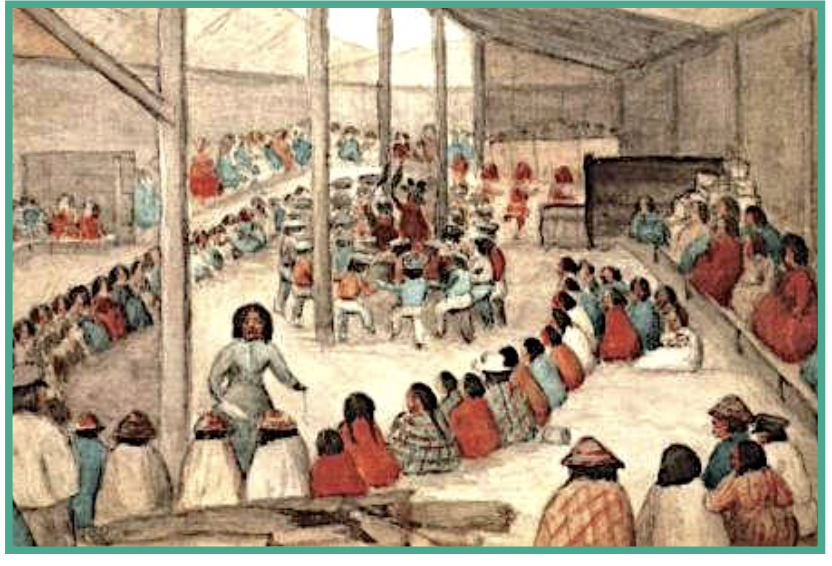
A.D. 1500 : Potlatch
Potlatch means “gift or to give”from a Chinook Indian custom in many North American Indian cultures. In some cases it was a form of initiation into secret tribal societies, a feast where gifts were exchanged, with dances & other public rituals being performed.
Because the exchange of gifts was so important in establishing a leader’s social rank, potlach often spiraled out of control as the presents became progressively more lavish, with tribes putting on larger, grander feasts & celebrations to out-do each other.

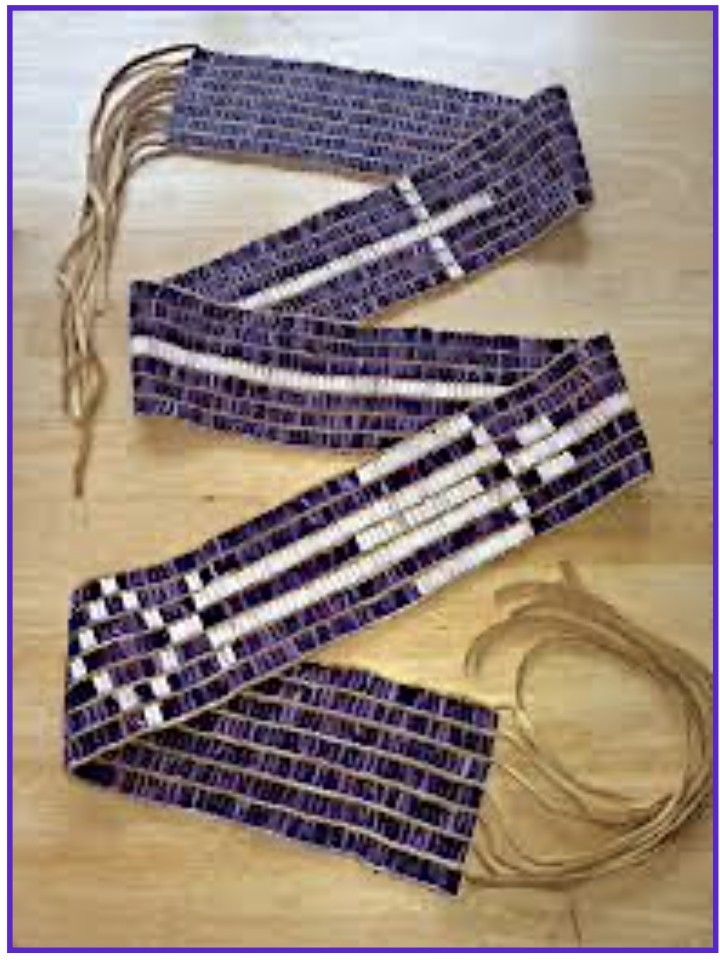
A.D. 1535 : Wampum
The earliest known use (1535) of wampum (short for wampumpeag = ‘white strings of shell beads’) – were made from clam & mollusk shells by North American Indians, but likely existed well before. These were used in ceremonies, as a record of an important agreement or treaty, as an object of tribute given by subject tribes, or for gift exchange. Its value derived from its ritualistic importance & the skill involved in making the objects.

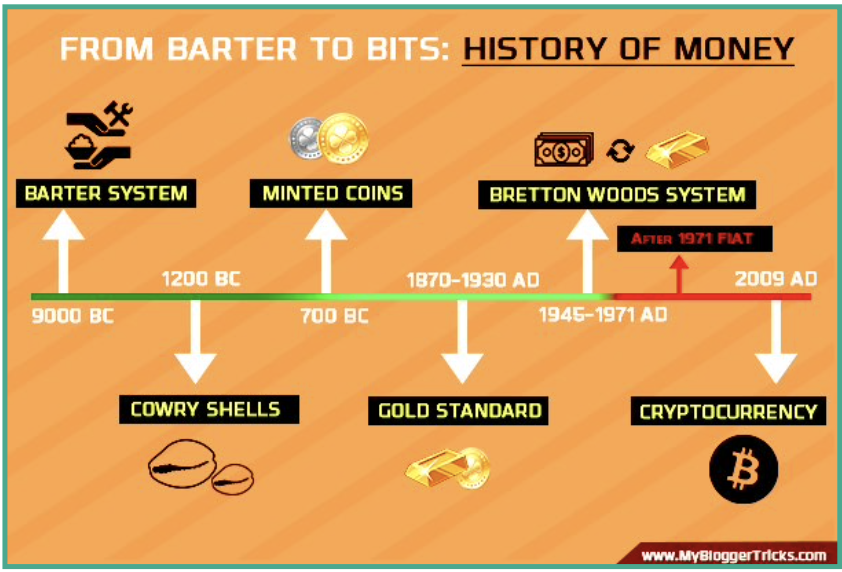
1816 : The Gold Standard
Gold was officially made the standard of value in 1821 by the United Kingdom – then the leader in international finance – in response to currency problems such as fiat money. This is currency issued on the “fiat” (decree) of a sovereign government &, unlike gold and silver coins, has no intrinsic value.

Countries can issued such money at will, potentially making the currency worthless. Banknotes had been used in England & the Continent for several hundred years, but their worth had never been tied directly to gold.

In the “gold standard”, the unit of currency is typically kept at the value of a fixed quantity of gold, increasing confidence in international trade by preventing governments from excessively issuing currency. Eventually other countries, including Germany, France & the US adopted this system in 1900. p which helped lead to the establishment of a central bank.

However, the system had its drawbacks – it limited a country’s ability to isolate its economy from depression or inflation in the rest of the world.  Guidelines were added to allowed for a non-inflationary production of standard banknotes which represent a certain amount of gold.

Since then there have been a number of extreme cases of hyper-inflation. A notable case is Zimbabwe in the early 2000s, when the country issued currency in denominations as high as $100 trillion—which was worth about a loaf of bread.

A.D.  1930 : End of the Gold Standard
The Great Depression (1929–c. 1939), felt worldwide, marked the beginning of the end of the gold standard, & by the 1970s gold was no longer tied to currency. Since then there have been a number of extreme cases of hyper-inflation. A notable case is Zimbabwe in the early 2000s, when the country issued currency in denominations as high as $100 trillion – worth about a loaf of bread.
In the US, it was revised & the price of gold devalued, eventually ending the connection altogether. The British & other gold standards soon ended as well, & the complexities of international monetary regulation began.

🏧 The Present: Forms of money have continually evolved since the days when people accepted seashells for payment, as evidenced by the new $100 U.S. Ben Franklin bill.  A gold standard existed until the arrival of fiat currency.
CREDIT CARDS
While credit has existed for ages, the first universal credit card was introduced in 1950. That year the Diners Club was founded in the US. & in 1959 American Express debuted. We have IBM to thank for the magnetic stripe on credit cards, introduced in the 1960s to hold account information.

Because of the stripe, merchants no longer needed to make phone calls for authorization. In the 1990s, cards had embedded chips encrypting information such as account balances, providing even greater security.
In the beginning, card users were required to pay the full balance at the end of the month. Eventually, AMEX allowed consumers to carry balances – though interest was applied – & other credit companies quickly followed. Customers took advantage of this development – maybe a little too much. In 2017 American consumers were carrying $1 trillion in credit card debt.

🁢 The Future : Electronic Money
In our digital age, economic transactions regularly take place electronically without any physical currency. Digital cash will most likely continue to be the currency of the future. (MORE….)
BITCOINS
Bitcoin is a digital currency system created in 2009 by an anonymous computer programmer or group of programmers known as Satoshi Nakamoto. The currency is not issued by a central bank & not regulated, though a decentralized network of computers keeps track of transactions. Users of Bitcoins are anonymous, known only by their digital wallet ID.

CBDC  –  a digital form of “central bank money” – that is a liability of the central bank. In the US there are currently two types : physical currency issued by the Federal Reserve & digital balances held by commercial banks at the Federal Reserve.

As of June 2024, the US doesn’t yet have a CBDC. If implemented, the public could use another form of central bank money other than physical cash & digital balances held in individual or corporate bank accounts. The Federal Reserve is committed to ensuring the continued safety & availability of cash, & is considering a CBDC as a way to expand safe payment options, not to reduce or replace them.  (MORE….)

SITE : The Future of Reserve Currencies

NEXT : Emotional Effects

MONEY MADNESS – Timeline (Part 1)

PREVIOUS :  MM – ORIGINS #2

«
From  PBS NOVA & Britannica

COUNTERFITTING
Counterfeiting dates to the invention of money. Even wampum was a target. Forgery proved such a huge problem around the world that harsh penalties were enacted. Chinese currency from about the 14th century carried the warning that counterfeiters would be decapitated, & England was known for punishing perpetrators by burning them at the stake.

In the American colonies too, death greeted early cheaters,  & many measures were taken to prevent forgeries. Ben Franklin, who owned a firm that printed money for several colonies, notably misspelled Pennsylvania, believing that ——s would correct the error in their forgeries.

Today anti-counterfeiting measures are much more elaborate. EXP :  the most copied note in the U.S. – the $20 bill – has been improved by adding a watermark & security thread,  which are visible when the note is held to the light. However, in recent years penalties for counterfeiting have relaxed – the maximum prison sentence is 20 years.

In the Beginning: BARTER
Barter is the exchange of resources or services to mutual advantage, & the practice likely dates back tens of thousands of years, perhaps even to the dawn of modern humans. Plants & animals have also been bartering in symbiotic relationships. Among humans, barter certainly pre-dates the use of money, & today individuals, organizations & governments still use – & often prefer – it .

9000 – 6000 B.C.: Cattle
Throughout history & across the globe  – cattle (including sheep, camels & other livestock) are the first & oldest form of money. In many cultures, with agriculture also came the use of grain & other vegetable or plant products as a standard form of barter

1200 B.C.: Cowrie Shells ++
Historically, the cowrie is the most widely & longest used currency. They had a number of advantages: they were similar in size, small, & durable. Many other societies adopted them as money, & even as recently as the mid-29th cent, cowries have been seen in some parts of Africa.
• Another currency from nature was made from whale teeth,  used by Fijians
• The people of Yap Island (now part of Micronesia) carved huge disks of limestone that eventually became currency, & remain part of the island’s culture..

1000 B.C.: First Metal Money & Coins
While the use of metal-money can be traced back to Babylon before 2000 B.C., standardized & certified coinage may not have existed until the 7th century B.C..  Bronze & Copper cowrie-imitations were manufactured by China at the end of the Stone Age & are considered some of the earliest forms of metal tender.

500 B.C.: Modern Coinage
Outside of China, the earliest coins were made of lumps of silver. They soon took the familiar round form of today, stamped with various gods & emperors to mark their authenticity. These first appeared in Lydia in Turkey, but were copied & further refined by the Greek, Persian, Macedonian, & later the Roman empires. These new coins were made from precious metals (gold, silver, bronze), which had more inherent value, unlike Chinese coins which depended on base metals (bronze, copper, tin, lead).

118 B.C.: Leather Money
About the 6th century BC leather from animal hides as currency came into fashion. The Chinese emperor Wudi (reigned 141–87 BC) created currency out of skins from his personal collection of white stags, in one-foot-square pieces. It was fringed & decorated with elaborate designs. This could be considered the first documented type of banknote.

Early ancient Rome reportedly used this type of money, also found in such areas as Carthage, & what is now France, & Russia is believed to have used leather money well into Peter the Great’s reign (1682–1725 CE).  Although no longer used, leather money has left a lasting legacy: some believe it gave rise to the use of buck as slang for dollar.

💲     💲    💲

A.D. 800 – 900: The Nose
The phrase “to pay through the nose” comes via Balor of the Evil Eye, a Fomorian giant who once ruled over Ireland. He collected an ounce of gold ‘per nose’ in taxes, & if you didn’t pay, it was off with your nose.
The Norse god Odin collected either a Scotpenny or a penny a nose from the Swedes. The 9th century Danes instituted a “nose tax” reminiscent of Balor’s. Pay one ounce of gold, or have your nose slit. (MORE….)

A.D. 806 : Paper Currency
Paper is widely believed to have originated in China & the first known paper banknotes appeared there. This innovation is widely thought to have occurred during the reign of Emperor Zhenzong  (997–1022 CE), made from the bark of mulberry trees (So, in a way – money really did grow on trees!)  (More….)
It used for over 500 years, from the 9th through the 15th century. Over this period, paper notes were over-produced so their value eventually depreciated & inflation soared.

By the late 18th & early 19th centuries, paper money had spread to other parts of the world. However, most of it was not money in the traditional sense. Instead, it served as promissory notes – to pay specified amounts of gold or silver – which were key in the development of banks.

Starting in 1455, their use of paper money disappeared for several hundred years, a long time before paper currency would reappear in Europe, & 300 yrs before it was considered common.

NEXT : Timeline #2

MONEY MADNESS – Money ORIGINS (Part 2)

PREVIOUS – ORIGINS (Part 1)

SITEs : “Coins of the Bible – when money was first mentioned

QUOTE : “All wealth belongs to the Divine , & those who hold it are trustees, not possessors. It is with us today, tomorrow it may be elsewhere.” — Sri Aurobindo

✳️ Money as SYMBOL
In ancient times, money was often used ritualistically, serving as a symbolic offering to deities, representing wealth and prosperity in ceremonies, and sometimes even acting as a substitute for actual goods in sacrificial rituals, with different cultures employing various practices depending on their beliefs and the form of currency available to them.

Tithing: In religions like Judaism, the practice of “tithing” (10%) involved setting aside a specific portion of one’s income as a religious offering to the temple, often with a symbolic monetary value

• Symbolic Value : Money was often seen as a representation of abundance & power, making it suitable for rituals aimed at attracting wealth, good fortune, or fertility. James Hillman wrote
” …money brings panic, confusion, ecstasies, joys and madness, especially when we try to hold its flow with rational accounting. Taurus the Bull, rules money (the Age of Taurus – 4300- 2150 BC)  so bags, pits, vaults, temples…. have been trying to keep the life in the money under control, as do the other measures in which we pen the bull.
But money is a wild ride because it’s truly blood money, perhaps never severed from the bull…”. Hillman (Pompeii fresco ▶️ ).
So it may be easier to understand why we speak of Bull Markets. At its symbolic root, money is not rational, &, like the bull, it relates to passion & desire. Financial markets are subject to the tidal periodic rises and falls just like the Moon and just like our emotions.
• Offerings to Gods: Many cultures would deposit coins or other forms of currency in temples or sacred sites as offerings to deities, either as a way to appease them or to request favors. Hillman writes that “the ceremonial dismemberment of the bull was the origin of bits of money. The spit on which the animal was roasted (obelos) became the coin (obolos) as the piece of bull meat stuck to the spit.”
In some cases, money could be used as a symbolic substitute for actual sacrificial animals or goods, particularly when the practice of animal sacrifice was restricted or considered inappropriate.  (COIN :  Apollo <——&——> Numa Pompilius 97 B.C.)

EXP :  In ancient times (Greece, Rome….)  money had more psychological & symbolic meaning than  economic.  In ancient religious rituals money was used as a symbol in sacrificial food ceremonies. The ‘god’ received the best part & the participants the rest – according to their social rank. To be excluded from the feast meant they were a social outcast.

Coinage evolved from the ritualistic killing & eating of the divine bull.  Metal coins (gold, then, silver then bronze) eventually replaced bull meat, representing royal esteem. & proportionally to the amount of each citizen’s contribution to the state.
So – the system of commodity money eventually evolved into a system of representative money. Money as a form of commercial exchange came later.

BTW – In England this ritual continues to the present – the royal gift of 1/4 venison is bestowed on important people such as the Prime Minister, lord chief justice, archbishops of Canterbury & York….

Therefore, money as a status symbol preceded money as a means of exchange. However, the deep psychological meaning in the human mind – as a measure of social rank – has not changed, even though our rational mind only considers money as a medium of exchange for tangible goods & services.

DEF : The word money derives from the Latin word moneta with the meaning “coin” via French monnaie. The Latin word is believed to originate from a temple of Juno Moneta on the  Capitoline hill often associated with money. It was the place where the mint of Ancient Rome was located, & she was believed to have blessed the coins herself. “Juno” may have derived from the Etruscan goddess Uni, & “Moneta” either from the Latin “monere” (remind, warn, or instruct) or from the Greek “moneres” (alone, unique).

NEXT : MM – TIMELINE , #1

MONEY MADNESS – Money ORIGINS (Part 1)

PREVIOUS : MM – Intro, #3

SITE : • Tragic Money” – from ancient Greek literature & tragedy plays.


💲   💲   💲
In early societies, survival was based on being the strongest & swiftest. But over thousands of years, money has become a substitute for strength & speed. People no longer compete directly for basic needs, but indirectly to purchase food, shelter ….. 

Because the ancient origins of economic systems precede written history, it has not been possible to trace the true origin of the invention of money. The use of barter-like methods may date back to at least 100,000 years ago, although there is no evidence of a society that relied primarily on barter. Historians believe metal objects were first used as money as early as 5,000 B.C. Non-monetary societies operated largely by debt & gift economy. When barter did occur, it was usually between complete strangers or potential enemies.

Many cultures around the world eventually developed the use of commodity money. The first usage of the term came from Mesopotamia circa 3000 BC, with a shekel as a unit of weight, which relied on approx. 160 grains of barley.  Their accounting documents – in the monetary system sense – showed lists of expenditures & goods received & traded.

Commodities are basic items used by almost everyone – including salt, tea, cattle & seeds. Using these items as money alleviated some of the problems of bartering. However, commodities weren’t always easy to transport , as many were perishable or difficult to store.
KNIFE-shaped commodity money were produced by various governments & kingdoms in ancient China about 2500 years ago, & circulated in China between 600 & 200 B.C. during the Zhou dynasty. They seem to have evolved in parallel with the spade money (12 different types) in the north-east of China. from 1045 to 256 B.C.

Societies in the Americas, Asia, Africa & Australia used shell  The use of shells in trade began as direct commodity exchange, the shells having use-value as body ornamentation.
Metal objects were first used as money as early as 5,000 B.C.   According to Herodotus, the Lydians (ancient Turkey) were the first people to introduce gold & silver coins, the first stamped coins minted around 650 to 600 BC.

Historical evidence indicates that money has taken 2 main forms, divided into money of exchange (tangible media of exchange made from clay, leather, paper, bamboo, metal…..) & money of account (debits & credits on ledgers).

The history of accounting shows that “money of account” pre-dates the use of coinage by several thousand years. Money as a unit of account was invented when the unquantifiable obligation “I owe you one” transformed into the quantifiable notion of “I owe you one unit of something”.

TALLY  – As “money of account” depends on the ability to record a count, the tally stick was a significant development. Tallies have had many uses, such as messaging & scheduling, especially in financial & legal transactions, to the point of being currency.

It was an ancient memory aid used to record & document numbers, quantities & messages. They first appear during the Upper Palaeolithic as animal bones carved with notches (notable example = Ishango Bone).
Historical reference is made by Pliny the Elder (AD 23–79) about the best wood to use for tallies, & by Marco Polo (1254–1324) who mentions the use of the tally in China. 

INSET : Medieval English split tally stick (⬇️ front & back) – notched & inscribed to record a debt owed to the rural dean of Preston Candover in Hampshire – of a tithe of 20d each on 32 sheep, amounting to a total sum of £2 13s. 4d (UK).
MANY types: Single & split tallies from the Swiss Alps, 18th to early 20th cent.

«
There are two principal forms : the single & the split tally. A comparable example of this primitive counting device can be found in various types of prayer beads…..The split tally became a prevalent technique in medieval Europe to document bilateral exchanges & debts – a time when there was a scarcity of coinage & widespread illiteracy. (MORE….)

NEXT : MM – Money ORIGINS, Part 1

MONEY MADNESS – INTRO (Part 3)

PREVIOUS : MM – Intro #2


✳️ MEANING of money
1.  Society
has placed a cultural significance on money. It conveys intelligence, fame, power, status…. to people who have it. In reality, money is just a tool that can create opportunities for those who use it correctly. It allows us to buy necessities, invest in others, travel, & build bridges to new ideas.

2. A very personal relationship
What money means to us is a complex web of experiences with friends & family, the communities we live in, & what our culture say about money & wealth. These all affect our attitudes, beliefs & values re. money, which form the basis for the meaning we place on it. 💲Money💲 is :
🔸 part psychology (how we think about it)
🔸 part utility (how we use it)
🔸 part subjectivity (personal choices we make)
It allows us TO  :
Impact & Servicebe active in our communities
Lovetake care of family
Securityfeel more comfortable
Powerhelp achieve effectiveness

Power of Choice : While history has attributed much significance to money, we still hold the power to define its meaning of in our life. The best way to live life is to feel in control, to have the ability to do what we love, & spend time with those that matter most to us. This includes the power to choose what meaning we give our money.

It reflects our beliefs & values. It’s not what we have – it’s what we do with it – that matters.  The meaning of $$ comes from the ROLES we choose to give it. With the right mindset, we can use it as a tool to help us live well.

Freedom from anxiety
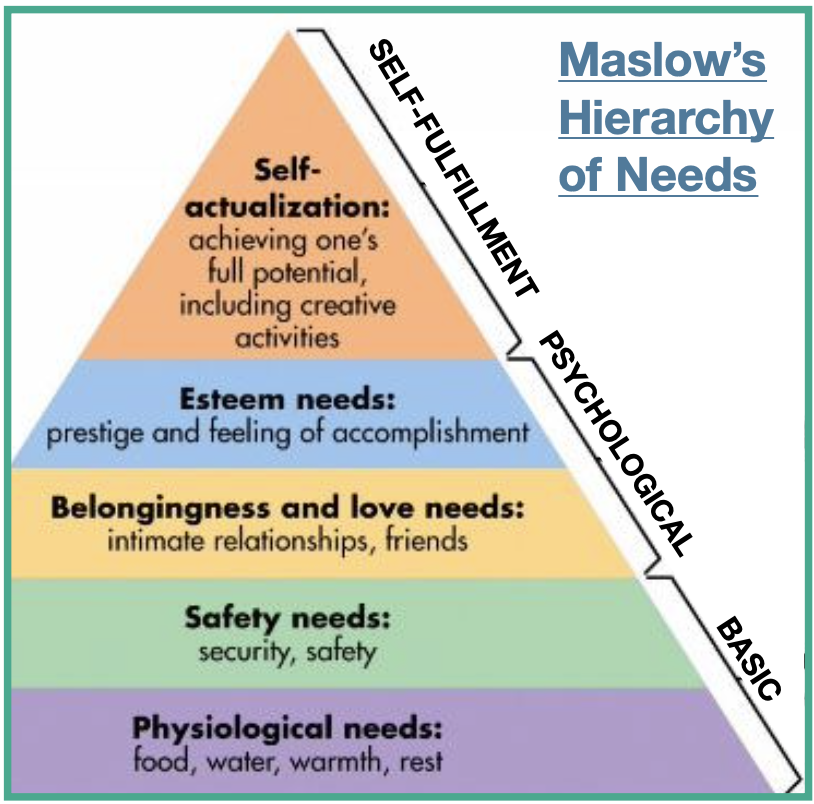
Famed psychologist Abraham Maslow may be right that we re all searching for what he calls self-actualizationthe best version of ourself – but we can’t satisfy the higher levels of our human needs if we can’t provide the basic necessities first. Money can provide the essentials in life, giving us the security to strive for more.
(From “FACETS”, 2021)   (see Pyramid info expanded)

✳️ Broad ATTITUDES
Our “Money personality” is affected by them, impacting how we interact with money – ours & others»
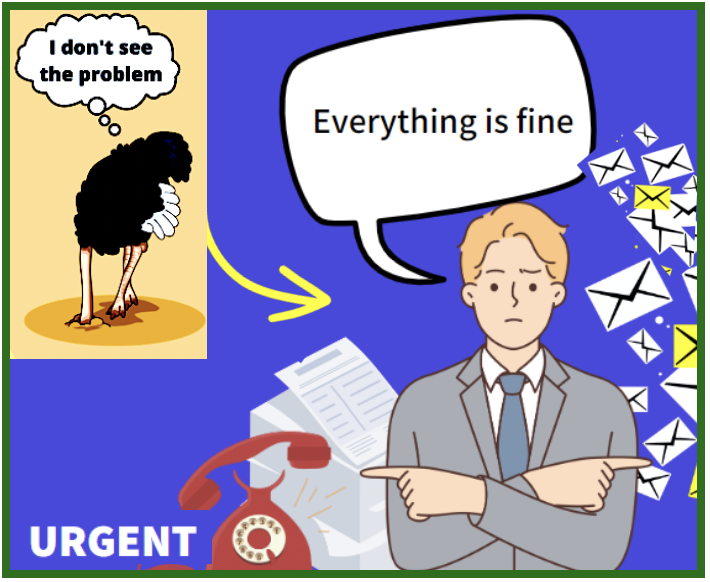
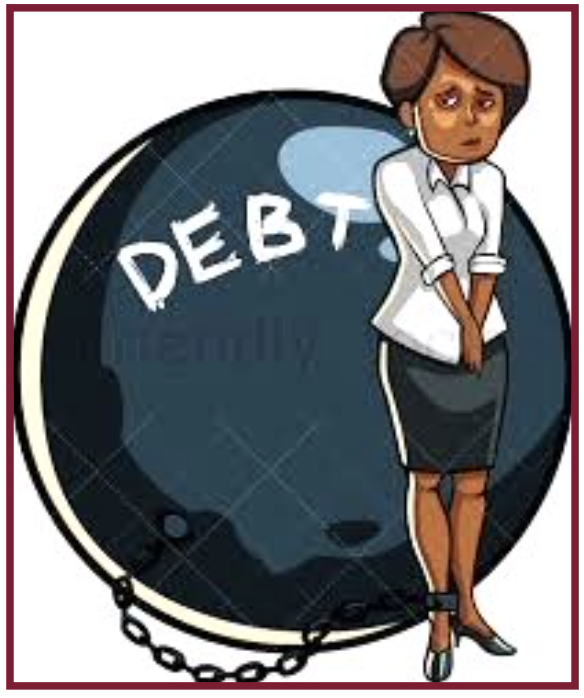
🔻 Avoidance == A negative association w/ $. This is a coping mechanism to avoid emotional distress & can be a trait across generations.  Often the outcome is spiraling debts.
Behaviors can include :
•  Avoiding making budgets • Procrastination on bills or taxes
Not keeping records of finances, opening banking apps & checking credit card statements.
Some reasons  
✎ Short-term comfort : spending can provide temporary comfort in times of stress
✎ Survival instincts: our brain os geared toward wanting rewards & away from anything painful. 

🔻 Status == keeping up w/ the Jones, they equate self-worth w. net worth. Wanting to be a celebrity living like a star,  they buy things to be part of a social experience & be seen in a certain way. SIGNS : they believe —
• they’re only as successful as the amount of money they earn, & without a lot of money, they’re not worth much
• if something is not considered the best, it’s not worth buying
THEY :
● are financially dependent on others
● are prone to excessive gambling
● hide spending from their spouse
● prioritize outward displays of wealth
● spend more than they can afford

🔻 Vigilance == often in the wealthy & self-made. It’s important to them to feel they have enough money so they’re alert, watchful & obsessed about their financial health. But they’re not waiting for a financial windfall & tend to downplay how much they have.

🔻 Worship == $ is put on a pedestal- more will make me gappy, solve all my problems . The person ics obsessed with the idea that getting more money is necessary to make progress in life, but at the same time, convinced they will never have enough money to fulfill their needs or desires.  (More….). 

SITE :
5 attributes iof  money LEDGERS :
◆ Anonymity
Centralization
Openness
Limit of Supply
Physicality.

 NEXT : $ Origins, #1

MONEY MADNESS – INTRO (Part 2)

PREVIOUS : MM- Intro, #1


«

✳️  FUNCTIONS  — MONEY IS A:
1. store of value. If I work today and earn 25 dollars, I can hold on to the money before I spend it because it will hold its value until tomorrow, next week, or even next year. In fact, holding money is a more effective way of storing value than holding other items of value such as corn, which might rot. Although it is an efficient store of value, money is not a perfect store of value. Inflation slowly erodes the purchasing power of money over time.

2. unit of account. You can think of money as a yardstick-the device we use to measure value in economic transactions. If you are shopping for a new computer, the price could be quoted in terms of t-shirts, bicycles, or corn. So, for instance, your new computer might cost you 100 to 150 bushels of corn at today’s prices, but you would find it most helpful if the price were set in terms of money because it is a common measure of value across the economy.

3. medium of exchange. This means that money is widely accepted as a method of payment. When I go to the grocery store, I am confident that the cashier will accept my payment of money. In fact, U.S. paper money carries this statement: “This note is legal tender for all debts, public and private.” This means that the U.S. government protects my right to pay with U.S. dollars.

✳️  5  TYPES
☼ COMMERCIAL Bank $ = debt generated by commercial banks. This money is used as loans generated by financial institutions. When a customer deposits funds in a bank account, it is loaned out to other customers, which earns the original depositor interest.
There is always a reserve requirement – the portion of client funds that a bank cannot lend out to other customers. This money is a vital part of any financial system, as it creates liquidity for the buying & selling of other forms of asset. EXP : money for mortgages, business &/or personal loans.

☼ FIDUCIARY $ = payment on the basis of trust, such as cheques, but not on any order of the government.
This is a money substitute that is often a written statement of debt or intent of payment. It is essentially a promise of money at a later date, backed by nothing more than trust between the two parties in a transaction.

There are risks involved, as the supply of money & the promises made may not align. So, if too many individuals using fiduciary money try to convert their statements at the same time, it can create a run on the fiat system that underpins the exchanges.

☼ COMMODITY $ = Money whose value comes from a commodity which it’s made of (stocks…). Economists say the invention of money is in the same category as other great inventions of ancient times, such as the wheel & the inclined plane.
Early forms of money were often commodities made of a valuable substance such as gold & silver coins. Gold was desirable in itself, used in exchange for other goods or services, for jewelry….
Commodity money gave way to the next stage – representative money.

☼ REPRESENTATIVE $ = a certificate or token that can be exchanged for the underlying commodity. EXP : instead of carrying the metal, the gold can be kept in a bank vault , replaced by a paper certificate which could be carried more easily & safely.
The certificate could be redeemed for the gold at any time, so people grew to trust them as much as the metal.
Representative money led to the use of fiat money – the type used in modern economies today.

☼ FIAT $ = government-issued currency not backed by a commodity (gold). It does not have intrinsic value & does not represent an asset in a vault somewhere. Its value comes from being declared “legal tender”- an acceptable form of payment – by the government of the issuing country.
Modern economies use fiat money.
The term Fiat comes the Latin word “fiat”, meaning ‘determined by authority’ – because the value of currencies is set by government bodies, not in relation to another asset. It’s traded in the foreign exchange or forex markets.  (MORE….)

NEXT : MM- Intro, #3