
 PREVIOUS : Grief (Ec -In)
SITE: “11 Ways to Support Someone Who’s Grieving”
MASKED
This is a grief reactions that prevents or harms normal functioning in life. However, most often, you won’t recognize this limitation as the result of a loss, or even seeing it’s related to it in any way, because the symptoms are masked as either physical problems or maladaptive behaviors that are wrongly attributed to a different cause (childhood damage, bad marriage….). Past unresolved grief can mix in with current feelings, making it hard to recognize the real source of distress. (MORE….w/ caused & examples)
NORMAL
 Normal – also called Existential grief – is the most common type. It’s normal to feel sad, angry, vulnerable…. at the loss of a loved one, whether they died, OR were taken away for some reason. It includes losing a friend, parent, sibling, spouse, child, or a beloved family pet. Any kind of loss is an important part of your life, affecting your future without the person or animal.
However, the main characteristic is that there’s a slow but definite movement toward acceptance of the loss, & a gradual lessening of symptoms, leading to an increased ability for self-care, & participation in positive daily activities.
💘 PROLONGED GRIEF DISORDER (PGD)
PGD differs from typical grief, depression & other mental health problems. And it’s not just the length of grieving. It’s about how disabling it is.
People with PGD yearn for their lost loved one with an urgency that lingers much longer, as they struggle to believe the death has really happened. Extremely shaken to the core, they can’t imagine ever being happy without this person in it. 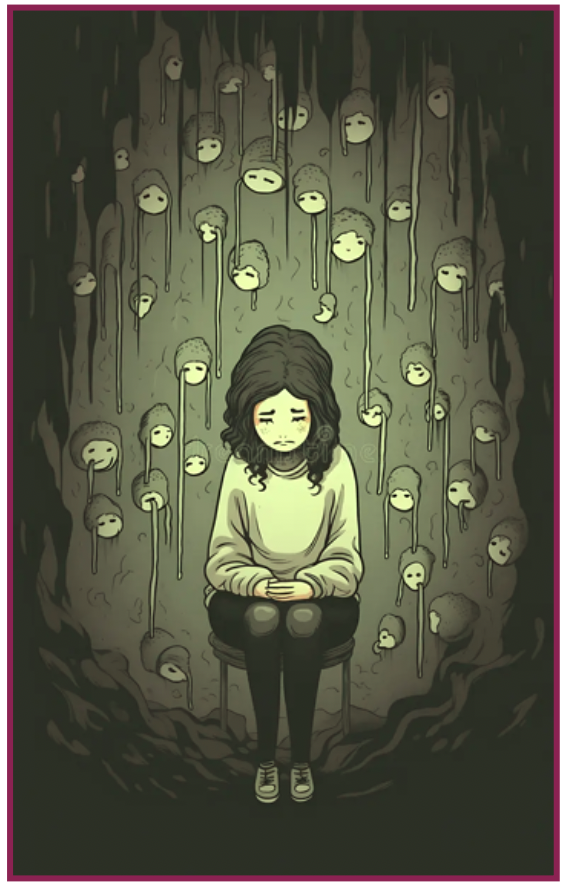
1. Event criterion: Bereavement (loss of a loved person).
2. Separation distress
The bereaved person experiences at least one of the 3 following symptoms, daily or to a distressing or disruptive degree :
☹︎ Intense feelings of emotional pain, sorrow, or pangs of grief related to the lost relationship
☹︎ Intrusive thoughts related to the lost relationship
☹︎ Yearning for the lost person
3. Cognitive, emotional & behavioral symptoms
The bereaved person must have 5 (or more) of the following :
☹︎ Avoid reminders of the reality
☹︎ Bitterness or anger about it
☹︎ Confusion about one’s role in life, or a diminished sense of self (feel that a part of oneself has died)
☹︎ Difficulty accepting it
☹︎ Difficulty moving on with life (making new friends, pursuing interests….)
☹︎ Feel that life is unfulfilling, empty & meaningless
☹︎ Feel stunned, dazed, or shocked
☹︎ Inability to trust others
☹︎ Numbness (emotional shut-down) after the loss 
4. Duration: Diagnosis should not be made until at least 6 months after the death
5. Impairment : Symptoms cause clinically significant distress or impairment in important social, occupational or domestic areas of functioning
6. Medical exclusion : The disturbance is not due to the physical effects of a substance or from a general medical condition
7. Relation to mental disorders : Not mainly accounted for by Major Depressive Disorder, Generalized Anxiety Disorder, or Post-traumatic Stress Disorder. But people with a history of depression or bipolar disorder are at an higher risk.
Disabling grief is treatable
Moving on from disabling grief does not mean forgetting your loved one. We don’t only need to honor their memories with anguish, but also can be with appreciation & gratitude for the time we had together, & by acting on the life lessons we learned with or from them.
SUGGESTIONS for healing:
☆Take self-care seriously. Try to eat well, exercise & keep regular sleep habits. Beware of relying on alcohol, pills or other substances to regulate emotions
☆ Reach out to others. It can be very hard to do, but isolation is worse. Spend time with available family, friends, a spiritual community……
☆ Attend grief support groups. They aren’t right for everyone, but really do help many people. It can be especially useful to connect with others who understands the type of loss you’ve experienced, such as with fellow widows.
NOTE: These tools can apply to healing any form of grief.
NEXT : Grief –
 HEAL & GROW for ACoAs