
 PREVIOUS : Attachment & Siblings
SITEs : ▫️ “How diet culture can lead to eating disorders”
🍔 🍟 🥤🍏 🥦 🥑
Attachment theory is expressed as an emotion regulation theory, & more than 80% of all adult ED patients studied have an Insecure attachment.
The attachment style we develop is crucial to whether or not we’re able to successfully deal with developmental stages. They include adjusting to physical changes during adolescence, forming a strong sense of an independent identity, & setting life goals. Basically, our attachment style is a way to buffer against actual & potential psychological anxiety or harm.
Some people are born with a predisposition to focus on food for pleasure & comfort, not just for survival. (Others have a stronger pull toward sports, or chemicals, or sex, or performing….as primary).
If a food-person also has any one of the Insecure attachment styles – they can be at risk for an eating disorder, or it’s precursor – unhealthy eating patterns with signs of a disorder that’s “waiting in the wings”. Signs can be : chronic restricted or compulsive eating, a heightened focus on appearance, worry about being overweight & being dissatisfied with body shape.
3 MAIN TYPES
♨︎ Anorexia nervosa – trying to control weight by under-eating &/or over-exercising.
♨︎ Bulimia – loss of control over how much food is consumed, then purged to avoid putting on weight
♨︎ Binging – eating vast amounts of food until uncomfortably full. (List of signs for each type)
Eating disorders (ED) are not a lifestyle choice, rather an outward expressions of deep psychological & emotional distress, ‘encouraged’ by Insecure attachment styles. They are serious illnesses marked by an unhealthy relationship to food, used to manage negative feelings. They’re emotionally painful, obsessive & isolating, mentally distorting what the person sees when looking in the mirror. (More in posts : Attachment & Eating 1 & 2)
Evidence from meta-analysis research supports a strong link between insecure attachment styles & eating disorders, for the majority of adolescents & adults who were canvassed.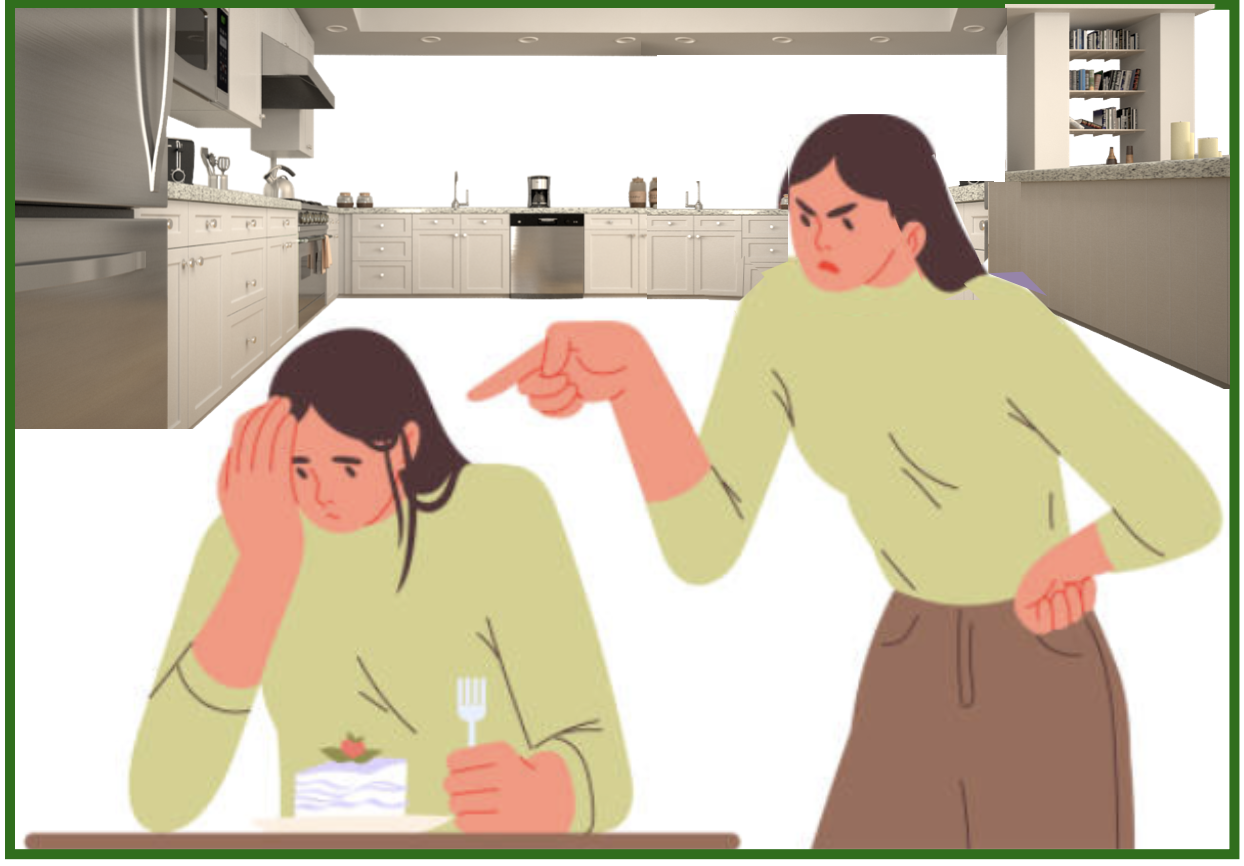
EXP 1 : One study of “food issues” showed that all the women involved were Anxiously attached, who identified having unhealed trauma or loss, especially with their mother.
It’s been established that the Anxious mother neglects her child’s emotional needs because she is too preoccupied with her own, & in a role-reversal she expects & demands that the child provide hers instead.
Because food is intimately connected with nurturing, the child’s response to emotional (& often physical) abuse & neglect can include how it reacts to eating — either over-focused on food as a symbol of longing for mom or rejecting it as a way to express anger at her.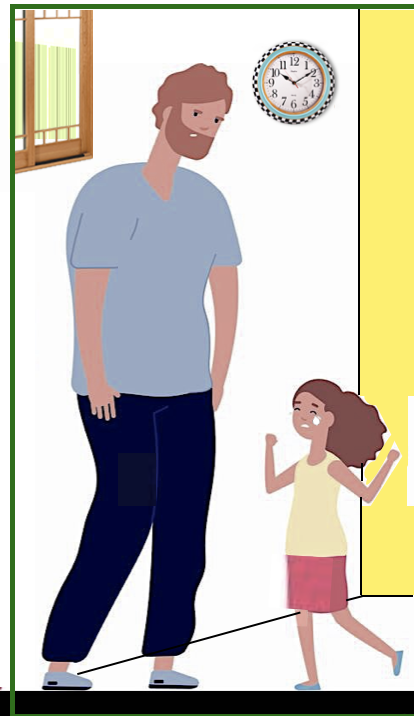
EXP 2 : The quality of a father’s bond & his emotional availability is also hugely important to a developing child. Infants have the same connection-seeking behavior toward dad (arms outstretched) as they do with mom. Babies also react strongly to a father’s ‘still’ face. Over time, his repeated unresponsiveness takes a toll on their emotional development – affecting the child’s sense of safety.
S0 – the fathers’ Avoidant style becomes another risk factor. Studies that have examined his role – found that an insecure bond with the father / father figure can predispose a child to developing an eating disorder.
In particular, the father being inattentive, detached &/or controlling – especially at meal times – can leave the child with anxiety about eating, using ‘food restraint’, & self-hate about body shape & appearance.
So understanding what underpins eating disorders (ED) must include either or both parents’ unresolved issues, not just those of the suffering teen.
Eating Disorder (ED) SYMPTOMS = The highest incidence of ED occurs between ages 10 & 19, but diagnosing correctly is challenging because symptoms of the various kinds & their behaviors overlap. Fortunately, most harmful complications are reversible with improved nutrition, & by stopping abnormal eating & purging.
Prognosis :
☀︎ Recovery from anorexia nervosa becomes much less likely the longer the illness persists (mortality rate increases).
☆ This finding contrasts with that of bulimia nervosa – the chance of recovery becomes higher the longer the illness’s duration.
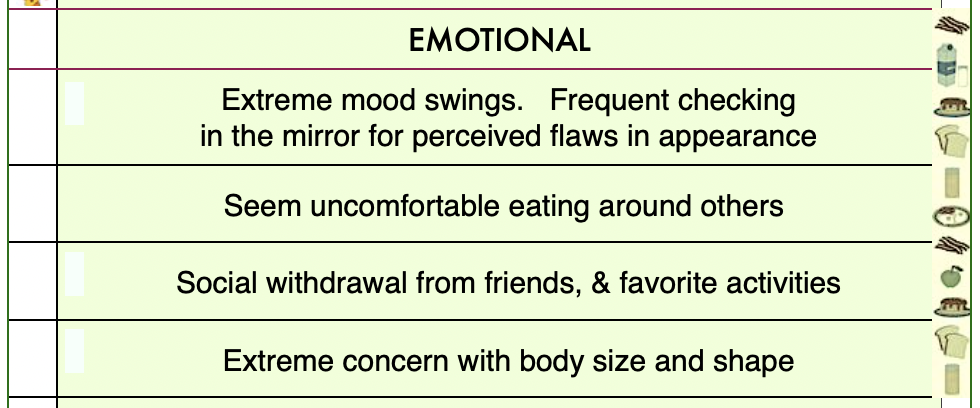
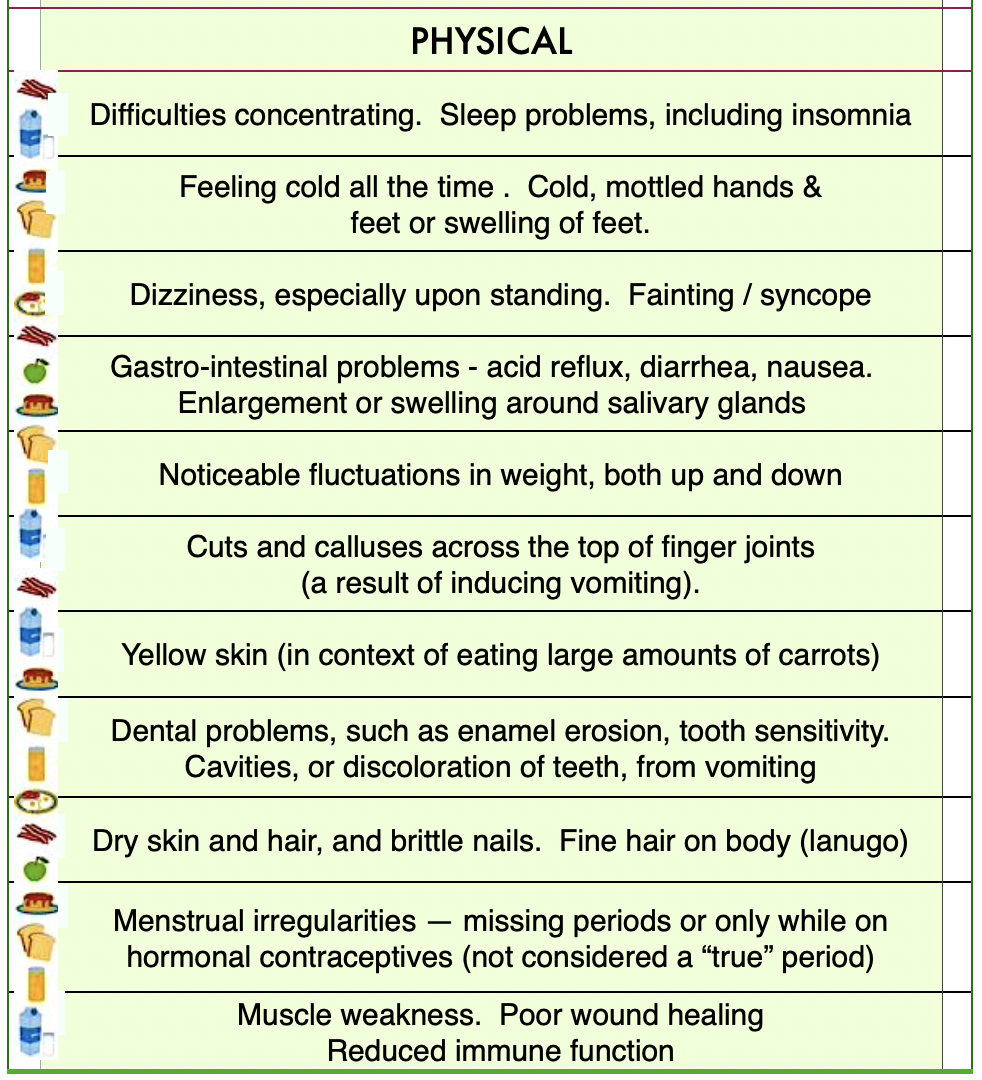
🔽 LIST combines characteristics of several styles. Symptoms vary across types, so someone struggling with an ED won’t have all of these, or not all at once.
«
«
NEXT : FOOD – #2
 HEAL & GROW for ACoAs