
 PREVIOUS : Attachment & FRIENDSHIP
BOOK : “The Body Keeps the Score” and REVIEW
COURSE : The Neurobiology of Attachment and How that Profoundly Impacts the Treatment of Trauma
1. MEDICAL
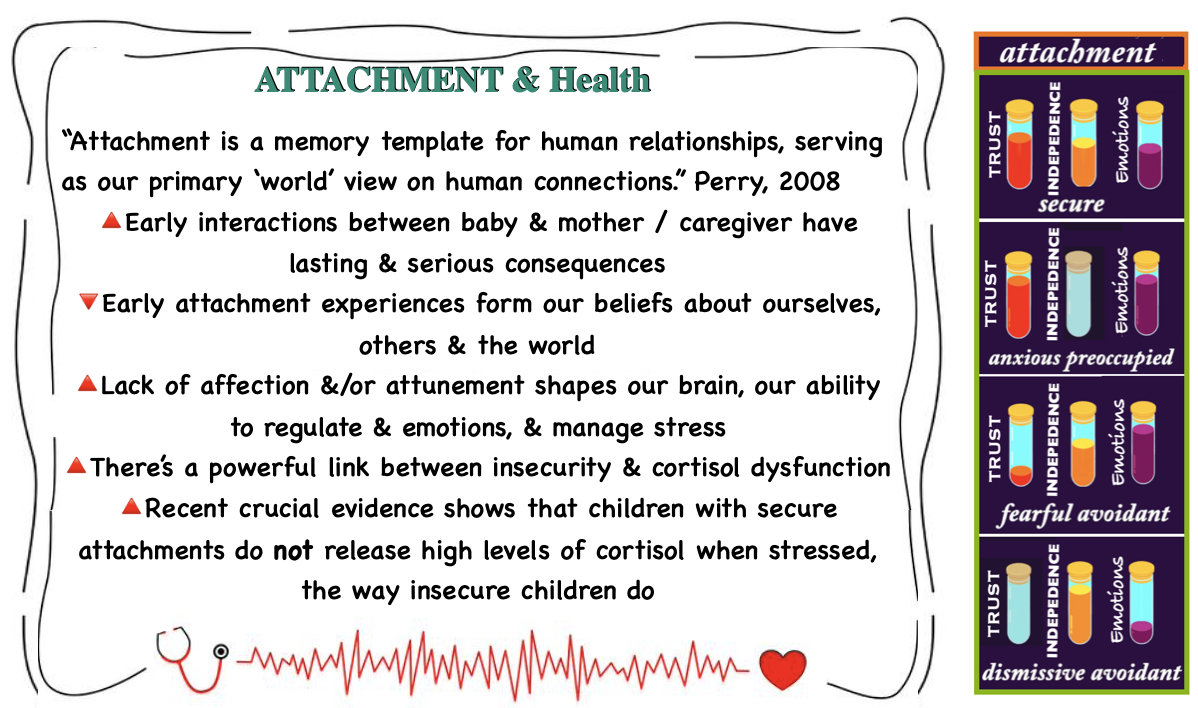
Attachment styles can shape physical stress-responses because they function as strategies for coping with distress, dealing with emotions, ‘explaining’ identity & moderating behaviors – in close relationships.
A person’s self-regulation ability & relationship interactions influence how they respond to stress at a physical level (cortisol reactivity/ recovery, cardiovascular reactivity, inflammation-related responses) & contribute to health outcomes over time.
«
«
HEALTH ANXIETY
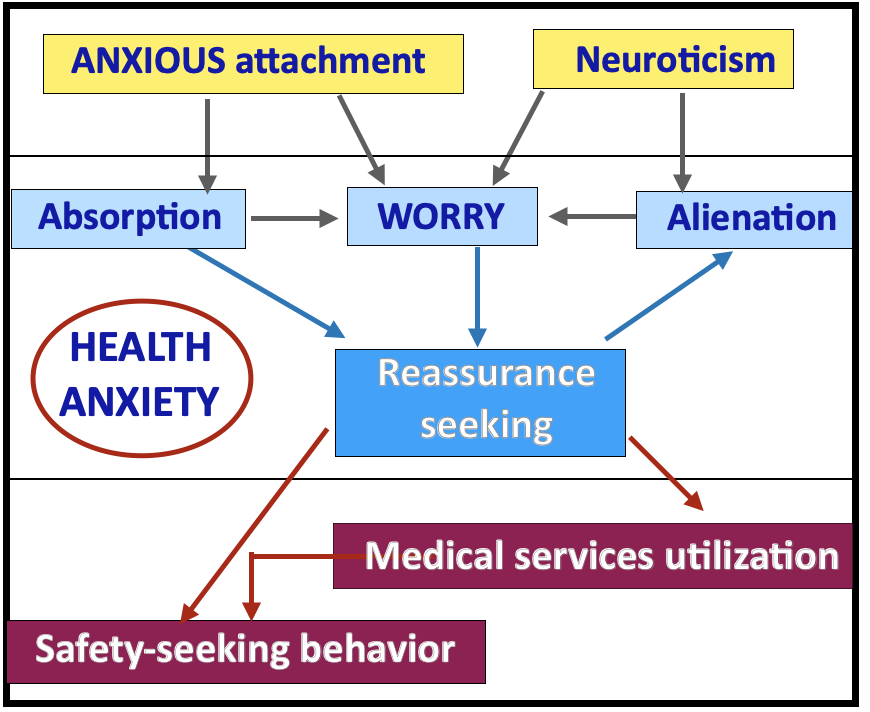
Also known as hypochondriacs or Somatic symptom disorder. It usually shows up in behavior patterns, with a strong belief that something is wrong with them – usually physiologically, but sometimes psychologically also. They may focus on a specific illness, or look for signs of something serious without having any one problem in mind.
People with Health Anxiety are more likely to constantly consult their doctor & request testing, sure they’re “dying” of something terrible. However – typically, instead of feeling relieved when every medical exam comes back Normal, they’re sure something was wrong with the test or the doctor misread the results.
Others may react by not seeking care – avoiding the doctor entirely. This anxiety can have the opposite effect – convinced hospitals are risky places & determine to stay away. This can be a big problem when real treatable conditions go undiagnosed. Harvard estimates ; 4% – 5% (maybe as much as 12%)
CHART ▼ From a Greek study exploring INSECURE Attachment & Health Anxiety. Results highlighted that inter-personal (alienation from others) and perceptual factors (tendency to focus on bodily sensations) play key roles in maintaining this condition, noting the importance of Anxious and Avoidant attachment in safety-seeking behaviors.
Health anxiety symptoms
▸ Avoid hospitals & doctor appointments OR call “every 5 minutes” with a complaint & worry
▸ Constantly anxious about general health
▸ Frequently scan the body for something wrong
▸ Preoccupied re. health for at least 6 months, even if the ‘illnesses’ they’re worried about change over that time
▸ Over-estimate the risks of getting a disease & jump to worst-case scenarios
▸ Spend a lot of time reading about different symptoms (cyberchondria)
▸ Worry a lot about having or getting a serious illness
«
«
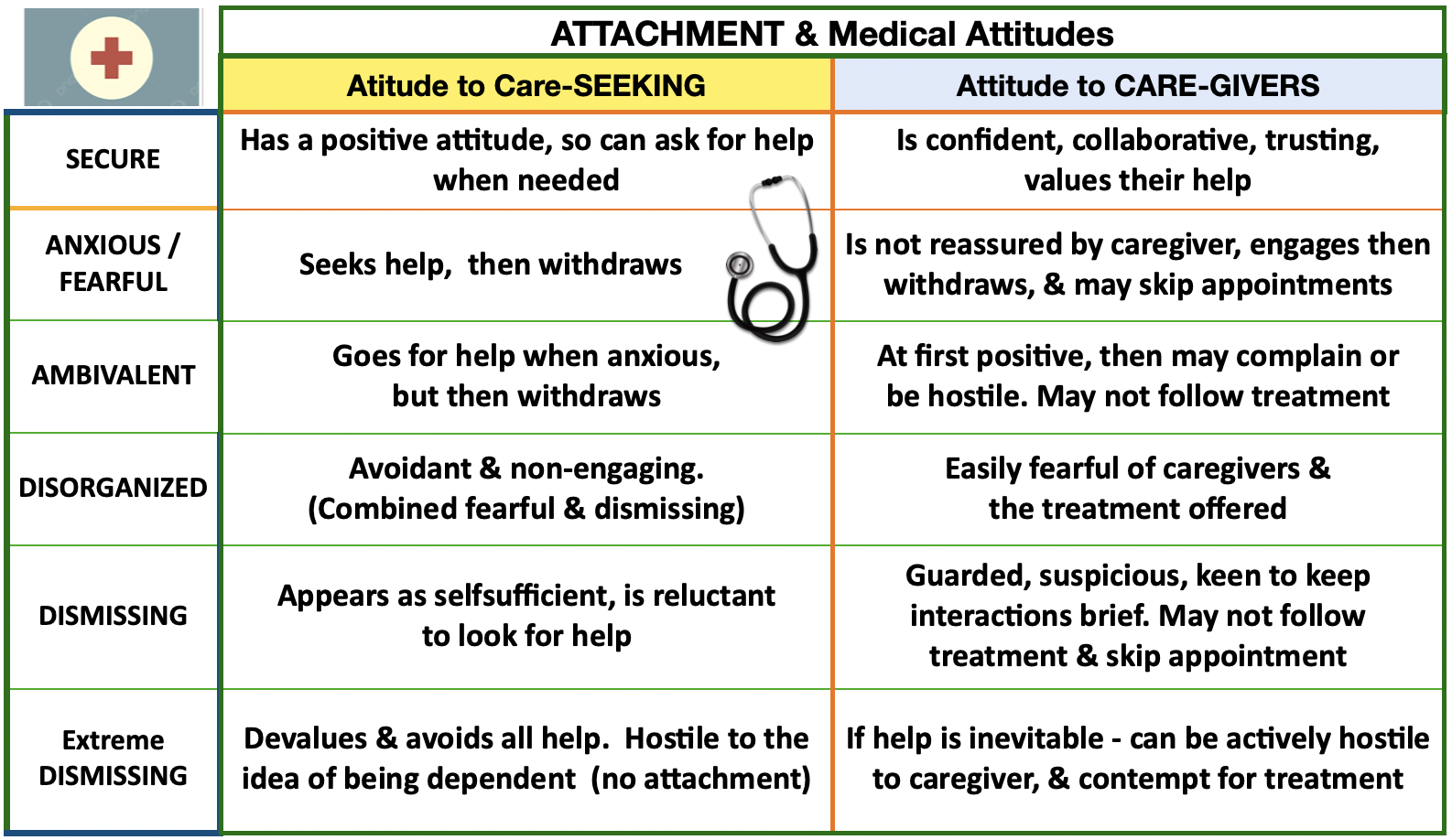
⬆️ Attachment style in medically unexplained symptoms & long-term illness
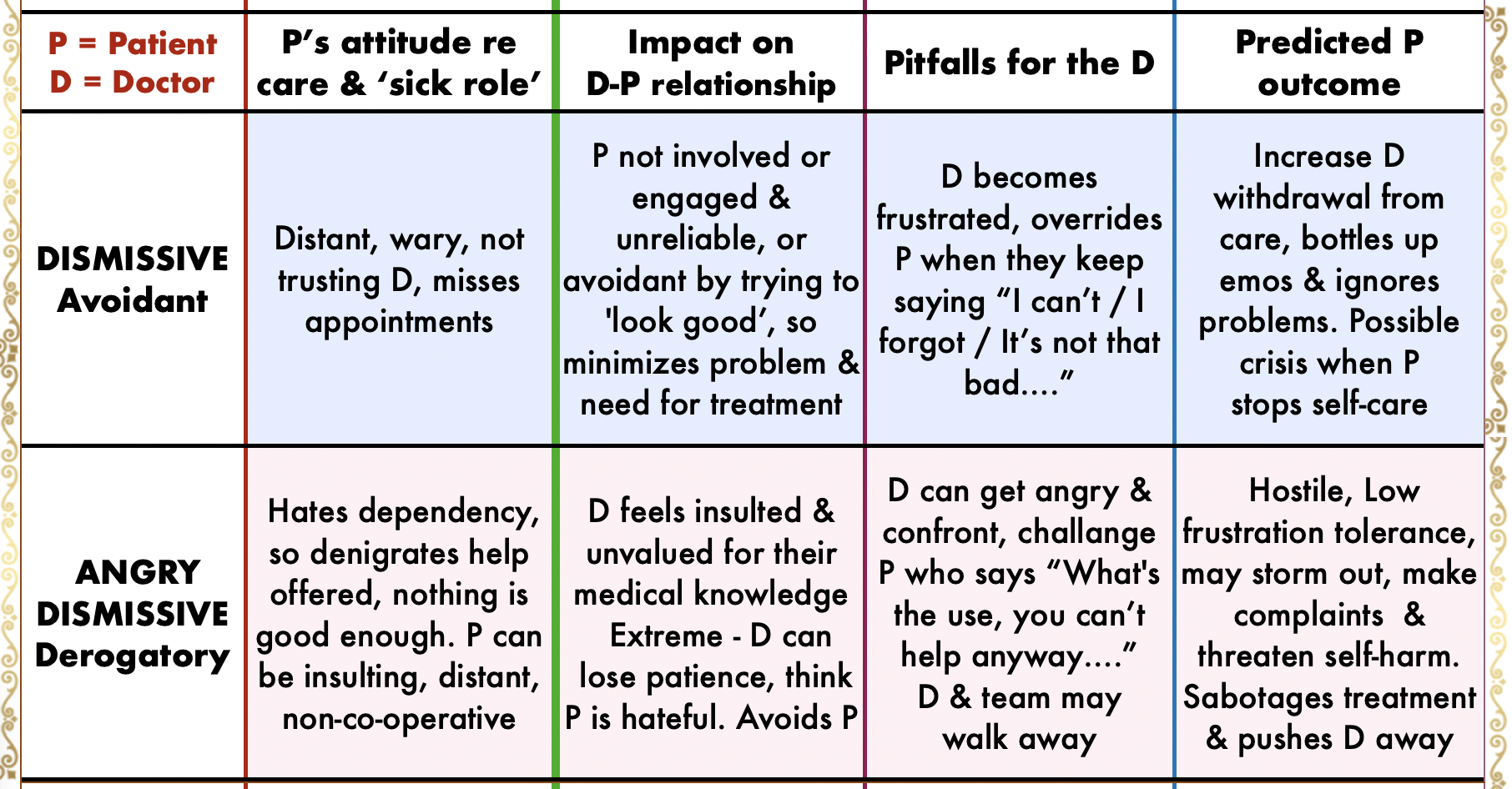
A UK study of medically unexplained symptoms (MUS) indicates that attachment insecurity is common in people with different forms of MUS & certain long-term physical conditions.
Insecure attachment is not in itself a pathology, but represents a struggle to manage stress & distress effectively.
It is common in the general population, about 40%, fairly equally divided between Ambivalent & Avoidant types.
When Insecure people become ill, their attachment system is especially activated, since illness (real or perceived) is experienced as life-threatening, so a sense of vulnerability increases.
When identifying themselves as ‘patients’, they may experience intense dependence on the professionals, triggered by their early internal working model of the world.
Ironically, Insecure adults have trouble believing they’ll get the help they long for, so don’t trust medical caregivers 
CHRONIC PAIN – There’s increasing recognition that unhealthy adult attachment styles play a role in the experience of pain…. & can be a risk factor for chronic pain which does not respond to ordinary analgesia.
Also, Insecure attachment in physically healthy adults is associated with obsessions about minor “aches & pains” causing increased pain-related worry, even projecting suffering & death. It can take the form of hypochondria, hyper-vigilance about health, as well as a reduced pain threshold, & poor coping ability with actual pain. (MORE…..)
«

«
2. RECOVERY GROWTH
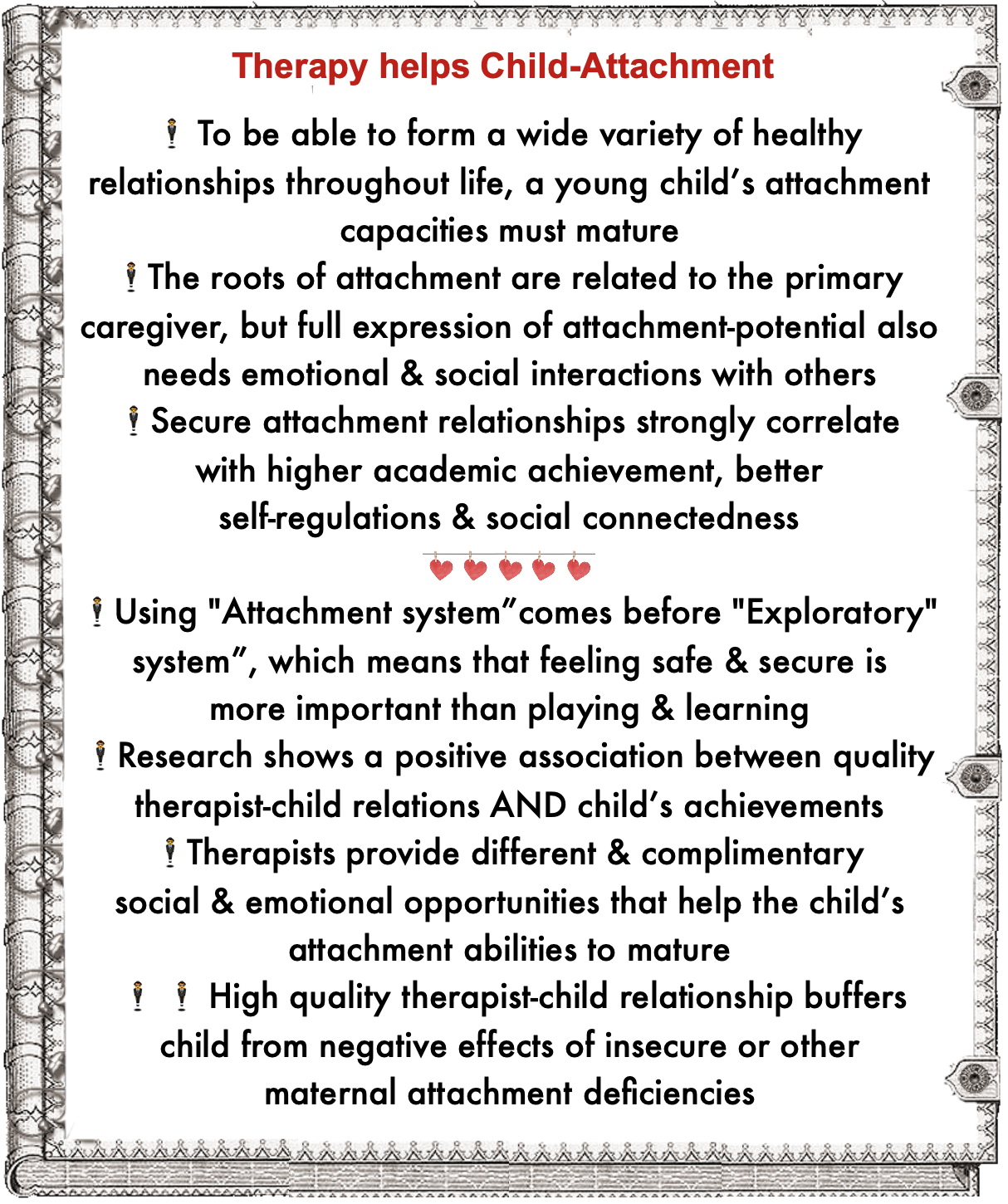
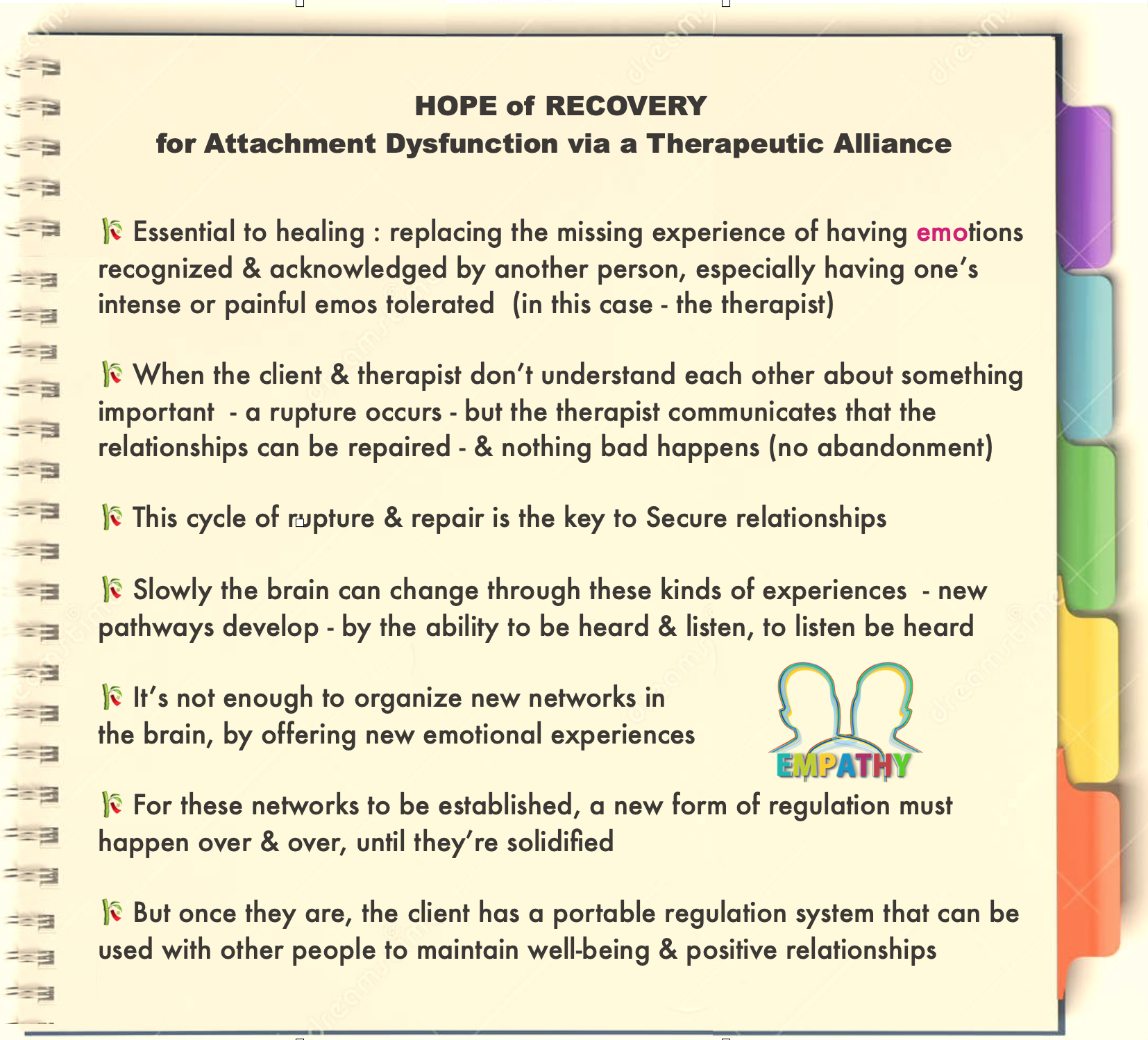
Healing from trauma is one of the most challenging things we do because we’re missing one key experience – a stable, secure relationship. RECOVERY has to include finding PPT (people, places, things) that will provide steady, caring connections to help us grow.
«
«
«

«
RESILIENCE (15 posts)
“Mindful people can better cope with difficult thoughts & emotions without becoming overwhelmed or shutting down feelings. Pausing to observe the mind can help resist getting drawn into wallowing when triggered” – Tom Jacobs
Being mindful increases happiness, improves the ability to bounce back from difficulties, reducing physiological & psychological responses to stress.
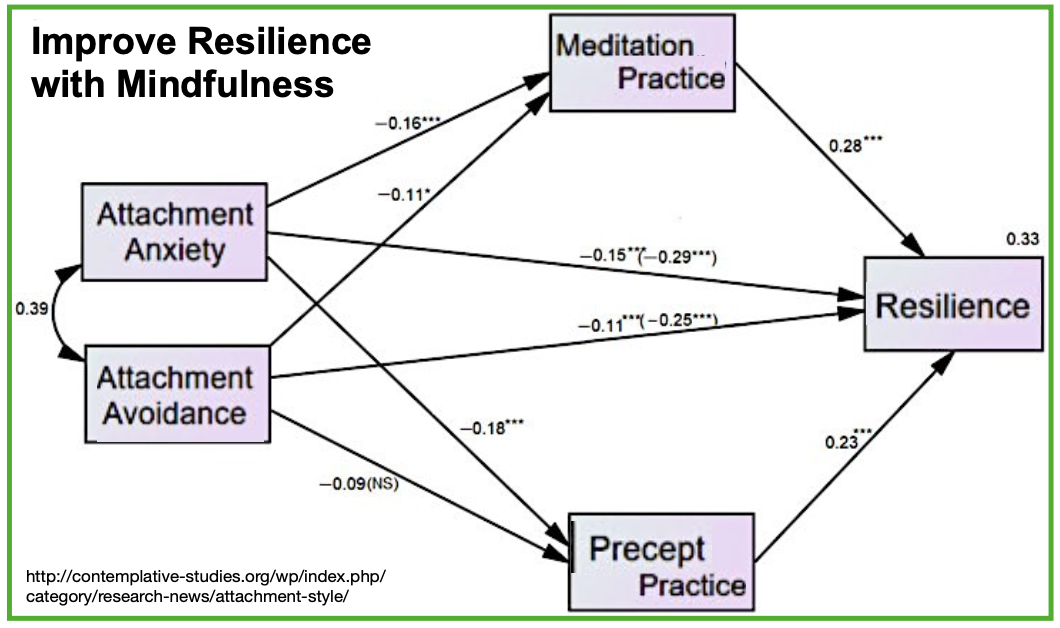
Research has established these effects : they found that the higher the levels of mindfulness —> the higher the levels of resilience. And, resilience is strengthened by being able to form attachments. Combined, they helped to lower the levels of attachment insecurity, anxiety & avoidance.
‘‘
« 
«
NEXT : Attachment & FOOD (#1)
 HEAL & GROW for ACoAs