
 PREVIOUS: Resilience – Spiritual #2
SITE: 3 Visualizations To enhance Resilience, Ultimate Meaning can be gained through activities that meet our soul-needs.
SPIRITUAL RESILIENCE (S>R>) Components CHART ↘︎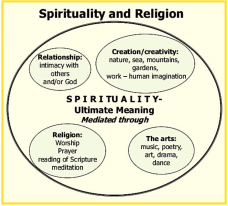
1. Spirituality
2. Humility
3. Emotional Equilibrium
4. STOOL of balance
God’s Timing – requires both Faith & Patience. God gives each person their own spiritual path, so how you travel on it will be different from everyone else. That means that some areas of your growth will seem to improve more easily, while others will take longer, & each of those time frames will be different for everyone else. So there’s no point in comparing!
⚙︎ Knowledge = of Soul & Spirit: we are created as spirit beings with a soul (Hebrew = nefesh), the personality made up of emotions, mind & will, encased in a body. The soul is meant to be ruled by our spirit – our breath of life – & the spirit is to be ruled by THE Spirit (Ruach), the supernatural part of a human that holds the breath of God which powers the entire being.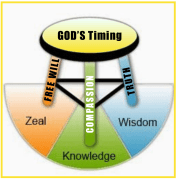
Compassion – as we stay connected to The Spirit, we experience the ability to connect to everyone & everything else
⚙︎ Wisdom = from The Knowledge. That deep understanding then forms a blend of social, emotional & mental processes, transmuting experience into wisdom. It’s an awareness of how things play out over time, providing balance between needs & wants. That gives us the S>R> to tolerate the uncertainties of life, as well as its difficulties
Truth – Wisdom gives us the courage to tell ourself the truth – about how we feel, what we think, want or don’t want. “You’re only as sick as your secrets” means owning up to the flaws we hide from ourselves. But wisdom also knows who, where & how much of it to right-tell to others
⚙︎ Zeal = goal oriented enthusiasm based on The Knowledge – the essence of a robust spiritual life – the opposite of complacency, but not fanaticism. 🪭 Because humans cannot feel enthusiastic & guilty at the same time, S>R> depends on continually working to outgrow behaviors that harm ourself & others (character defects from damage)
Free Will – the philosophical/religious concept of ‘moral liberty’ that says we can freely choose between right & wrong, consciously making decisions not determined by the biology of our brain. However, there are many influences out of our control, (Step 1), that Wisdom teaches us to accept without resistance, leading to S>R>
 5. Compassion
Developing it, both for oneself & for others, is one of the most overlooked aspects of the resilience skill set. While empathy is taking on another person’s perspective, & sharing emotions, compassion is when those feelings & thoughts include the desire to help, but with boundaries (not rescuing)
Research tells us that doing compassionate acts produce ‘good’ emotions
— internally, & in positive relationships (cooperation & collaboration)
— externally, which strengthens resilience.
EXP: In CA (2009) David Breaux asked people to write down their concept of Compassion & got back over 9,500 responses. He’s been using that input to provide spiritual healing to hundreds of people as a ‘street therapist’.
6. Post-trauma growth (P-TG)
Spiritual beliefs & practices provide a sense of purpose to one’s life which helps people know they’re not victims of arbitrary events. It’s a Belief in a Higher Power who is ‘in charge’ – God is on His throne – now & forever. This implies that what happens to us is not arbitrary, but does not eliminate or substitute our right & ability to choose actions & responses, creating balance. The ultimate in post-trauma growth (P-TG) in Biblical terms would be Jesus Christ’s resurrection.
7. Silence
Having Spiritual Resilience is based on a connection to Spirit. And that requires regularly quieting the mind to hear that ‘still small voice’ – our own & that of H.P. We are made up atoms & molecules held together with pure energy that keeps everything in the Universe moving in the right order. We can tap into that by being quiet – every so often.
The brain & the mind are different.
— the brain needs the right chemistry & health to function well
— the mind includes conscious & unconscious awareness – which we have some control over.
What works for some is meditating, for others it’s doing visualizations, & for many it’s praying. The important thing is that some form of quiet time needs to be a regular part of our day. (MORE….)
NEXT: MBTI – Introvert T & F
 HEAL & GROW for ACoAs