
 PREVIOUS: Social
SITE: RESILIENCE 101…. re. thinking
MENTAL RESILIENCE
💛 What we think – how we talk to ourselves – affects the quality of every part of our life. Research show that the #1 roadblock to resilience (R). is not genetics or past difficulties, but negative thinking (as adults). Our 5 senses always take in much more info than the brain can process easily or quickly. So to cope, it creates mental shortcuts (mostly unconscious), to simplify & make sense of it all, especially when under stress. Unfortunately this can backfire, often trapping us into making assumptions & jumping to conclusions.
 When trying to figure out what went wrong, we wonder:
• Who caused the problem? (me / not me)
• How long will it last? (always / not always)
• How much of my life does it affect? (all / not all)
ACAs usually answer these Qs based on childhood damage rather than current or universal reality – even for the slightest frustration or annoyance, like not being able to find something at home, much less the big hurts … we think (from the WIC ) : Who = me , How long = always , How much = all of it!
✥ No wonder we procrastinate & feel hopeless! Note how they fit the ‘Pessimist’ column in ‘Thinking Part 2‘
Instead, being able to handle stressors well is built on positive beliefs – about ourself & the world. Facing difficulties & disappointments takes courage & learning from them, sticking to goals, being creative – to use as future reference – to not get trapped in ‘victim mentality’.
And that starts with our inner dialogue – how kindly, respectfully we talk to ourself.
 What are some of your negative labels that can be changed into legitimate positives? ⬅️
➖ ➖ In a desperate attempt to prevent feeling abandoned, many ACAs will keep chasing the wrong kind of people (unavailable, needy, narcissistic….who can’t connect) & in wrong ways (pushy, people-pleasing, controlling….) . This leads to constant disappointment, so we label ourself ‘stupid, undesirable, ugly, useless…..‘
➕ ➕ While our choice of relationships may need a radical shift, our drive to connect is actually very healthy. So we can legitimately say that, as “chasers”, we’re Courageous, Curious, Determined, Persevering, .…. With this cognitive correction we can travel on a new, positive path – to chase & catch the good things in life that fit our True Self!
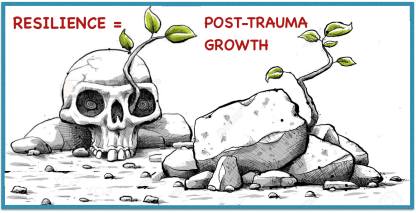
💚 Post-traumatic growth (P-TG)
Traditional psychology equates thriving with R., which is: “reaching the previous level of functioning before a trauma”. However, in Recovery – thriving goes above & beyond R., to find the benefits within each challenge or trauma.
Q: How is it that some people – when they fall down – can get up even with a limp, dust themselves off & keep going, even improve, after a bad experience?
ANS: They have accumulated strong inner resources AND the right kind of external help.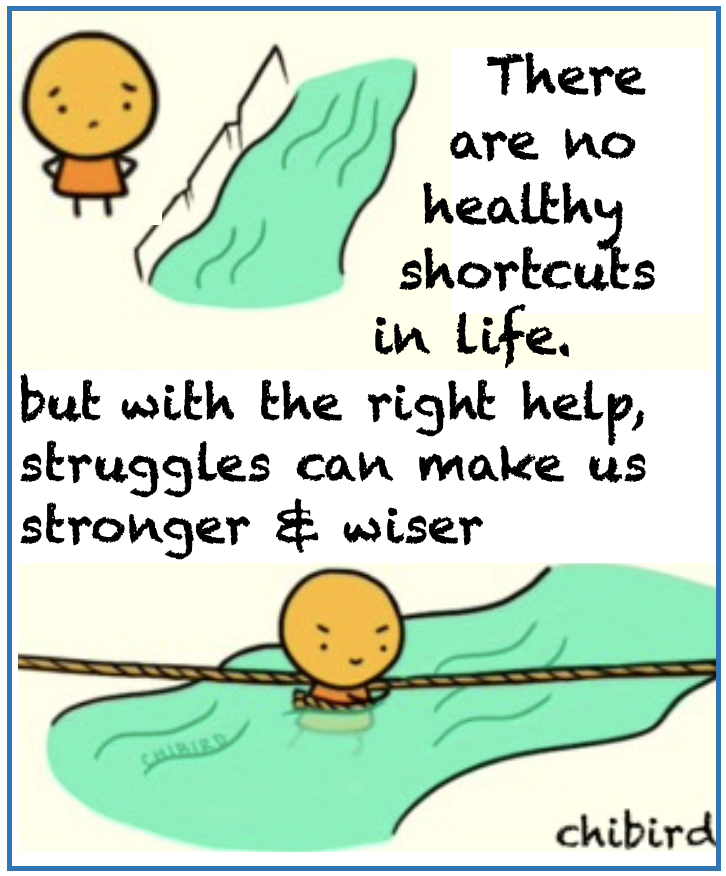
We can find examples of P-TG in ancient spiritual traditions, literature, & philosophy. New studies of R. (‘benefit finding’) verify that after trauma – in spite of all their suffering – some people experience them as valuable life-changing events.
THEY:
• are less triggered & have faster recovery time after future stressors occur
• develop greater inner strength than they thought possible
• find unexpected possibilities open to them, & can tap into creativity
• rise to a new level of functioning, shaken out of routine or limitation
• have a new understanding of the world, & an appreciation for being alive
• have more emotional intimacy with loved ones & gain deeper spirituality
Mentally resilient people will look at any problem or difficulty & ask, ‘What are some possible solutions? , What action is most useful? , What are my available choices?, What do I need to change or improve?…..’
They see painful events as a chance to problem-solve & learn something from them – which builds confidence. They develop the habit of moving thru the pain instead of running from it, preventing bitterness & resentments.

It makes them winners, no matter how limited their real-life options may be, because they’re happier – which is better for them & everyone around them. Realistic optimists don’t do drama. Without being in denial about the level of difficulty they face, they experience every situation in its proper proportion. For winners there are no ‘unbearable’ events. They just build their castles out of every stone life throws at them!
And they say YES to any & all good things that come their way.
NEXT: Resilience – Thinking #2
 HEAL & GROW for ACoAs