MONEY MADNESS – Archetypes (#4)

PREVIOUS : Archetypes – #3

SITE : At The Well+Good Podcast — Listen to the full episode  re. archetypes

REMINDER : See list of all types in Part 1

✥ MONEY-MAKER 
Their top priority in life is making money. They believe that life gets better the more money they make, because money is so important to them, & they take risks to win bigger. Even so, their ability to save is good & get pleasure from the approval & recognition from other people for their financial efforts & successes.

Compulsive Moneymakers are usually on a strong path to achieving financial freedom, but can enter dangerous territory if they start neglecting important relationships , choosing to work on weekends over spending time with loved ones). Being so focused on making money, they miss out on shorter-term fun & later regret not having a more balanced approach to their life.

✥ SAVER
A bit like the money-maker, the compulsive savers see money as a source of personal security & financial stability. They’re afraid of the dangers of impulsive spending, or spending money for pleasure, so they’re expert at hunting down bargains, & pride themself on being very ‘careful”. This makes them excellent savers, but may be saving at the expense of enjoying life.

Savers are the polar opposite of Big Spenders. They’re the budgeting champions, always looking for ways to cut costs & save a little more. Content with what they have they’d rather watch their bank balance grow, being conservative investors, opting for security over high returns.

✥ HOADER  (SAVER Variation)
For this type, money also represents security – they live by the mantra, “save, save, save! . They are terrified of risk & stockpile cash which would probably be better investing – or even spending it.  EXP :  a 94 yr. old man still saving half of his pension.

Money hoarders tend to avoid spending money on gifts, entertainment, or activities that allow them & their loved ones to live a full life, which can cause resentment & tension in relationships.
Statistics suggest that about 1/3 of people who have made withdrawals have simply put the money in savings accounts, even though interest rates are at record lows & their actions could have triggered a tax penalty.

“If you were raised in a family where money was tight, you probably need to feel a lot of security.” These  people may cash in their pensions from fear that the value will drop if they don’t take it out of the market. Everyone needs a rainy day fund, but cash is not a suitable long-term investment  – even more so at a time of rising inflation.” says Claudia Hammond, a psychology lecturer & author of the book “Mind Over Money”.

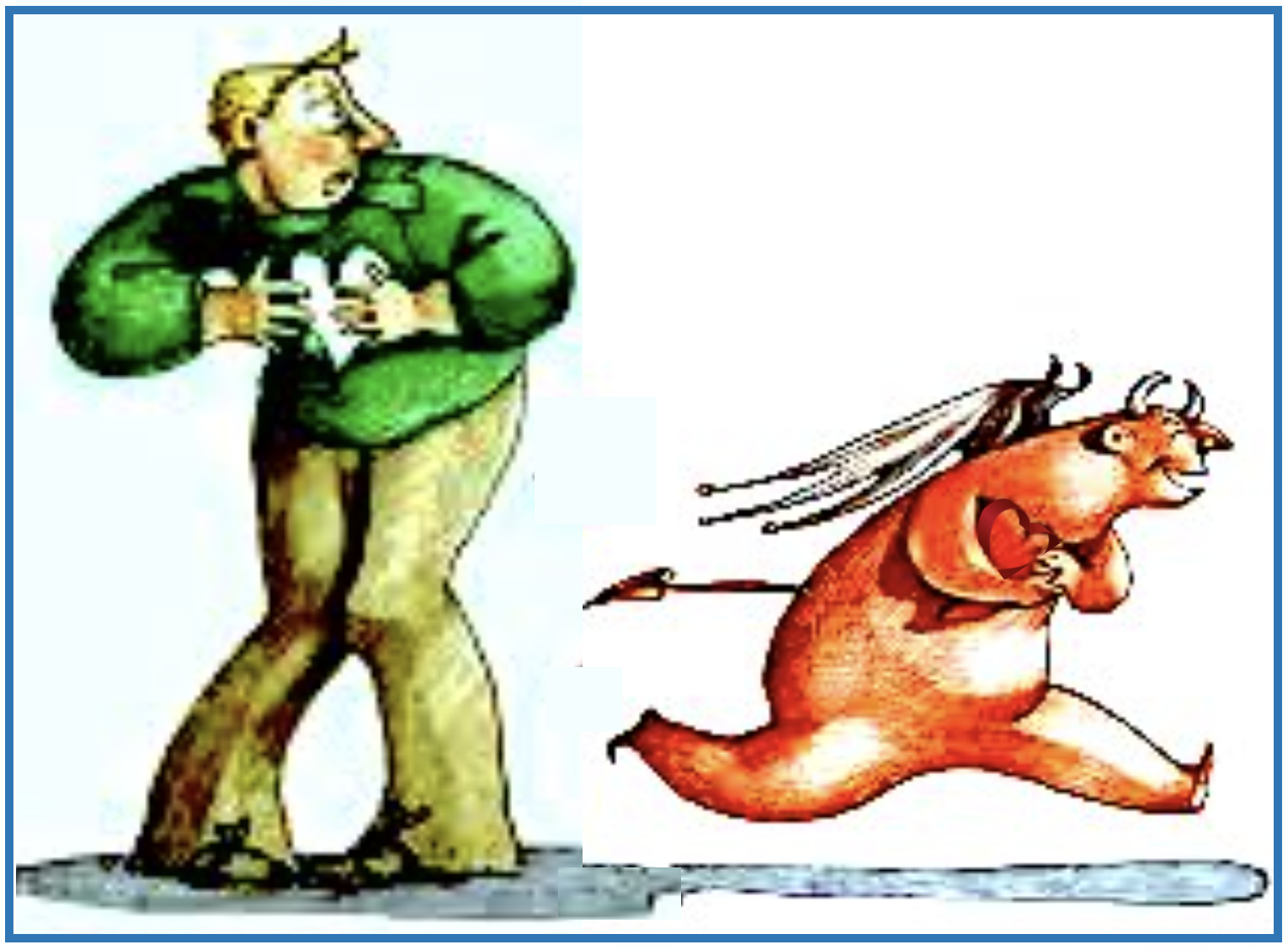
GAMBLER  “Fortune favors the brave, right?”
There are 3 main styles :  Casual – gambling regularly or on occasion for fun,  Professional – gambling for a living (poker masters), Compulsive – gambling addiction, those who can’t stop. (More….)

Overview:  this Financial type is an interesting mix of Money-maker & Compulsive spender, eager to make a lot of money quickly, who believe that taking big risks produce big rewards.  They get a real buzz from the risks that pay off, & feel very depressed when losing. The promise of reward is a pleasure in itself they can quickly get lost in. But sometimes they cant gamble away their money just to escaping boredom.

It’s not unusual for Gamblers to encounter sudden windfalls or devastating losses.  In an extreme case, if their gambling gets out of control they may dip into retirement saving, their children’s college fund …. Saving isn’t really on their agenda — they’re all about making as much money as possible, thriving on the high.
Advice : It would be better to split their money up to have a pot they’re willing to risk & a pot that they’re not. A healthy goal is to become emotionally introspective & practically restrictive about financial risks, to gain balance & security instead of chasing excitement.

NEXT : Archetypes. #5

MONEY MADNESS – Archetype (#3)

PREVIOUS : MM – Archetypes,  #2

IMAGES  ⬆️


SPENDER   –  “Because life is for the living!
Compulsive (big) Spenders are prone to extremes in all areas of life, such as going through phases of intense exercise followed by periods of inactivity & lethargy.  Buying is about personal enjoyment as well as making a statement to others. They’re all about the finer things in life – usually the first to try new trends, travel to new places, and indulge in life’s pleasures. They have a taste for luxury, the latest tech, designer clothes…..

They’ll often over-spend on unnecessary things to make themself feel good, especially when stressed. Then they’ll feel guilty for spending so much – making a big point of  justify splurges to themself & others – ” I’m just taking a break from the stress from work / family obligations…”.  But it can make them vulnerable to sales pitches – lists of services & offers that encourage the adrenalin high, but the rush after purchases is fleeting.

They’re comfortable with debt, & and often take bold investments risks.  Not afraid to use money to enhance their lifestyle, they often prioritizing immediate gratification over long-term savings. They say they do want to save & be able to control over-spending, but don’t know where or how to start.

✥ SOCIAL VALUE Spender (variation)
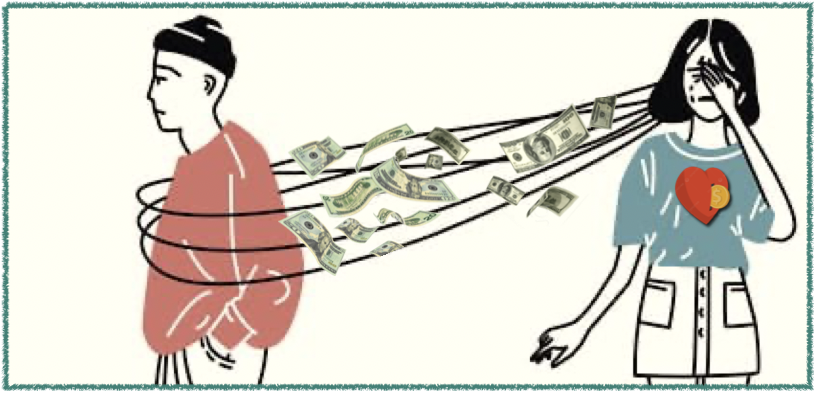
They are the type who feel very happy by shopping – maybe getting a hit of enjoyment from looking at things in a shop, or handing over your card. But spending & buying too much could subconsciously be using money as a proxy for love & affection

It boosts their self-esteem – like when wearing something new for the first time, & people say it looks nice. They may think they’ll be more accepted in a group if you own the right things. Women are more likely to spend on clothes, but men will try to enhance their  own sense of value with a single status symbol, like an expensive car.

Or over-give, to feel loved by blowing the budget for holiday giving, & buying loved ones presents “just because”…. which can easily put them in debt.  At its most extreme, this pattern can resemble alcoholism. Some even have bags of new clothes hidden all over the house so their loved ones cannot see them, the way problem drinkers stash empty bottles.

Cash Splasher  (variation)
They see themselves as generous, but use money to make others think more highly of them.  A close cousin of the social value spender, Splashers are more likely to be males who tends to spend on others very visibly, motivated by a need to be admired. The implication is that “Having a lot of cash makes me popular & I can be loved”
EXP : He’ll declare at the beginning of a restaurant meal that he’s going to cover the bill. Then it’s all about him & how generous he is – entirely different from paying for something quietly.

WORRIER
Financial security is paramount from a fear-based relationship with money, a scarcity mindset that can lead to excessive anxiety about financial stability.

The compulsion to save goes beyond having a solid emergency fund & retirement account. At some point, holding tightly to their money may have kept themself or their family safe, but they continue hoarding long after circumstances have changed.

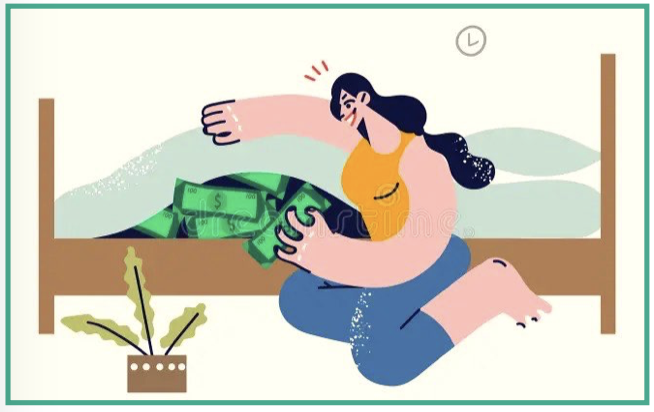
They have trouble differentiate levels of financial threat, struggling with what it means to have & spend money, so end up keeping their savings under the mattress (literally!).
EXP :
buying ice cream feels as stressful as paying for a new roof

They excel at saving money, planning ahead, & working toward a debt-free life. But this financial anxiety makes it hard to enjoy daily life. There’s a strong emphasis on preparing for worst-case scenarios, but it comes at a high cost. While preparing for worst-case scenarios isn’t inherently foolish, it’s important to find a balance.

VARIATIONS : ◆  Doomsday Prepper
◆ Guardian  –
Safety is their highest priority, with the intention of being careful, alert & prudent. But when worry gets the best of them, the anxiety can become intolerable, & to the point they may worry that catastrophe is imminent.

NEXT : MM – Archetypes, #4

MONEY MADNESS – Archetypes (#2)

PREVIOUS : Archetypes, #1

SITE : alvinapp.com – a money buddy that recognizes your spending & saving habits

FOOL
The type is really a combination of the Innocent & the Warrior. Like the former, the Fool is often judgment-impaired & has trouble seeing the truth about things. The main difference is that Fools are relatively fearless & the eternal optimist regardless of circumstances.
However, Fools are like Warriors because they seem to always land on their feet & are not easily defeated. They too set out to conquer the world but are easily distracted, without the Warrior’s discipline.

An adventurer, they get caught up in the enthusiasm of the moment, caring little about details. A gambler by nature, the Fool is always looking for a windfall by taking financial shortcuts. Even though “a fool and his money are soon parted” often comes true, they often win because they’re willing to throw the dice.
The Fool is much more interested in money-making as a sport or recreation than as a serious effort. They very much live in the moment, quite unattached to future outcome.  They may happily give the shirt off their backs – only to realize later that it was their last or it wasn’t their shirt.
However – they do have some remarkable qualities that if mastered – could turn them into a Magician. (more interested in truth than what other people think of them, poking fun at their own ego, seeing the lighter side of dark situations….).

✥ INDIFFERENT -to-Money
This type is the person who feel they doesn’t care about money & rarely think about it, because they feel it’s not important – or it’s too overwhelming. They avoid managing their money & obligations, don’t pay attention to money in or out, relying on others for financial decisions (just the idea of creating a budget makes them nauseous).

They act Blissfully Ignorant, uncomfortable about or avoidant in dealing with money. Their philosophy is that money will sort itself out –  deeply believing “I don’t deserve money when others have less than me, or It’s selfish to want more money than just enough to get by.” They can be charitable, & are good candidates for automating savings & investing.

They think it’s rude to talk about it, feel strongly that money shouldn’t influence important decisions in their life, think that anyone who makes a lot of money are greedy, & in extreme cases believe money is inherently evil. Even so, they can easily be financially unstable, having a hard time meeting their bills, & depend on a partner or spouse to handle finances for them.

✥ INNOCENT  (an INDIFFERENT variation)
They
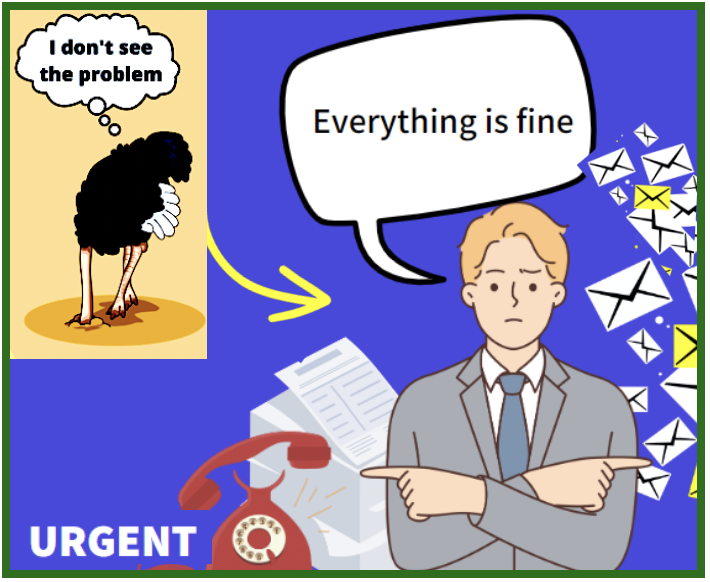
takes the ostrich approach to money matters – often living in denial, burying their heads in the sand so they won’t have to see what is going on around them. They’re easily overwhelmed by financial information & rely heavily on the advice & opinions of others.

Innocents are perhaps the most trusting of all the money archetypes because they do not see people or situations for what they are. They’re like small children in the sense that they have not yet learned to judge or discern other’s motives or behavior. While this trait can be very endearing, it is also precarious for an adult trying to cope in the real world.

✥ OSTRICH – (another variation)
Anxiety drives this behavior too – making no decision always feels easier than the possibility of making the wrong decision.  This is someone who would rather bury their head in the sand than organize their finances. Piles of mail lie unopened on the doormat, & seldom open their bank statements.

Older birds may have money, but consistently fail to make long-term investment decisions.  A more sophisticated version is the wealthy investor who hands their finances to an adviser / manager but never checks what’s being done with the money, or the investment charges eating into their returns.

Mr Evensky states : “At one level, you have the client who walks in with brown bags full of papers & statements but don’t understand what they mean. More commonly, there are those who have a single account with a brokerage firm but just have no idea about what it is being invested in, or why.” 

NEXT : MM – Archetypes, #3

MONEY MADNESS – Archetypes (#1)

PREVIOUS : MM  – DEBT

BOOK:  “Happy Money: The Japanese Art of Making Peace with Your Money”


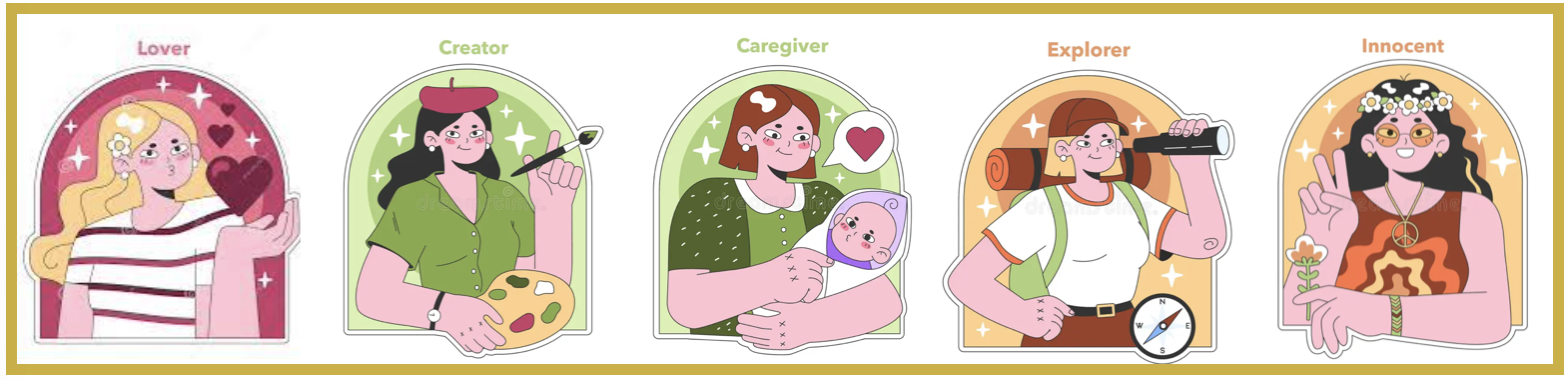
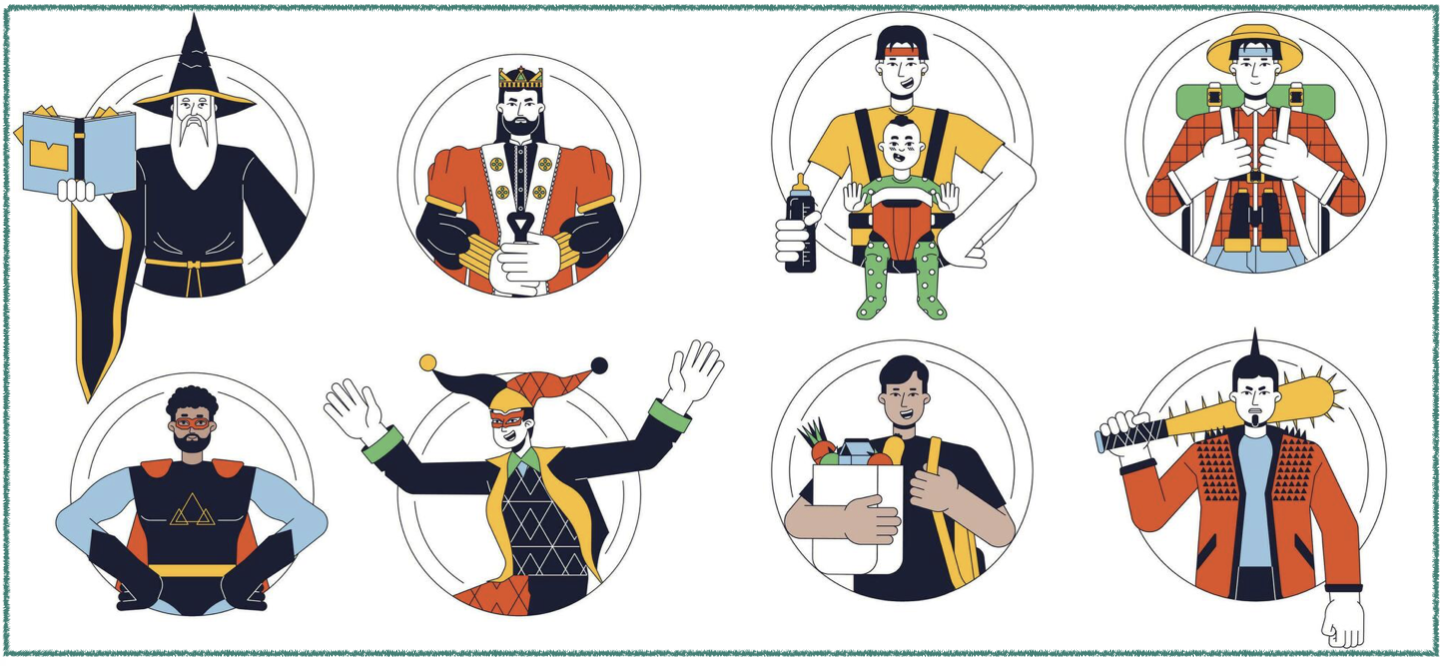
Money ARCHETYPES
are innate patterns that influence your thoughts, feelings, behaviors, & actions about money.  These unconscious forces create success or sabotage, & can impact your income & life on so many levels.

Many writers have tried to distinguish between “money types”. There is even an online magazine (http://womenmoneyandsuccessmag.com/), &  literature on money in relationships, as money can be a major cause of friction because of what it represents. 

✥ MAGICIAN
This is the ideal money type. They embrace the inner life as the place of spiritual wealth and the outer life as the expression of enlightenment in the material world & so are infinitely connected. Using new & ever-changing dynamics both in the material world & world of the Spirit, Magicians know how to transform and manifest their own financial reality.

The Magician is fully awake & aware of themself & the world around them. They’re armed with the knowledge of the past, made peace with their personal history, & understands that their source of power exists within in his ability to see and live the truth of who he is.
Magicians know the source of power comes from their ability to tap into their Higher Power. With faith, love & patience, they simply wait in certainty,  knowing that all our needs are met all the time.

They are confident about managing money, strongly believing in their ability to create wealth through various ventures or creative endeavors. Finding innovative ways to generate abundance, they often have multiple streams of income & can adapt quickly to changing economic landscapes.

The archetype currently active in our life is the place we need to grow from – by becoming aware of the thoughts & actions that prevent us from having a positive relationship with money. When we’re willing to claim our own power, we can be the Magician.  

✥ ARTIST / CREATOR
NEGATIVE :  This type is on a spiritual or artistic path, but many of them feel that money is bad or not spiritual (‘the root all evil….:‘). They often find it hard living in the material world, with a conflicted love/hate relationship with money. They love it for the freedom it buys, but have little or no desire to actually participate in it practically.

They most fear not being true to themself, over-identifying with their inner feelings, even despising those who live in the ‘real’ world. Their negative beliefs about commercialism block the very freedom they so desire. So they constantly struggle with financial survival – not for lack talent or ambition, but because they’re stuck in a mind set that keeps them from manifest money.

POSITIVE: Creators/Artists who work to integrate the spiritual with the material reality can end their struggles. Since they spend much of their time paying attention to their inner journeys & creative potential, they already have many of the qualities to become Magicians. They need to accept the world they lives in, embracing it in all its dimensions.

✥ CONNECTOR
They keep the world spinning and bring everyone together with kindness and love.   The most important thing to this type is connecting with others, so they use money to form & maintain their community.  They’re the  sometimes-counselor, cheerleader, & problem solver who freely gives away their ideas & advice.
They struggles to charge ANYONE because everyone they meet becomes their new best friend. Of course this makes them sitting ducks for co-dependent users who take advantage. Learning to have boundaries become an imperative survival skill.

However, their ability to bring people & solutions together is the key to their business, but resist it & worry about being inauthentic. They care more about heart-to-heart interactions than about making money, but creating long-term relationships can actually generate income.

Ironically, their faith & optimism that money will always be available keep them from worrying about it. They could live off heart-shaped mung beans & probably find someone to share it with. They tell themselves it will work out, & it often does, magically at the last minute, having found that connections such as networking can benefit them financially.

NEXT: Archetypes , #2

MONEY MADNESS – Stages of Wealth

PREVIOUS : MM – Debt & Mental Health


STAGES of Financial Prosperity

♦️ SURVIVAL = People in this mode :
☔︎ Carry balances on their credit cards
☔︎ Face threats of collections & service shut-down
☔︎ Feel regret & remorse (shame) about past financial decisions
☔︎ Feel powerless to & resigned about catching up
☔︎ Owe back taxes / credit cards….
☔︎ Obsess, yet avoid dealing with their money
☔︎ Spend a lot of energy moving money around (“$F Coach”)

♦️ Stability = At this level it’s not having to worry about paying bills because you know you’ll have the money. Being debt-free with savings for future goals, including enough to cover emergencies (60%) . The other 40% of Americans struggle to cover basic needs.
You  have :
💚 enough understanding of monthly / annual earning & spending
💚 insurance: health, home, car, life, long-term care
💚 6 months of living expenses in safety net savings account
💚 regular contributions to retirement  (Chart)

Traps to Avoid :
☁︎ tunnel vision, only focusing on monthly payments
☁︎ ignore building an emergency fund. Make sure your deductibles are covered.
Indicators of Success :
♥︎ develop the habit of saving money, & eradicate credit card debt
♥︎ don’t be afraid to cut back, consolidate expenses, & be savvy about how you spend. Even if starting small, these habits will take you to the next level & give peace of mind.

♦️ STRATEGY = Only 16% of Americans save more than 15% of their income each year.  Plan beyond simple cash reserves – make sure your money is working for you with investment like Roth IRAs & 401(K)s.
Traps to Avoid – NOT:
☁︎ have saving of at least 15% of your income
☁︎ regularly saving for retirement – consider where your money is housed & take advantage of compounding interest
Indicators of Success :
♥︎ saving 20-25% toward your future goals
♥︎ automating your financial life as much as possible
♥︎ tracking your net worth each year.

♦️ FREEDOM = enough positive cash flow to generate passive income to sustain your current lifestyle.
It’s living within your means, ensuring money is spent on things you need (food, shelter, vacations, or relaxation). Not about being rich – the focus is on having enough residual income to spend precious time doing what you love.
Traps to Avoid :
☁︎ about retiring – be honest about the “why” behind your work/career, & know what you’re retiring to
☁︎ don’t assume your retirement savings are enough to support the lifestyle you picture. Make sure your math is right.
Indicators of Success – YOU :
♥︎ know your “army of dollar bills” has worked hard enough to cover cash flow needs
♥︎ can live the American dream of being your own boss with more flexibility
♥︎ should have a net worth double the number in the formula (age x income / 10)  from The Millionaire Next Door formula

♦️ SECURITY  – enough investments or assets to generate passive income to cover basic expenses. It’s challenging  – besides making a thorough plan, you must also be persistent until you achieve  it.
Traps to Avoid:
☁︎ overindulging, causing you to slip into financial problems, & takes the novelty out of special purchases
☁︎ watch out for lifestyle creep, & not living within your means Indicators of Success :
♥︎ able to spend money on small, unnecessary expenses without worrying, like Starbucks most mornings
♥︎ realize you have margin for some of your bucket list items

♦️ WEALTH = an abundance of valuable possessions or money
YOU :
💚 ensure that everyone in your family, across generations, is on the same page. Re. family money, you have some personal finance accounting skills, OR
💚 hand over taxes to a strategist or beloved/ successful CPA
💚 have a will, a living will & a medical power of attorney
💚 hire a certified financial planner, work with an investment advisor
💚 know the details of your entire estate, including inheritance
💚 strategize for periodic income: bonuses, commission, gifts, reimbursements & tax refunds
💚 understand your parents’ wills & are clear about their end-of-life wishes

♦️ AFFLUENCE = leveraging ones wealth, using money to grow more.
You have access to services, savings, investments, tax & business loopholes, & outright wealth accumulation that other people don’t.  AND you have an extraordinary opportunity & responsibility to channel this flow of energy for good.

The danger is excess – unhealthy or unconscious relationship with money from outsourcing, overdoing & overwhelm.
Some pitfall :
☁︎ entitlement that harms personal & professional relationships
☁︎ loss of contact with simple, natural, connected & meaningful experiences
☁︎ severe loneliness, not part of ‘normal people’, isolation
☁︎ too much stuff, too many houses….. that can’t be used

NEXT : MM – Archetypes, #1

MONEY MADNESS – DEBT & Mental Health

PREVIOUS : MM – Love Dealers

SITE : “Money and Mental Health Professional Network“, UK


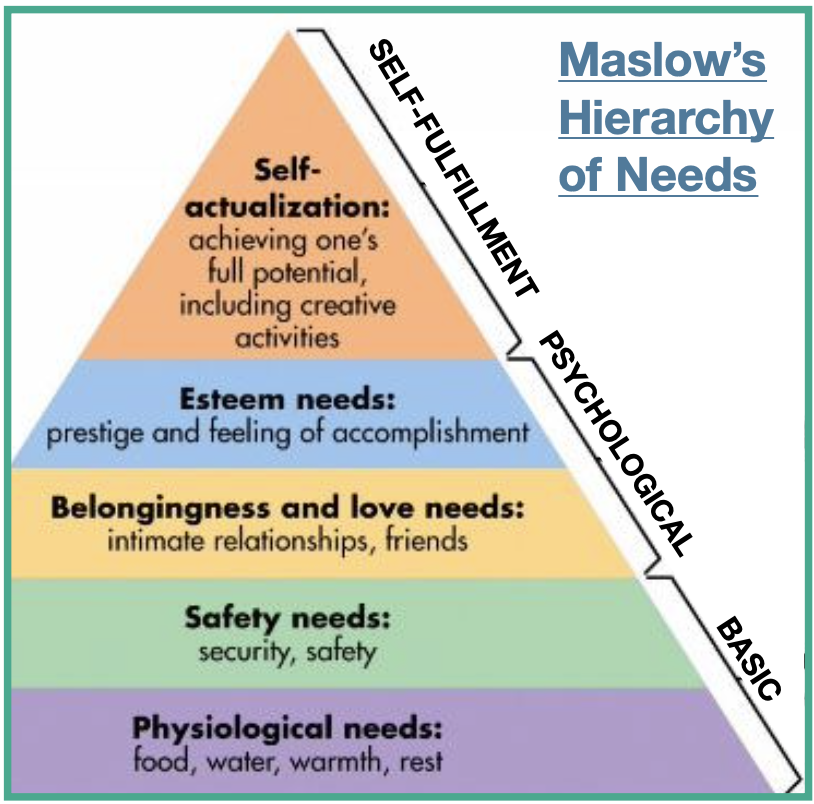
DEBT & MASLOW’s Pyramid  –

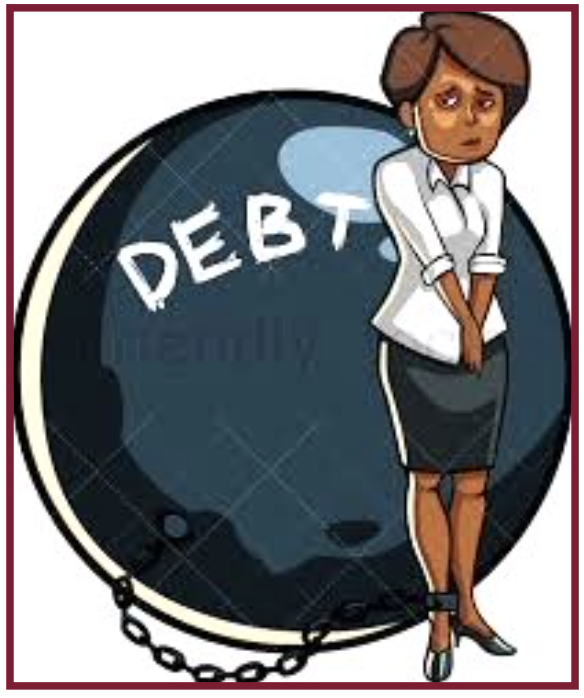
DEBT flips the hierarchy upside-down. When you introduce debt, things get ugly. People often live beyond their means because theyre looking to satisfy one of their higher needs. The engine of their financial life, their ability to earn, hasn’t increased but they’ve already borrowed against their future self.

People often live beyond their means because they are looking to satisfy one of their higher needs. The engine of their financial life, their ability to earn, hasn’t increased but they’ve already borrowed against their future self.  

We all want prestige, whether we admit it or not. ( buy a $15,000 handbag), but If you put that purchase on a credit card (and carry a balance), it becomes a big financial problem.

Functionally, debt allows you to borrow money from your future self. But your future self doesn’t get interest payments, he or she just gets to use whatever you’re buying a little bit earlier.

HOWEVER – When you use it for an investment in your earning potential, like education, you borrow against the future but you also increase your earning potential. In that situation, debt can be a valuable tool.

Mental health & money problems are intricately linked
UK STUDY
Our research shows that in England alone over 1.5 million people are experiencing both problem debt and mental health problems.
Common symptoms like memory problems, difficulties concentrating & impaired problem-solving often lead to financial difficulty, which can also make it harder to successfully access & use debt advice. (Providers guidelines)

Financial difficulty affects mental health
Money troubles are stressful, often causing anxiety & drastically reduce recovery rates for common mental health conditions.
EXP : People with depression along with PD are 4.2x more likely to still have depression 18 months after the survey

☁ People with problem debt (PD) are significantly more likely to experience mental health problems (MHP)
— Half (46%) of people in PD also have a MHP
— 86% of respondents to a ‘Money and Mental Health’ survey of nearly 5,500 people – with MHP – said that their financial situation had made their money problems worse
AND
☁ People with MHP are also more likely to have PD , almost 1-in -5 (18%)  & 3.5x more likely than people without MHP (5%).

— 72% of respondents to the “Money and Mental Health” survey said that their MHP had made their financial situation worse.

☁ People with problem debt
— are 3x more likely to have thought about suicide in the past year. Because of severe debt more than 100,000 people in England attempt suicide each year.  However, there is rarely only a single factor – rather, a range of social issues, life events, cognitive & personality factors are combined.

♢YOUNG – 63% of 18-34 year olds are anxious about their finances, & younger people with MHP are more likely to report feeling anxious about their financial situation. 

♢ MIDDLE – in contrast : 54% of 35-54 year olds, and 44% aged 55-65 have both issues

 ♢ OLDER people with MHP tend to be more reticent to disclose their condition to essential services providers – & so are missing out on extra support.

Stigma around debt can mean that people struggle to ask for help & can become isolated. The impact on people’s mental health can be particularly severe if they resort to cutting back on essentials, such as heating & food, or if creditors are aggressive or insensitive when collecting debts. 

☁ Ethnic MINORITIES  — The combination of having a MHP & being from a minority group can present increased barriers to having a good income, & therefore good financial health. They are significantly more likely to live in a household that is behind on bills .

UK : This ranges from 9% of White people <———> to 33% of Black, Black British, Caribbean or African people. Minorities can also face barriers to accessing support for their mental & financial health, & in some cases experience worse outcomes – than White counterparts – when they do receive help.
SITE : US -” Causes of Disproportionate Poverty among Ethnic Minorities

NEXT : MM – Archetypes #1

MONEY MADNESS – AUTONOMY Worshipers (#2)

PREVIOUS : Autonomy Worshipers, #1

SITE : ” Pathological Demand Avoidance IS Pervasive Desire for Autonomy

AW = Autonomy Worshipers
LB = Love Dealers (in 6/07)
SC = Security Collectors
PG = Power Grabbers

1. Autonomy Worshipers (cont)
a. Freedom Buyers

b. Freedom Fighters – this group sees money as an unnecessary evil – understanding that the hunger for greed & power is why some people actively manipulate & dominate others, restricting their freedom. Some AW turn their back on money & give-the-finger to the economic system – refusing to compete, while others actively rebel & try to destroy the system. Some express their aggression passively – by defying convention, with a lifestyle that scorns everything that money represents.

Others refuse to be in the rat-race from religious convictions, or feel guilty about their family’s affluence, or because they’re deeply satisfied  with the work they’ve chosen. Yet others are frustrate by family hypocrisy – the discrepancy between the high ideals touted by idealistic careers (doctors, clergy, lawyers, college profs….) vs. the selfish &/or immoral life their parents’ actually lead.

◆ Underlying issue – Their great fear is dependency but repress & deny an unconscious desire to dominate. EXP : Some entertainers who’ve made their fortunes appealing to the counter-culture – built an empire with their own ‘assistant / slaves’.

Even more than Buyers, Fighters feel alienated from mainstream society. They see the”establishment” in-group as enslaving & money-worshiping, & don’t feel it’s worth participating or being accepted. This can be a rationalization to hide feeling inadequate to qualify or compete

◆ Payoff – Dedication to a cause can provide alienated (young) people an identity & give their life meaning. They may feel shy & socially awkward, & sharing a common enemy could provide emotional reassurance & support. So rather than money & social acceptability, rewards could be camaraderie & companionship.

◆ Cost – Freedom fighting is mainly for the young & rarely a life-long passion. They’ve confused intense emotions with idealism – which ironically is a defense against feelings. Most become more cynical & conservative with age – deeply disillusioned by the impossibility of changing the world. They often end up angry, frustrated & bitter, because money was never the root of their problems.

♥︎ Families of FF also pay a high price, sometimes involved with expensive drawn-out legal battles to get their children out of cults which enslaved rather than provided real freedom from mainstream society.

In this category –  technocrats (believe in the elimination of $), freedom fighters, revolutionary activists, communal living advocates, members of the drug culture….

❇️ UNDERSTANDING Autonomy Worshipers
One consistent theme in their background is that dependency on others people & the world in early life was experienced as threatening rather than comforting or a safe way to connect.

Like love, security & power, freedom – in proper perspective – is a virtue.  It’s naturally expected that young people go thru a phase of “separation & individuation” –  a kind of rebellion to find their own identity.
In the best scenario – over ones lifetime – a person can go from needing to be independent (of family & established culture) to developing the ability to be inter-dependent without losing that hard won identity.

However, for those who insist with Frank that “I did it MY WAY” there are signs that the compulsion to demand freedom at any cost is an expression of emotional & social anarchy.
EXPs : 🔸 FL generally have a positive attitude
🔹Anarchists are angry with a chip on their shoulder

🔸 Freedom lovers (FL) resent any justice to themself or others 🔹Anarchists rebel just for the sake of it (thumbing their nose)

🔸 FL accept a limited amount of obligation good-naturedly if they can’t avoid it
🔹Anarchists rebel against any interference with their complete autonomy (elements of narcissism!)

More than anything, freedom represents the American ideal. But Autonomy Worshipers are out of touch with basis of their obsession – the inner child’s terror of being trapped . This personal blindness corrupts the concept by confusing freedom with license (selfishness), while ignoring the rights & freedoms of others.

NEXT : Security Collectors, #1

MONEY MADNESS – AUTONOMY Worshipers (#1)

PREVIOUS : Psychological Effects

AW = Autonomy
Worshiper
LB = Love Dealers (in 6/07)
SC = Security
Collectors
PG = Power Grabbers

NOTES :
🔺 The variability of Money MEANINGS
Although Goldberg & Lewis focused on the following 4 dysfunctional ways people deal with money, others could be added. Also, for some people, money can have more than one meaning, such as being both a Love Buyer & a Security Collector.
For others, as they age (mature ?) their way of experiencing & using money can change, so that a Security Collector may ‘evolve’ into a Power Grabber, but eventually end up an Autonomy Worshiper.

Whatever confusion or inconsistencies we may have in our dealings with money – one thing is sure : Like all complex patterns, money attitudes & behaviors are learned – because they satisfy a person’s specific psychological & emotional needs.
Positive & negative childhood experiences, culture & religious influences & individual temperament, combine to form our money attitudes. As adults, if our dealings with money are distorted & one-dimensional, they can be modified, even unlearned, so it can become a benefit to ourself & those around us.

🔻 The high price of HIDING.  Few people deal openly or easily with the topic of money, which is not unique to any one culture to time period. An old proverb from India states:  “Never make known one’s wealth, one’s remedies, one’s lover, where one has hidden money, the good works one has done, the insults one has received, nor the debts one has contacted.”

The inability to discuss money can contribute to a variety of psychological ills, generating such painful emotions & actions as depression, hate, paranoia & self-destruction. Whether in families, in business partnerships or intimate relationships –  the hurt feelings, resentment, disappointments, anger, frustration, suspicion – might have been avoided if money were not considered a taboo subject heavy with guilt & anxiety.

Money is one of the strongest motivators of human behavior, yet because it still has such a negative meaning to most people, they deny how intensely it affects their life. And so they suffer the consequences.
Modified from : “MONEY MADNESS” by Goldberg & Lewis.

Type 1. AUTONOMY WORSHIPERS  (AW)
Their main reason for earning money is to feel free & be free. The goal is to get away from the daily routine & restrictions of a paid job. Their burning desire is to live exactly as they want, so having money allows escape from the orders & commands coming from others causing the AW anger & resentment, buying time to pursue their whims & interest.

They have a live-&-let-live attitude toward others as well, & are angry when anyone tries to restrict them. They see Power Grabbers as potential enemies, Security Collectors as  ‘slaves” who willing give up their independence for money, & Love Buyers as pathetic.

AW fall into 2 groups
a. Freedom Buyers – those who see $$ as a way to escape an intolerable life of servitude.. They accept it a necessary evil, its accumulation a passport to freedom. The more one can accumulate, the less dependent they are on the structure & limitations of a job & the dictates of other people. With more money the less time they have to work, giving more opportunities to pursue their  interests. And it provides the clout to protect them from being pushed around.

◆ Underlying issue – an intense need to not be dependent – which is what they desperately want, perhaps unconsciously, but are use all their energy to deny & precess the wish.

◆ Payoff – attractive & charming, they’re interesting people socially because they have such unconventional lives, doing things others are too timid or rigid to try.

◆ Cost – they can turn into freedom gamblers, taking big risks to get money fast, & can end up with big losses. Others experience them as irresponsible & unreliable, causing partners & other associates pain & frustration. The price is constant dependency hunger, & with age isolation & loneliness.

In this category – Many writers, painters, poets, musicians & others in the arts

NEXT : MM – Autonomy Worshipers , #2

MONEY MADNESS – Psychological Effects

PREVIOUS : MM – Emotional Effects

SITE : The Psychology of Money….


✳️ MEANING of money (see Intro #3)
Personal VALUE 
Goldberg & Lewis (1978) suggest that money has essentially 4 emotion connotations, causing distortions in behavior :
☀︎ Freedom  – a necessity to acquire what you want
☀︎ Love  – an expression of, & substitute for affection
☀︎ Power – to gain importance, dominance & control
☀︎ Security – a primary way of staving off anxiety

Trouble is brewing when money is (mis)used to buy love, security, power, or when getting it is a goal rather than a reward.
EXP: Those who associated money with security tended to be hoarders, those who associated money with generosity tended to use money emotionally & compensatorially…..

BACKGROUND – There is research interest in “money genograms”, the social & emotional values attached to money originating in childhood family relations (Mumford and Weeks 2003). Childhood attitudes about money are usually shaped by parents’ financial habits as well as the family’s social environment – associated with stress or abundance.
Also, previous generations’ thoughts & beliefs about finances have influence, which may have been taught &/or observed by the child.  (MORE….)
(AI Overview – type  “Childhood attitudes about money” in google)

Based on our early life, our “money stories” are ingrained in the subconscious mind, so even though they are a major influence on how we feel about money, chances are we’re not even aware of them & how intensely they affects our adult financial behaviors.

DYSFUNCTION – Psychotherapists have noted highly irrational behavior of some people regarding their use of money, called “money neuroses”, with extreme kinds of worries. They state that money beliefs & behaviors are not isolated psychic phenomena but integral to the person as a whole, & a measure of underlying pathology. EXP : people who withhold money may also tend to withhold praise, affection or information from others.

Forman (1987) noted that of all the neuroses, the “money neurosis” is most widespread. Like all neurotic processes it involves fear & anxiety connected to unresolved conflict – expressed as maladaptive, self-defeating, irrational money behavior. Factor analysis work provided evidence of the four factors listed above – Freedom, Love, Power & Security – reflecting these specific money pathologies also identified by other researchers working in the area.

He argued that too many people have a simple equation like “money=love”, so the amount of money you spend on a person is proportional to the amount of love you have for them.
To help people identify their neurosis, Forman developed a general money sanity scale, a 20-item questionnaire, ranging  —> from 1 (strongly disagree) to 5 (strongly agree) <—,  assessing a person’s money sanity or the extent to which their attitudes to, & use of money is problematic.  (sample of Questions)

NOTE : Nearly all this work is based on case studies of middle-class people.  This was a cross-sectional study of a large European population group measured at a time of economic difficulty. Socio-economic & cultural factors could have influenced their results. FROM a UK study (2014).

High scores imply “insanity” or the presence of maladaptive money beliefs & behaviors. The dimensions do reflect the specific money “pathologies” identified by various different researchers working in the area. The scale gives a picture of many people are obsessed by money, thinking about it all the time, & of money being a powerful source of mainly negative emotions.
(CHART : Correlations between money attitude & money sanity factors)

EXP : re. Worried Spenders –  while some of the 20 items of the money insanity scale showed floor** effects (around 5 % or less of the sample said “yes” to the item),  a large number of studies endorse this particular money madness.
Over 40 % of respondents said they worried about spending money all the time (item 1), & half agreed they resent paying the full price in shops.  Nearly half – that they were flooded with guilt & anxiety when asking for money, over 1/3  felt anxious in spending money on themself, & 1/3 thought about money all the time.
** In psychological research,”floor effects = too hard” & “ceiling effects = too easy” refer to a large proportion of participants scoring at the absolutely lowest OR highest possible value on a scale.

NEXT : MM – Autonomy Worshipers, #1

MONEY MADNESS – EMOTIONAL Effects

PREVIOUS : Psychological Effects, #1


💲   💲   💲
While we like to think that our spending habits are rational & logical, the truth is that our emotions & psychology play a huge role in how we handle our finances.  Envy, fear, greed, guilt & regret can cloud our judgment, often leading to decisions that are self-defeating. It’s much better for us emotionally & financially – when we deal with emotions & negative beliefs head-on. Identifying & facing harmful patterns starts with addressing Family & Childhood experiences, since our unconscious rules most of our emotions.

POSITIVE emotions
When you have enough money to cover needs and wants, you feel independent & secure, with the ability to pursue goals, allow us to experience happiness & contentment.

NEGATIVE effects:
☁︎ Anxiety –
having experienced financial abuse in the past can affect how you feel about money now. (Narc mistreatment)
☁︎ Depression – debts, job loss, illness, divorce…. can lead to depression
☁︎ Envy & comparison of one’s financial situation to others can lead to feelings of envy and dissatisfaction

☁︎ Financial anxiety – about not having enough money, especially for basics  Not wanting to look at your bank balance or asking for info or help
☁︎ Fear of “abandonment”- money problems create tension & conflict in relationships
☁︎ Guilt – for not being able to provide for loved ones. Feel undeserving of a windfall,  &/or if the money came at the expense of others. Guilt for spending money even if you know you can afford it, from having more wealth than others

☁︎ High – a temporary high (dopamine) after making a purchase, which can mask underlying stress
☁︎ Hope & optimism –  unrealistic over-optimism can lead to over-committing oneself financially

☁︎ Loss of perspective: focusing heavily on gaining & maintaining wealth can cause a disconnect from other important aspects of life
☁︎ Overspending & impulsive behavior can occur when money is easily available
☁︎ Shame – money troubles can lead to feeling inadequate, negatively impact self-esteem. (MORE….)

2 PSYCHOLOGICAL reactions
LOSS AVERSION is one of the most powerful psychological forces in any part of our life, & definitely when it comes to money. It’s when we feel the pain of losing something/ someone – more than the pleasure of getting & holding it.
EXP : imagine being offered a gamble = you can either take a 50/50 chance of winning Rs.1,000 or losing Rs.500. Most people would pass on the gamble, because the thought of losing Rs.500 is just too distressing.

Loss aversion can also affect our spending habits. We might hold onto things we don’t need or use because we don’t want to feel like we’ve wasted the money spent on them. Or we might be hesitant to invest in something that could potentially earn us more money, being afraid of losing what we already have.

SOCIAL COMPARISON  is another psychological force. It’s when we constantly compare ourselves to others, basing our own happiness & success on how we measure up (“compare & despair”). When it comes to money, this can lead to feeling inadequate or envious when we see others with more than we have. It can also drive us to spend more than we can afford, trying to keep up with other people.

CORRECTIONS
1. Take a step back to separate your emotions from your money. Ask what a coveted item will bring to your life – rather than how much it  costs. EXP : instead of buying a new car because it’s the latest model, consider how it will feel to have more reliable transportation

2. Focus on the long-term, rather than immediate gratification. It’s easy to get caught up in the moment & lose sight of positive goals. Remind yourself of ultimate financial objectives to make better spending choices

3. Work at being mindful of your spending habits. Be honest about what you really need vs. what you’re just buying to make yourself feel better. This can hard but important

Money habits are deeply influenced by our psychology, but understanding emotional forces can help us make better spending decisions. To achieving our financial goals be be honest with yourself, mindful of your feelings & attitudes, and keep your focus on the long-term.  (FatakPay)

NEXT : MM  – Psychological Effects #3