
 PREVIOUS : GRIEF & the Body, #1
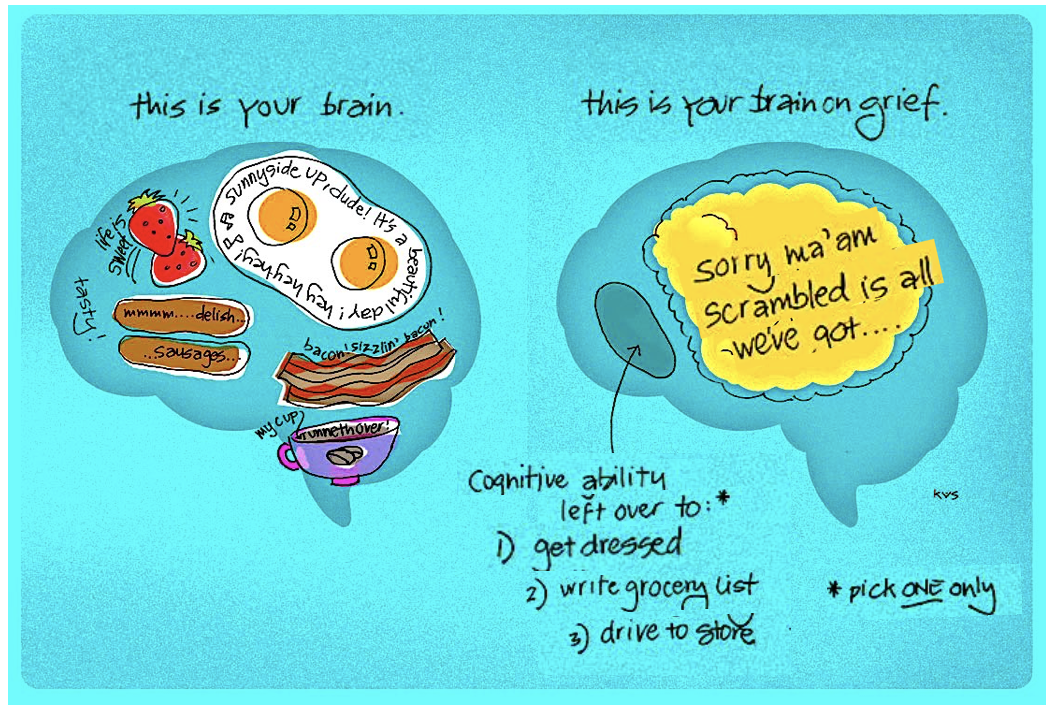
ARTWORK ⬆️ from Melanie, 2017
SITEs : “Loss of (precious) Objects”
“Grieving Lost Objects: The Copper Kettle”
💔 IMP to remember – while most people think of grief only in terms of death & dying, we also experience loss – & therefore grief – when confronted with other kinds of endings (‘Secondary‘). There is a lifetime of grieving to be done by us who are living, about current & historical childhood trauma & family abuse, as indicated in the post on Ancestral Grief.
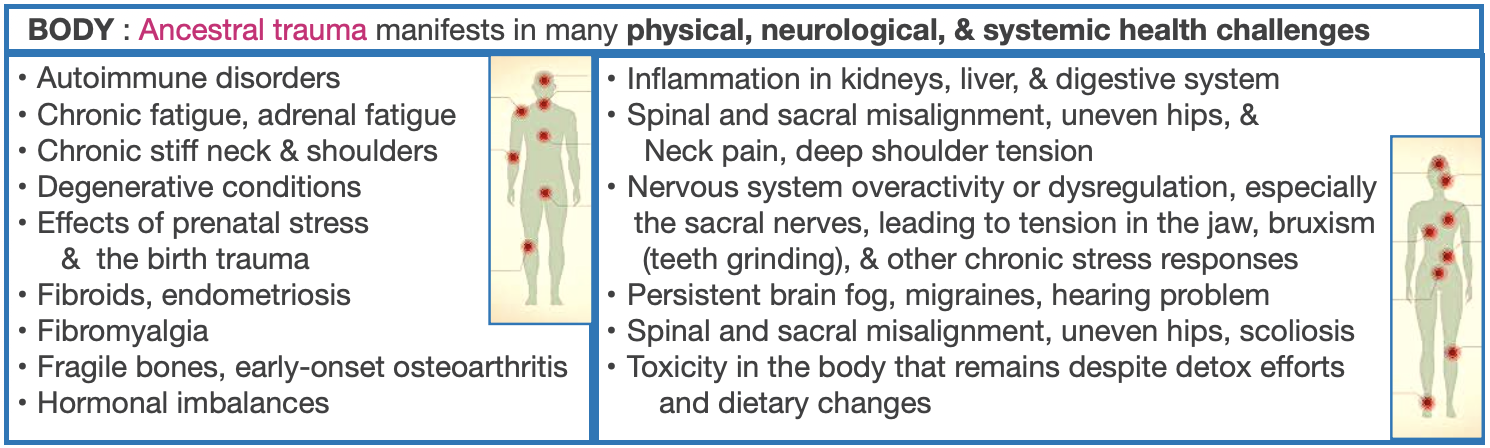
EXP: Grieving the loss of time to our PMES damage. This chart identifies some of the symptoms that need ‘tending & mending’ :
«
«.
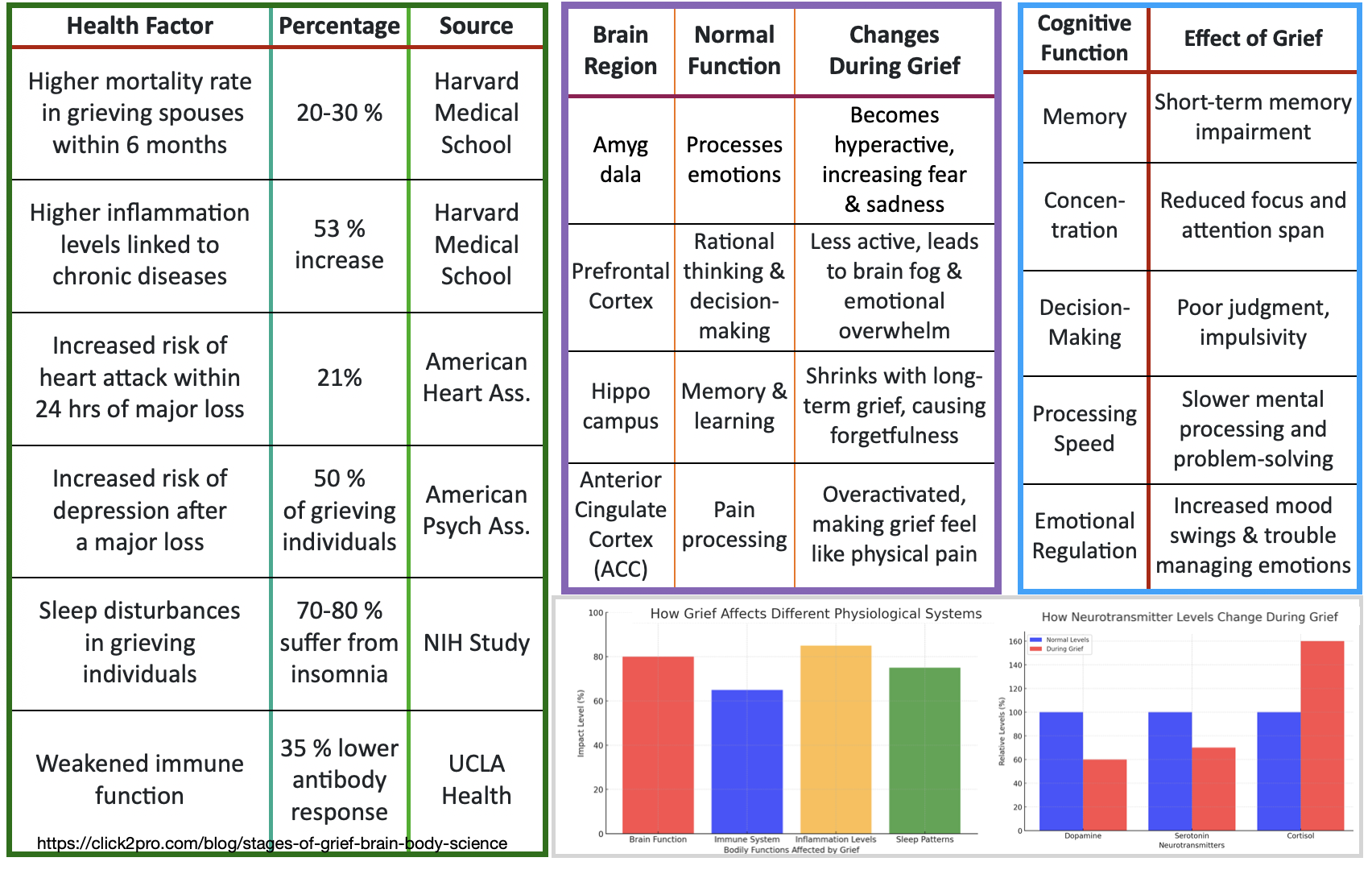
❇️ After reading “Brain – #1” you may worry : Can grief permanently damage my brain?
Though grief does have major effects on the brain, the worst changes are temporary for most people. The brain is resilient & good at healing itself. Because of built in redundancy it will rebalance itself over time with proper care, even after very painful experiences. Science reinforces wisdom-knowledge that with compassionate support to restore confidence AND enough time to process, you will be able to adapt to the ‘new norm’.
*** We know this is possible because of all the people who persistently work at Recovery in therapy & 12 Step Programs, along with a deeply held Spiritual connection – who are slowly undoing much of their old & more recent traumas.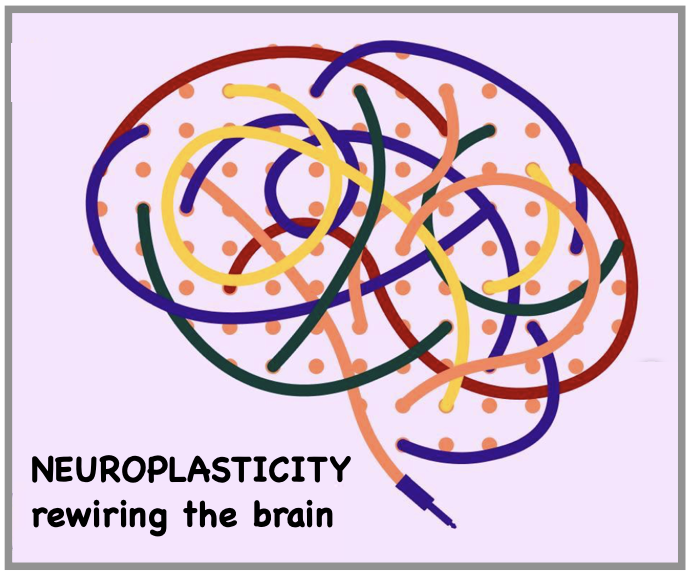
One of those brain redundancies is Neuroplasticity It can strengthen existing neuronal pathways (& lessen them, when needed), or establish entirely new neurons & connections. Any time you think (obsess ?) about the deceased, work on holding both the love & the pain you feel.
A major sign of neuroplasticity as psychological resilience is that its energy moves in both directions, shifting in response to a traumatic event then changing again in response to restorative experiences. Between loss-related thoughts & sharp mourning pangs ——> to restoration-related thoughts, like planing a special meal, testing out a new role or skill. Fortunately, this allows us to adapt, respond & grow in real time.
 Grief is one of life’s great teachers. It presses us to live in the present, appreciate all we have right now, & learn how to be in the world without someone who was precious to us. And some changes are permanent. ** Read these excerpts from Clarissa Moll’s “The Gifts of Grief Brain” after her husband’s death :
❤️🩹 “Grief brain is the gift of perspective. It taught me to defer to my brain when it signals that it’s reaching maximum capacity. It taught me that my mind has limited energy & space, & I must choose carefully how to use & fill it. It taught me to spend less time planning for the future & more time focusing on what is before me now. And it has taught me to say “no” to a busy calendar, & “yes” to boundaries in challenging relationships.
My brain regained its capacity as the shock of Rob’s death wore off & my new life began to come into focus……However, my brain was not the same.…… Processes that had once been rote now needed conscious effort….. like at the gas station, when I did everything right – except forgot to start the pump, so drove away again on almost empty….. But no more kicking myself. Grief brain tells me, “Let it go. You’ve got more important things to think about.” That’s one thing I won’t forget.” 💝
Beyond acceptance, taking action can help you tackle some of the hopelessness you might feel when dealing with events out of your control. It’s too easy to stay in bed under the covers, wallowing in despair. But finding the courage to take action can help to get out of your head & connect with others – some who share a similar painful experience, AND some who know how to enjoy life to help lift you out of the pits. With time & ‘work’, the world will seem a little less bleak.
«
«
NEXT: GRIEF – Effects in the BODY , #1
 HEAL & GROW for ACoAs