
 PREVIOUS : MM – Love Dealers
SITE : “Money and Mental Health Professional Network“, UK
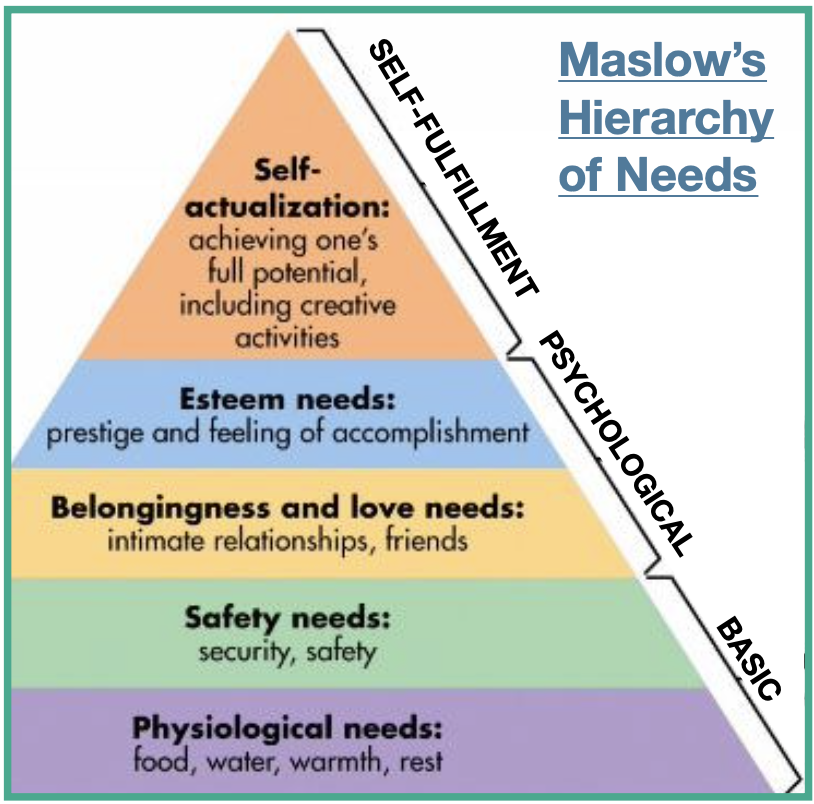
DEBT & MASLOW’s Pyramid –
DEBT flips the hierarchy upside-down. When you introduce debt, things get ugly. People often live beyond their means because theyre looking to satisfy one of their higher needs. The engine of their financial life, their ability to earn, hasn’t increased but they’ve already borrowed against their future self.
People often live beyond their means because they are looking to satisfy one of their higher needs. The engine of their financial life, their ability to earn, hasn’t increased but they’ve already borrowed against their future self.
We all want prestige, whether we admit it or not. ( buy a $15,000 handbag), but If you put that purchase on a credit card (and carry a balance), it becomes a big financial problem.
Functionally, debt allows you to borrow money from your future self. But your future self doesn’t get interest payments, he or she just gets to use whatever you’re buying a little bit earlier.
HOWEVER – When you use it for an investment in your earning potential, like education, you borrow against the future but you also increase your earning potential. In that situation, debt can be a valuable tool.
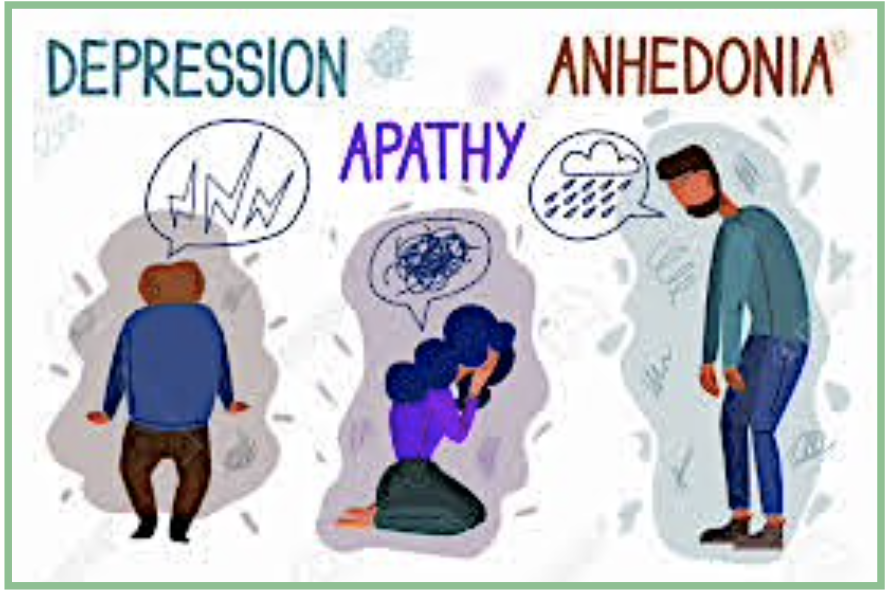 Mental health & money problems are intricately linked
UK STUDY – Our research shows that in England alone over 1.5 million people are experiencing both problem debt and mental health problems.
Common symptoms like memory problems, difficulties concentrating & impaired problem-solving often lead to financial difficulty, which can also make it harder to successfully access & use debt advice. (Providers guidelines)
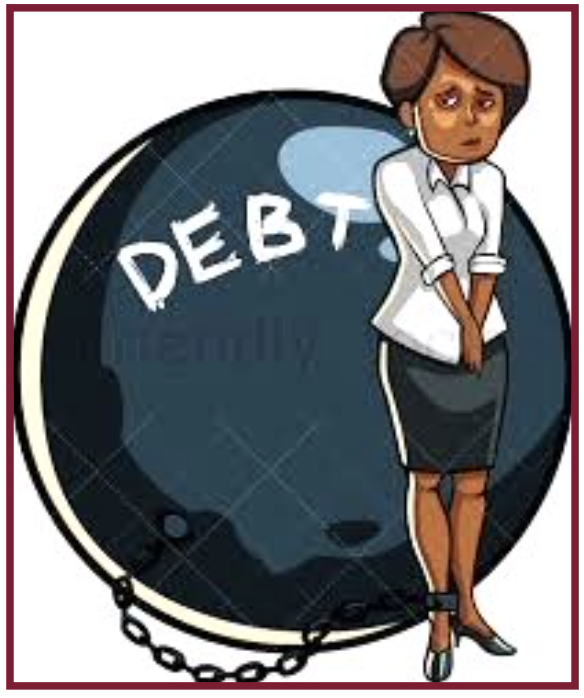 Financial difficulty affects mental health
Money troubles are stressful, often causing anxiety & drastically reduce recovery rates for common mental health conditions.
EXP : People with depression along with PD are 4.2x more likely to still have depression 18 months after the survey
☁ People with problem debt (PD) are significantly more likely to experience mental health problems (MHP)
— Half (46%) of people in PD also have a MHP
— 86% of respondents to a ‘Money and Mental Health’ survey of nearly 5,500 people – with MHP – said that their financial situation had made their money problems worse
AND
☁ People with MHP are also more likely to have PD , almost 1-in -5 (18%) & 3.5x more likely than people without MHP (5%).
— 72% of respondents to the “Money and Mental Health” survey said that their MHP had made their financial situation worse.
☁ People with problem debt
— are 3x more likely to have thought about suicide in the past year. Because of severe debt more than 100,000 people in England attempt suicide each year. However, there is rarely only a single factor – rather, a range of social issues, life events, cognitive & personality factors are combined.
♢YOUNG – 63% of 18-34 year olds are anxious about their finances, & younger people with MHP are more likely to report feeling anxious about their financial situation.
♢ MIDDLE – in contrast : 54% of 35-54 year olds, and 44% aged 55-65 have both issues
♢ OLDER people with MHP tend to be more reticent to disclose their condition to essential services providers – & so are missing out on extra support.
Stigma around debt can mean that people struggle to ask for help & can become isolated. The impact on people’s mental health can be particularly severe if they resort to cutting back on essentials, such as heating & food, or if creditors are aggressive or insensitive when collecting debts.
 ☁ Ethnic MINORITIES — The combination of having a MHP & being from a minority group can present increased barriers to having a good income, & therefore good financial health. They are significantly more likely to live in a household that is behind on bills .
UK : This ranges from 9% of White people <———> to 33% of Black, Black British, Caribbean or African people. Minorities can also face barriers to accessing support for their mental & financial health, & in some cases experience worse outcomes – than White counterparts – when they do receive help.
SITE : US -” Causes of Disproportionate Poverty among Ethnic Minorities”
NEXT : MM – Archetypes #1
 HEAL & GROW for ACoAs