
 PREVIOUS – ORIGINS (Part 1)
SITEs : “Coins of the Bible – when money was first mentioned
QUOTE : “All wealth belongs to the Divine , & those who hold it are trustees, not possessors. It is with us today, tomorrow it may be elsewhere.” — Sri Aurobindo
✳️ Money as SYMBOL
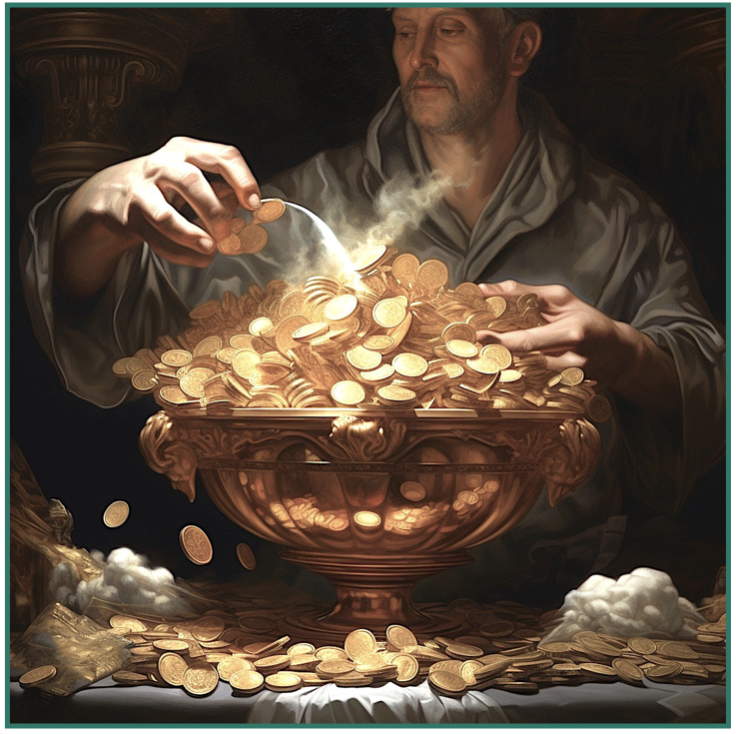
In ancient times, money was often used ritualistically, serving as a symbolic offering to deities, representing wealth and prosperity in ceremonies, and sometimes even acting as a substitute for actual goods in sacrificial rituals, with different cultures employing various practices depending on their beliefs and the form of currency available to them.
Tithing: In religions like Judaism, the practice of “tithing” (10%) involved setting aside a specific portion of one’s income as a religious offering to the temple, often with a symbolic monetary value
” …money brings panic, confusion, ecstasies, joys and madness, especially when we try to hold its flow with rational accounting. Taurus the Bull, rules money (the Age of Taurus – 4300- 2150 BC) so bags, pits, vaults, temples…. have been trying to keep the life in the money under control, as do the other measures in which we pen the bull.
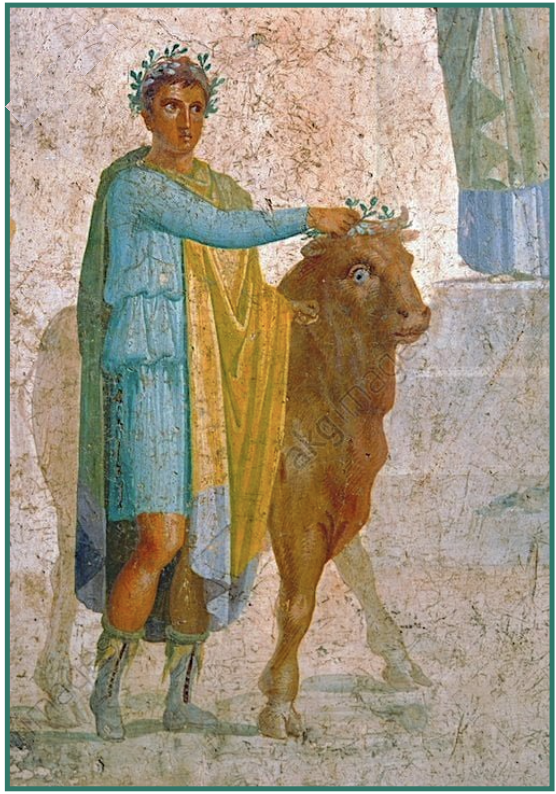
But money is a wild ride because it’s truly blood money, perhaps never severed from the bull…”. Hillman (Pompeii fresco ▶️ ).
So it may be easier to understand why we speak of Bull Markets. At its symbolic root, money is not rational, &, like the bull, it relates to passion & desire. Financial markets are subject to the tidal periodic rises and falls just like the Moon and just like our emotions.

EXP : In ancient times (Greece, Rome….) money had more psychological & symbolic meaning than economic. In ancient religious rituals money was used as a symbol in sacrificial food ceremonies. The ‘god’ received the best part & the participants the rest – according to their social rank. To be excluded from the feast meant they were a social outcast.
Coinage evolved from the ritualistic killing & eating of the divine bull. Metal coins (gold, then, silver then bronze) eventually replaced bull meat, representing royal esteem. & proportionally to the amount of each citizen’s contribution to the state.
So – the system of commodity money eventually evolved into a system of representative money. Money as a form of commercial exchange came later.
BTW – In England this ritual continues to the present – the royal gift of 1/4 venison is bestowed on important people such as the Prime Minister, lord chief justice, archbishops of Canterbury & York….
Therefore, money as a status symbol preceded money as a means of exchange. However, the deep psychological meaning in the human mind – as a measure of social rank – has not changed, even though our rational mind only considers money as a medium of exchange for tangible goods & services.
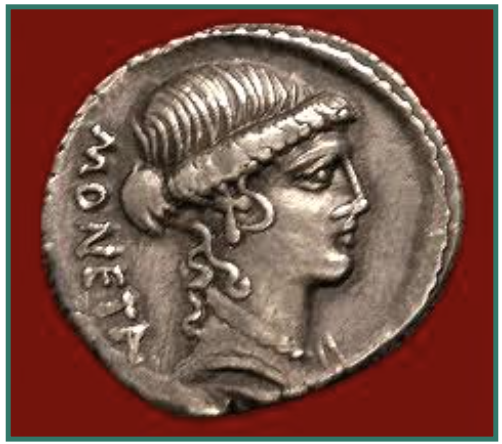 DEF : The word money derives from the Latin word moneta with the meaning “coin” via French monnaie. The Latin word is believed to originate from a temple of Juno Moneta on the Capitoline hill often associated with money. It was the place where the mint of Ancient Rome was located, & she was believed to have blessed the coins herself. “Juno” may have derived from the Etruscan goddess Uni, & “Moneta” either from the Latin “monere” (remind, warn, or instruct) or from the Greek “moneres” (alone, unique).
NEXT : MM – TIMELINE , #1
 HEAL & GROW for ACoAs