
PREVIOUS : MM- Intro, #1
«
✳️ FUNCTIONS — MONEY IS A:
1. store of value. If I work today and earn 25 dollars, I can hold on to the money before I spend it because it will hold its value until tomorrow, next week, or even next year. In fact, holding money is a more effective way of storing value than holding other items of value such as corn, which might rot. Although it is an efficient store of value, money is not a perfect store of value. Inflation slowly erodes the purchasing power of money over time.
2. unit of account. You can think of money as a yardstick-the device we use to measure value in economic transactions. If you are shopping for a new computer, the price could be quoted in terms of t-shirts, bicycles, or corn. So, for instance, your new computer might cost you 100 to 150 bushels of corn at today’s prices, but you would find it most helpful if the price were set in terms of money because it is a common measure of value across the economy.
3. medium of exchange. This means that money is widely accepted as a method of payment. When I go to the grocery store, I am confident that the cashier will accept my payment of money. In fact, U.S. paper money carries this statement: “This note is legal tender for all debts, public and private.” This means that the U.S. government protects my right to pay with U.S. dollars.
✳️ 5 TYPES
 ☼ COMMERCIAL Bank $ = debt generated by commercial banks. This money is used as loans generated by financial institutions. When a customer deposits funds in a bank account, it is loaned out to other customers, which earns the original depositor interest.
There is always a reserve requirement – the portion of client funds that a bank cannot lend out to other customers. This money is a vital part of any financial system, as it creates liquidity for the buying & selling of other forms of asset. EXP : money for mortgages, business &/or personal loans.
☼ FIDUCIARY $ = payment on the basis of trust, such as cheques, but not on any order of the government.
This is a money substitute that is often a written statement of debt or intent of payment. It is essentially a promise of money at a later date, backed by nothing more than trust between the two parties in a transaction.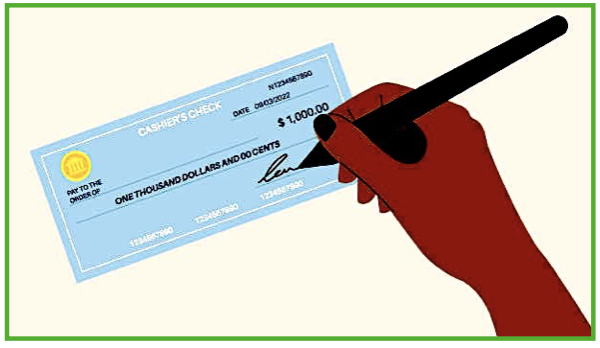
There are risks involved, as the supply of money & the promises made may not align. So, if too many individuals using fiduciary money try to convert their statements at the same time, it can create a run on the fiat system that underpins the exchanges.
☼ COMMODITY $ = Money whose value comes from a commodity which it’s made of (stocks…). Economists say the invention of money is in the same category as other great inventions of ancient times, such as the wheel & the inclined plane.
Early forms of money were often commodities made of a valuable substance such as gold & silver coins. Gold was desirable in itself, used in exchange for other goods or services, for jewelry….
Commodity money gave way to the next stage – representative money.
☼ REPRESENTATIVE $ = a certificate or token that can be exchanged for the underlying commodity. EXP : instead of carrying the metal, the gold can be kept in a bank vault , replaced by a paper certificate which could be carried more easily & safely.
The certificate could be redeemed for the gold at any time, so people grew to trust them as much as the metal.
Representative money led to the use of fiat money – the type used in modern economies today.
 ☼ FIAT $ = government-issued currency not backed by a commodity (gold). It does not have intrinsic value & does not represent an asset in a vault somewhere. Its value comes from being declared “legal tender”- an acceptable form of payment – by the government of the issuing country.
Modern economies use fiat money.
The term Fiat comes the Latin word “fiat”, meaning ‘determined by authority’ – because the value of currencies is set by government bodies, not in relation to another asset. It’s traded in the foreign exchange or forex markets. (MORE….)
NEXT : MM- Intro, #3
 HEAL & GROW for ACoAs