
 PREVIOUS:
SITE : What causes stress? (lists)
REVIEW = Executive function & (S-R) self-regulation skills depend on 3 types of brain function: working memory, mental flexibility & self-control. 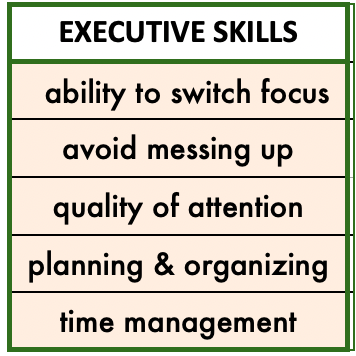
Because they are highly interrelated, successful ability to self-reg requires them to fully work together.
☀︎The dorsolateral prefrontal cortex is the processor
☀︎ The anterior cingulate cortex is about emotional drive & integration
☀︎The orbitofrontal cortex is key for monitoring ongoing appropriate social behaviors
When these functions are not working properly, several critical skills – for effectively managing our daily lives – will show signs of impairment . Stress impacts underlying neuro-biological processes of self-regulation as well as cognitive, emotional & behavioral aspects of S-R.
♥︎ ACUTE stress involves the body’s stress system activated for a short time in response to a temporary stimulus. Although such stress can have lasting biological or behavioral effects if severe enough, the ‘human stress response system’ is generally well-equipped to manage.
♥︎ CHRONIC stress – where body’s stress system is activated very frequently, or for a prolonged period, or in response to
persistent stimuli —- will definitely have detrimental effects on the brain & behavior. Being continually upset makes it harder to regulate actions & thinking.
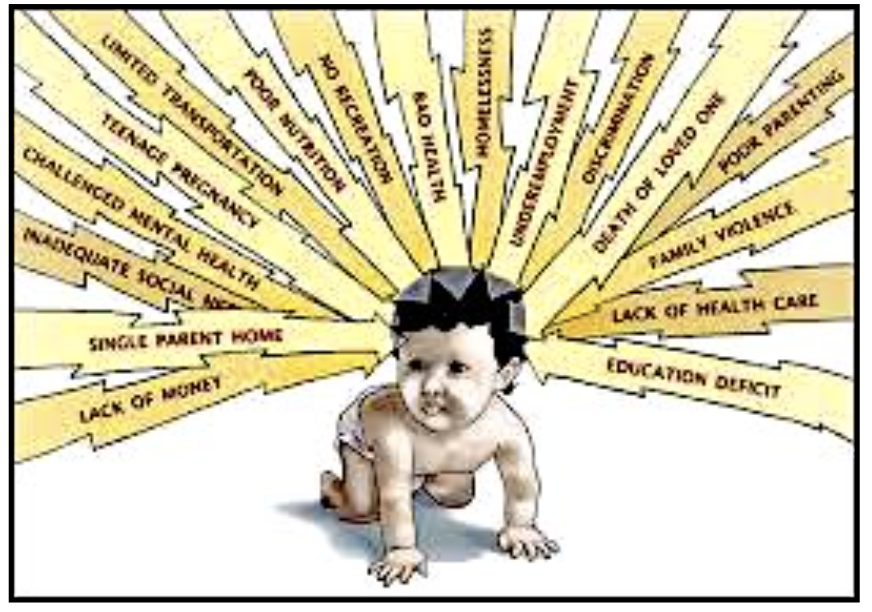 ♥︎ TOXIC stress response – when a child experiences strong, frequent &/or prolonged adversity that overwhelms their skills or support. This includes physical & emotional abuse, chronic neglect, caregiver substance abuse or mental illness, exposure to violence, and/or the accumulated burdens of family economic hardship.
Trauma can either be acute (natural disaster, robbery….) or chronic (child mistreatment). Also, the after-math of acute trauma (sustained homelessness, disruption of social networks after a natural disaster….) can create chronic stress when long-lasting. (from OPRE, Duke U.)
Self-Reg WEAKNESS
At any given time our ability to self-regulate is limited. You try your best to be on an even keel to get things done, but lots of life events can reduce the amount of self-regulation energy available. The 6 main things that can shrink our supply :
♦︎ Behavior of other people : if you let yourself be drawn in to their agenda or excitement – it can act as a temptation to ‘leave’ yourself, decreasing your self-regulation. EXP : Hearing someone going shopping or on a trip, it’s easy to start thinking about doing that yourself
♦︎ Overdoing one of the areas of self-regulation : if you have to (over)control your body & actions for long periods of time, your thinking & emotional self-regulation will temporarily be weakened or worn down
 ♦︎ Negative mood – if you’re feeling low, frustrated, grouchy…. it means your supply of self-regulation is low. You might think “Everything else has gone wrong today so I’m not even going to try ___.” But the more you try to control your mood, the worse it seems to get
♦︎ Stress – Physical effects ➡️ CHART
♦︎ Temptations – if you let something delicious, beautiful or fun grab your attention away from a desired goal or important activity, self-regulation can go out the window.
Also, when self-control is impaired (alcohol consumption or effort depletion), when overwhelmed by immediate external temptations or internal impulses, or when minor indulgences snowball into full blown addictions….
♦︎ Tiredness – if you’re unrested, self-regulation is weakened. making it harder to effectively use your executive functions. You might feel, “(groan) I just can’t make myself do it right now.”
Factors that affect the ability to consciously choose positive strategies – OUR :
 • capacity for self-reflection, to see ourselves as separate intentional beings, able to access & name our experience as separate from”the other”
• main & secondary attachment styles (secure/insecure)
• level of fear and/or anxiety in a situation
• perceived level of risk or danger
• motivation & commitment to a particular outcome or goal
The DEGREE • to which we trust ‘the other’
• we trust our Self, our knowledge & our competence
• of our real or perceived dependence on another or the situation
NEXT : S-R & the Child
 HEAL & GROW for ACoAs