

PREVIOUS : Executive Functions (# 1)
SITE : “Executive Dysfunction Workbook”
MORE Executive Functions SKILLS
❣️ Planning & Problem Solving : how we mentally play with information to form new ways of doing something. And, taking things apart & re-combining them in various ways, we find solutions to problems. Planning for future events requires estimation & forethought – setting a goal & forming a strategy to reach it.
❣️Self-contol
This is about stopping to think before acting, in order to make the best verbal or behavioral choice in stressful moments. That involves “hitting the pause button” to calm down when emotions run high, in order to consider our options & make a good choice for present & future outcomes
❣️ Self-motivation : How well we can motivate ourself start a task without procrastinating, & the willingness to complete a task when there’s no real or immediate external consequence
❣️Task initiation 
This means starting right away, rather than procrastinating, even when we’re not pleased with the task
❣️Time management
It’s about using time well then working on something – being able prioritize tasks, to correctly estimate how long something will take, & use the time efficiently
❣️ Verbal Working Memory : the ability to use self-talk / “inner monologues” to monitor & regulate our behavior, as well as direct future actions. It’s an important part of planning & problem-solving
❣️ Non-Verbal Working Memory : the ability to retain & manipulate distinct pieces of info over short periods of time, & hold info in memory while performing complex tasks.
Also, how well the brain can mentally picture things
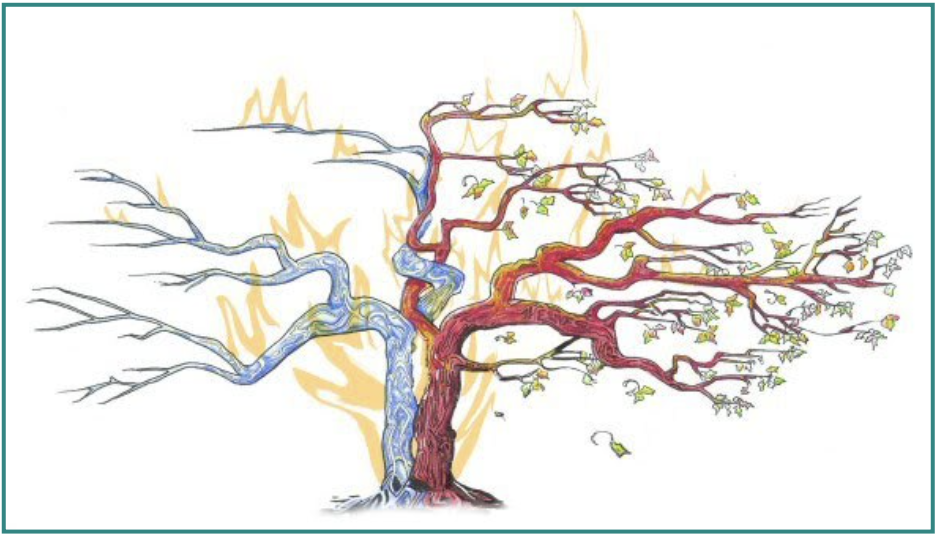 Signs of Executive DYSFUNCTION
An executive function disorder impairs some of these skills, affecting a person’s ability to manage & organize themself to achieve goals. Although the DSM-5 does not recognize it as a specific mental health condition, it’s considered symptomatic of other neurological, mental health, & behavioral disorders.
☇ Attention – pay attention to minor details, but fail to see how these details fit into a bigger picture
☇ Emotional control – have poor impulse control & overall weak S-R (low self-esteem, mood swings or extremes)
☇ Flexibility – may be very stubborn, with rigid attitudes & thinking, & taking things too literally
☇ Organization – not able to pay attention or organize thoughts & actions – constantly losing or misplacing things
☇ Planning & Prioritizing – problems with complex thinking that requires holding more than one train of thought at the same time. May not know how to start a project, easily become overwhelmed
☇ Task Initiation – are habitual procrastinators, may be considered lazy or “not very bright” because they struggle with starting or finishing tasks, avoid ones that cause anxiety
☇ Working memory – trouble mentally holding on to one piece of information while moving on to the next step in a sequence (multi-step tasks, taking notes…. forgetting directions or explanations just given)
EGO-DEPLETION
Having self-control is often referred to as willpower. It allows people to stay on point even when there are many distractions, or many calls on their attention. It benefits relationships, & is the basis for achievement, from school to the workplace.
There’s evidence that willpower is a limited resource, so even relatively minor acts of self-control – repeated – can take a toll. The idea is that willpower is like a muscle which can be both strengthened & fatigued.
Ego depletion happens when people use up their available willpower on one task. As a result, they can’t exert the same level of self-control on subsequent, often unrelated tasks.
This may explain why we struggle to avoid “bad behavior” when tempted by something enticing over a long period of time.
EXP : — why many dieters can keep to their strict diet all day but give in after dinner when tempted by dessert
— why a married /committed person can rebuff repeated advances from someone other than their partner for days or weeks, but eventually gives in & have an affair.
Findings in neuroscience back this up. One study by Wagner et al. in 2013 used functional neuro-imaging to see if participants’ self-regulation energy would be depleted by the experiment’s prolonged activity.
✴︎ The scans showed there was less connectivity between areas of the brain involved in self-control and those involved in rewards. As their brain tired (maybe bored?), it was harder to keep resisting the available temptation. (Other research….)
NEXT : Self-REFLECTION
 HEAL & GROW for ACoAs