
 PREVIOUS : Avoidant-Dismissive – Growth
SITEs :SITE : ✐ eBooks…. https://janinafisher.com/
✐ “How Disorganized Attachment Became the Most Misunderstood Attachment Style”
DISORGANIZED ATTACHMENT STYLE (DAS)
ME- no / YOU -no
People with Disorganized Attachment experience persistent & pervasive anxiety in life, & are considered to have a “shattered self,” with both a negative self-concept & a negative attitude toward everyone else.
Similar to Avoidants, they don’t believe they’re worthy of love, nor able to get the love they need without being angry or clingy. But unlike them, the Disorganized want relationships, they’re just too terrified.
Also, D-As they don’t believe that others are trustworthy, reliable or able to meet their needs. They expect & are waiting for rejection, disappointment & hurt that will inevitable come.
❗️However, in addition to the internal conviction that everyone else is always going to be abusive, Dismissives believe they deserve the abuse they receive.
BTW – the DAS is not considered a “disorder”, but the unhealthy forms of acting it out are, such as substance abuse, depression, delinquent/ aggressive behavior, abuse of their own children ….
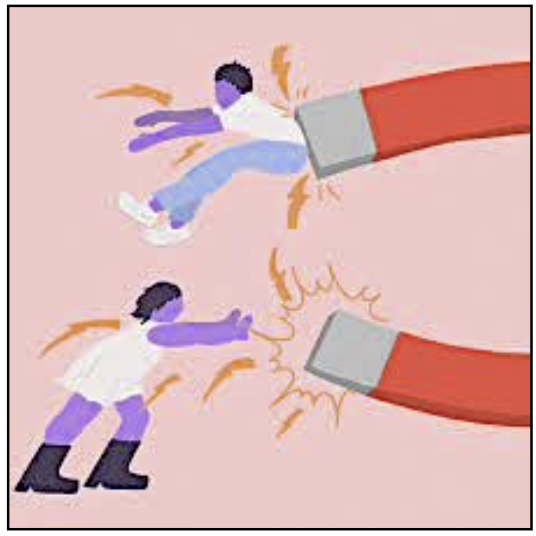 Naturally, many DAS sufferers came from abusive, alcoholic & neglectful homes. But the main thing is that the parent(s) gave mixed signals : one minute pushing the child away, the next minute pulling them close – only to push them away again, a source of both fear & reassurance.
The child felt comforted and frightened by the caretaker, causing deep mental & emotional confusion.
As teens & adults, they will repeat this parental cycle of trying to draw close, panicking, fleeing, then trying to draw near again, in dramatic & inconsistent ways.
Background : This parent / caretaker is herself disorganized, feeling trapped in her own chaotic world, She will have quick, unpredictable emotional reactions, impulsive behaviors & muddled treatment of the child. The sudden shifts (attack, withdrawn, punish, ignore….) ——> leave anyone close to her confused, frustrated & terrified.
EXP : Mother frightened, passive, intrusive…. In reaction, her extreme & erratic behavior makes it hard for the child to form a consistent, meaningful coping strategy. When near her, two conflicting mental signals cause the child’s brain to short circuit – so it psychologically fragments & dissociates.
«
The first brain signal comes from fear-based experiences with the unsafe mother’s scary facial expressions or behaviors that make her feel dangerous. The infant’s brain stem automatically activates a protective reaction for a quick retreat.
The second brain signal comes from the mammalian that wires ant child to attach to an adult figure for protection & safety, & fires unconsciously. When children fear their attachment figure, they’re faced with an unresolvable paradox : the mother becomes both the source of protection & the source of alarm.
Disorganized infants in Ainsworth’s “Strange Experiment” were more often found in ‘high risk’ environments (extreme poverty, with alcoholic, narcissistic &/or mentally ill parents….). These children acted anxious, confused, dazed, & depressed toward the returning parent, & some rocked back & forth. 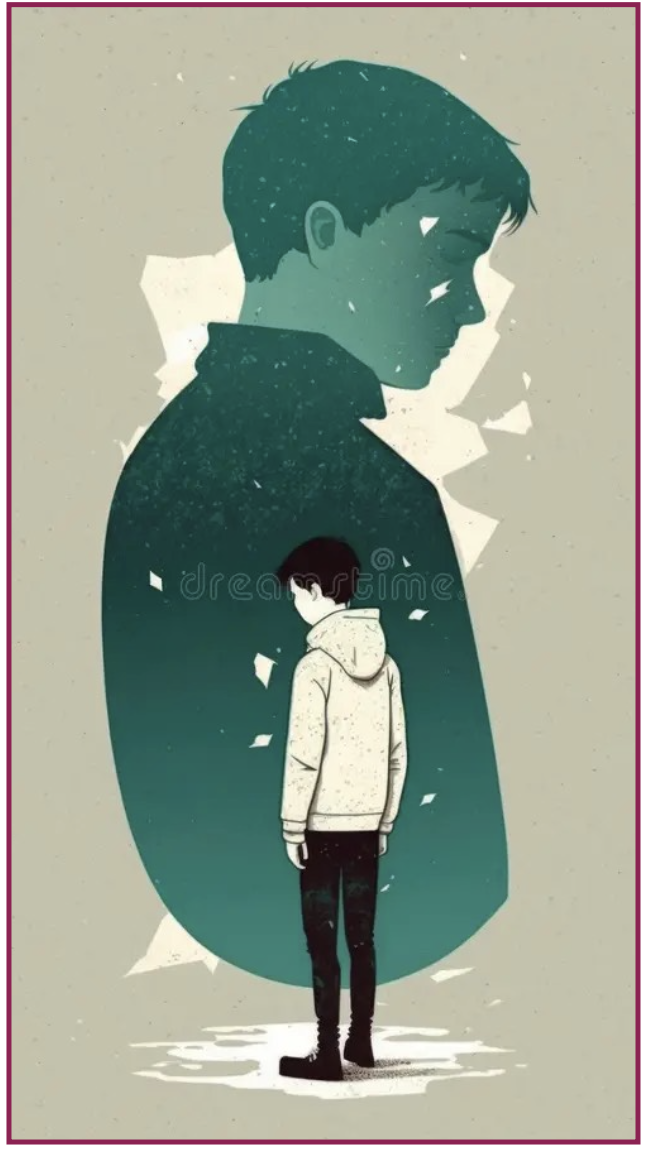
❣️ Some ACoAs still act that way as adults, especially around authority figures. (terrified, dissociated?) See “Laundry List“, point #1.
SEXUAL Responsiveness
Disorganized people tend to swing between anxiety- & avoidance-driven behaviors, creating generally unstable & unpredictable social interactions. This tendency can also apply to their sex life.
EXP : They can express extreme passion & love for someone – one minute – then shut down their ‘attachment system’ during lovemaking, from fear of intimacy, becoming mechanical, emotionally withdrawn & insensitive.
Even more than the Anxious group, Disorganizeds are deeply insecure, but some can cover it with an “I’m too cool to care” attitude, motivated by a “why bother, why risk” avoidance of intimacy. Because they have trouble trusting & depending on their lovers, they’re more likely to choose emotion-free casual sex, which is linked to a higher likelihood of sex addiction. They’re the type who can’t wait to leave after ‘the act’, not wanting to cuddle & definitely not stay overnight.
However, if they do enter a relationship, they often end up with a dominant, assertive partner who will not let the Disorganized ‘get away’. Being chosen by a stronger personality may unconsciously satisfy their need for connection, so they’re willing to be bullied, controlled & manipulated – as a sign of ‘being wanted or loved’.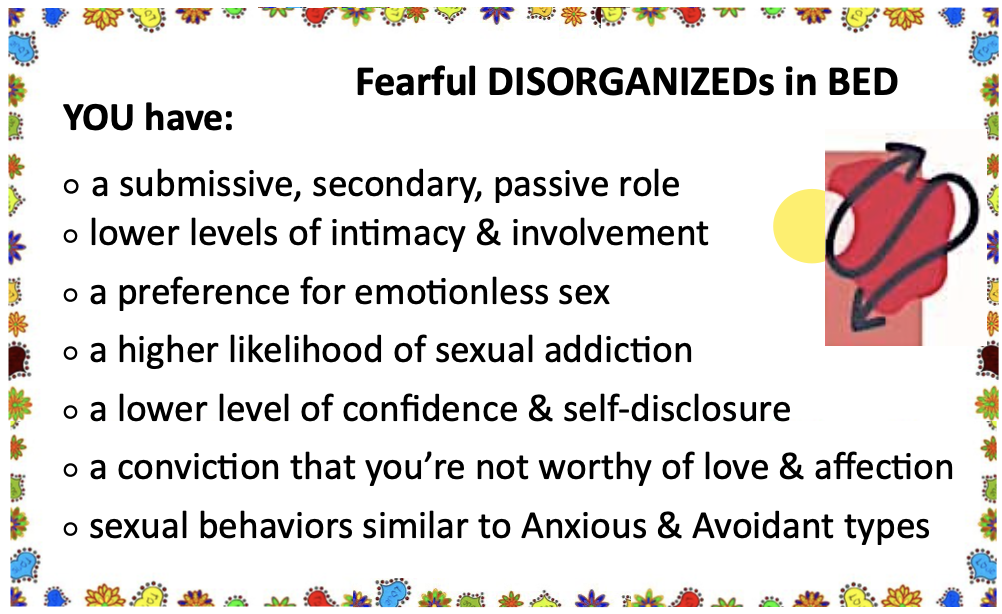
NEXT : Disorganized Style, #2
 HEAL & GROW for ACoAs