
 PREVIOUS : Anxious-Avoidant (#1)
SITE : ” Serial Monogamy” (EXP: Liz Taylor)
Anxious-avoidants long for intimacy but are (unconsciously) terrified of rejection from their partners. This fear make them pull away or close themself off. When in a relationship that starts to get too close & requires emotional openness, their self-hate & mistrust of others surfaces & they use manipulative ways to escape.
This can lead to the push-pull pattern of alternately trying to keep a partner attached, then pushing them away when the partner asks to be close. In their own double bind – they’ll feel cranky & empty when pulling away, but still dream of being wanted.
JOURNALING
F-As struggle with negative core beliefs about the Self, which turn into negative actions. You can become aware of those Toxic Beliefs. by journaling or thinking about them when driving or on a walk. Staying awake to your harmful inner voice *Negative Introject) can give you the opportunity to disagree with it, which will minimize your need to be avoidant.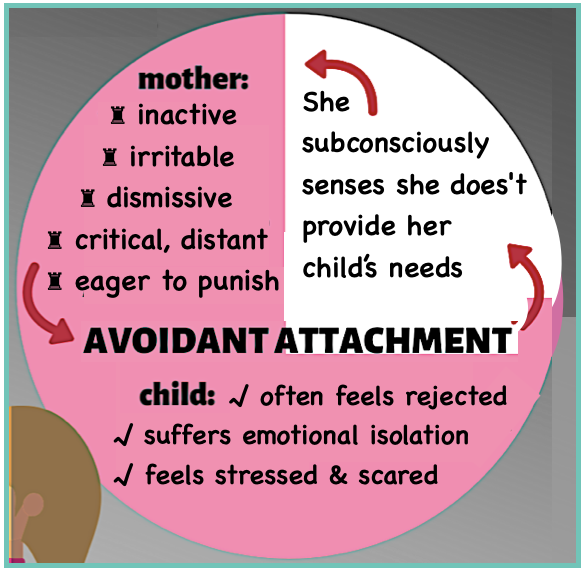
📯 Be wiling to identify, admit & feel the pain of your childhood abandonment & neglect
📯Learn to notice & acknowledge the difference between people who want to use you vs. those you genuinely love you
📯 Acknowledge what you’re doing = that you act out or withdraw when you feel ‘crowded’
📯 Choose better ways to calm yourself when you get anxious when someone is getting too close to you
Prompts
📫 What are some signs that I might be projecting past abandonments on to a new relationship?
❤️🩹 How can I practice self-compassion when I act on the urge to avoid an emotional situation
❣️What are my beliefs about relationship endings?
What influences those beliefs?
🖥️ What is my relationship yo my career, and hobbies?
Am I using them as a form of escape from intimacy?
«

«
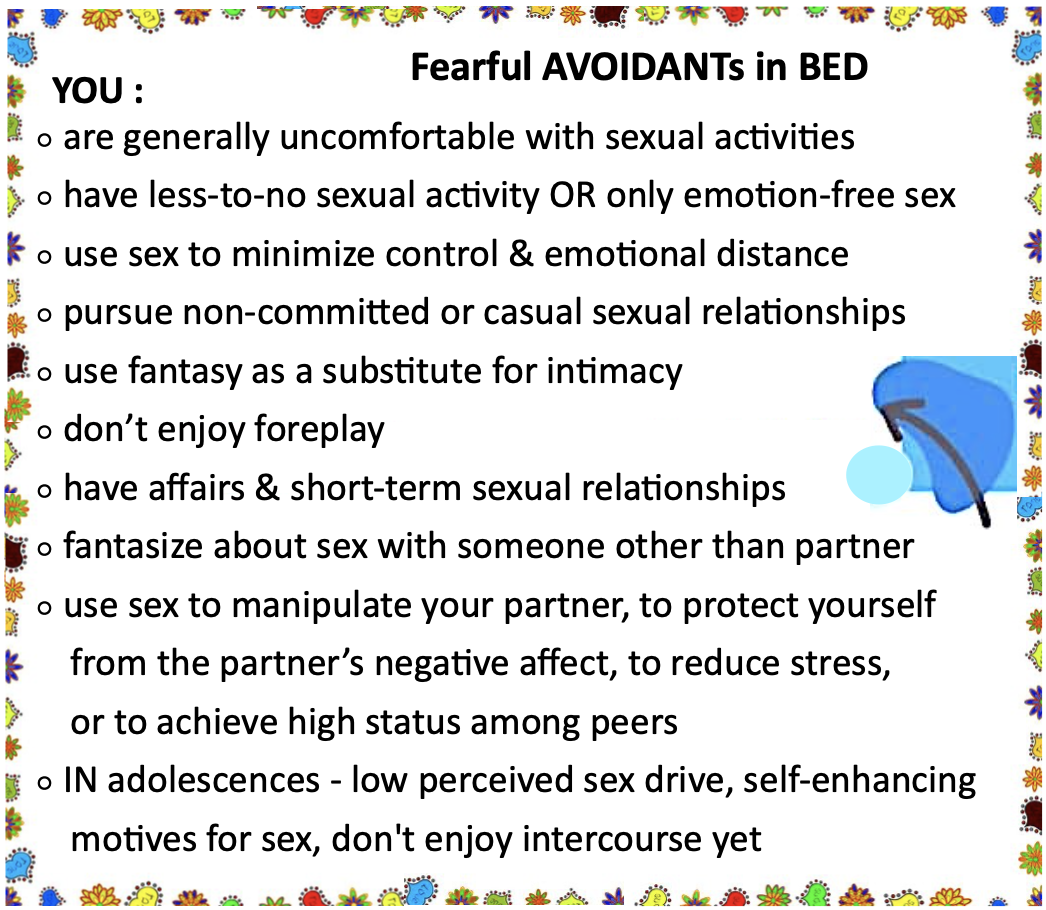
F-A struggles with low self-esteem – not deserving of approval & acceptance – also affect their sex-life.. They look for sex to meet their need to feel loved but without having to be emotionally available, as a way of avoiding potential loss. While they may think they long for sex within a long-term relationship, their negative beliefs can often keep them from taking the risk.
«
«
PARTNERs of F-As : Improve your SEXUAL Relationship
♡ Be open & available
If you figure out that your partner’s avoidance stems from low-self esteem-anxiety rather than a lack of physical attraction, you may want to take extra care to provide reassurance they might not even realize they need – making it clear by the consistency of your actions that you can be relied on to provide a level of safety for them.
♡ Slow down you heat-of-the-moment comments
Sexual encounters can spur automatic behaviors in a F-A partner, like – springing out of bed immediately post-orgasm.
☸︎ Stop to notice your own emotional reaction before saying anything. If you’re able to be objective, you may consider asking “‘Would you be willing to stay in bed with me a little longer?”// “Can you tell me what’s going on?” // “Can you please slow down instead of rushing off?” // “What do you think just happened?” …..
♡ Learn better ways to Communicate Needs
Instead of making accusations & pointing a finger at your partner (which can spark defensiveness) it’s better to use ‘I’ statements.
EXP : instead of ‘You always seem disinterested when I’m talking to you,’ say, ‘Sometimes I feel unheard when we’re talking about a serious subject . Will you let me know you understand what I’m saying?’”
♡ Frame sex conversations about pleasure & play
Too often the ‘talks’ are about emotional frustration or sexual disappointment.
Instead, rather than focusing on what’s missing, make suggestions about how to have more pleasure when you’re together. Highlight an exciting or new element about any sexy idea that’s of mutual interest. It can spark a conversation about pleasure that may ultimately open the door for more intimacy. EXP : Mention – “I just read about this new sex position I’d love for us to try,” or “Theres a new sex toy talked about on a podcast”

NEXT :ANXIOUS Attachment – GROWTH
 HEAL & GROW for ACoAs