
 PREVIOUS :
Parent-Child – Insecure (4b)
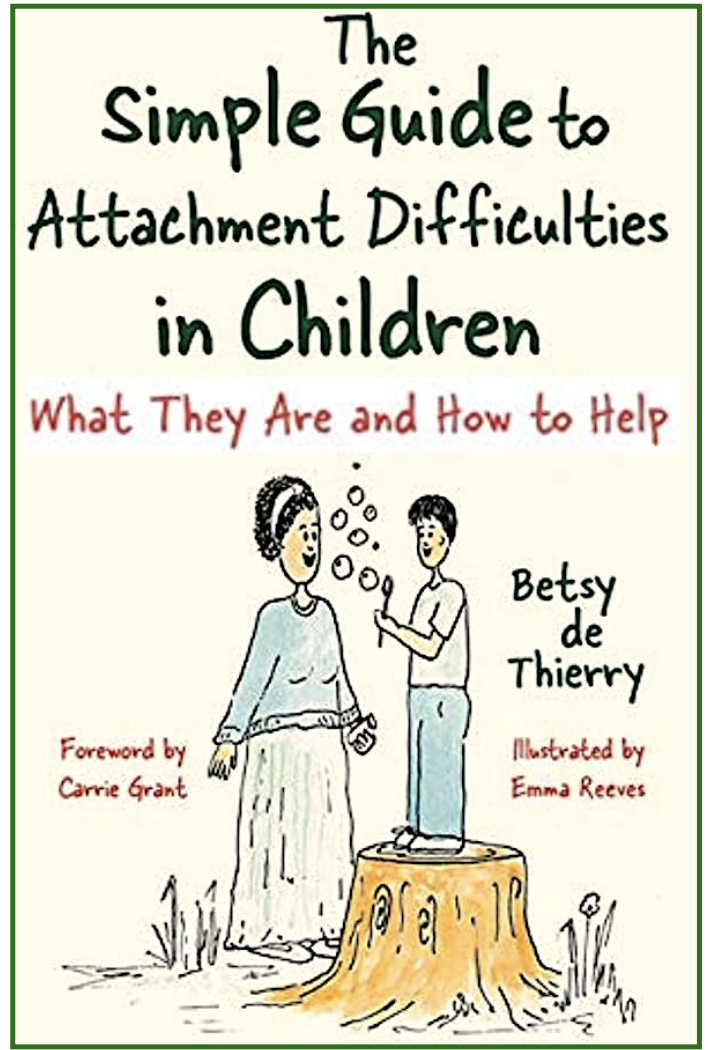
⬅️ BOOK from Amazon UK
POST : Psychological Disorders (#2a):
Numerous studies have found that attachment anxiety & emotional dysregulation (out of control) are positively correlated (directly connected), which can contribute to maladaptive behaviors, such as — various addictions, problem internet use, eating disorders, depression…..
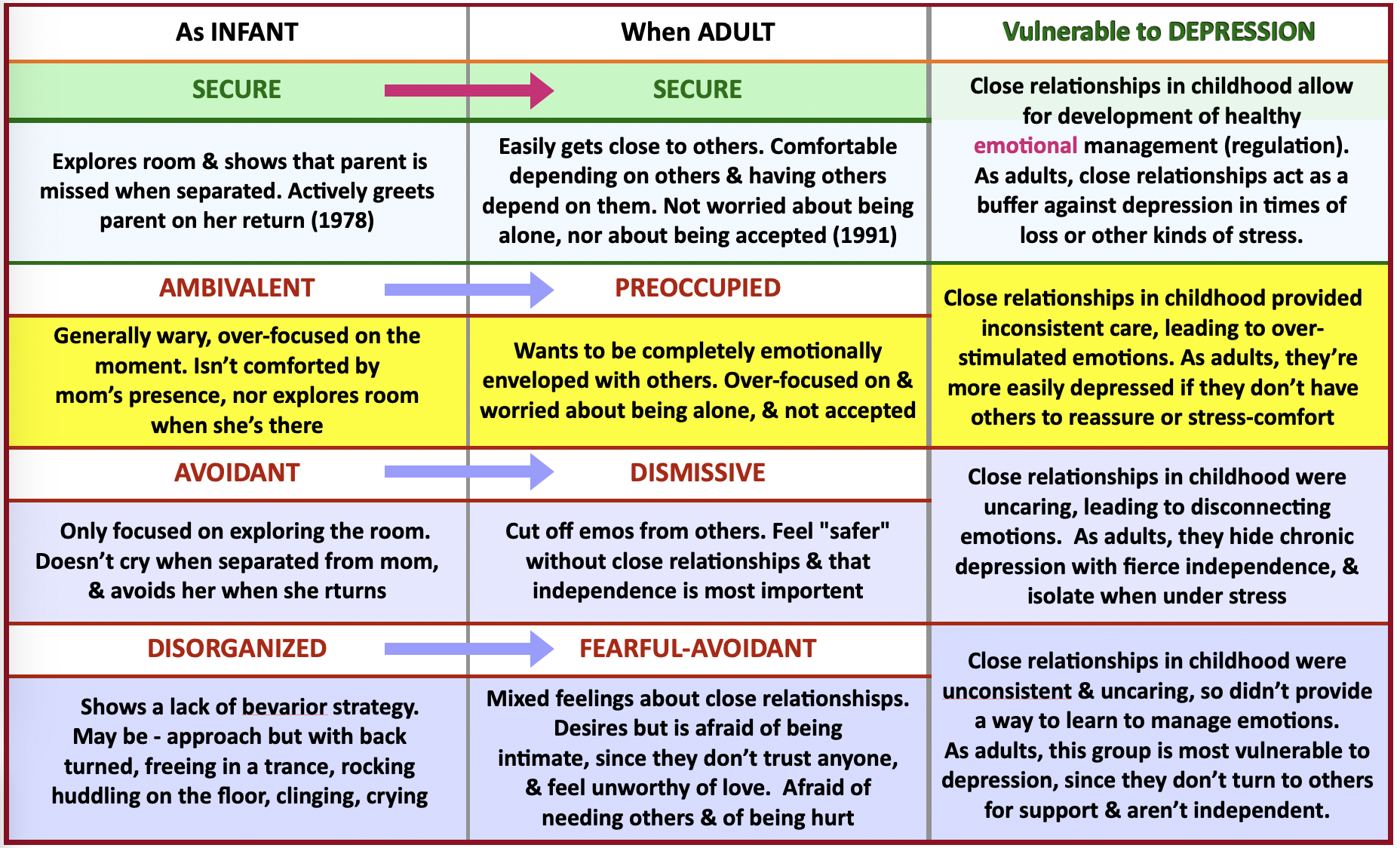
Attachment disorder in adults usually starts in childhood, with symptoms that show up between 9 months & 5 years old. Untreated they can affect everything from a person’s self-esteem to satisfaction in relationships. In fact, without available, consistent & responsive parenting, most children are vulnerable to developing attachment disorders.
When the primary attachment figure (Mom / caretaker) is unresponsive but also physically present, the distress that first makes a child hunger to connect slowly turns into doubting the possibility of attachment. SO then secondary strategies are developed. EITHER:
👁️🗨️ Hyper-activation – If mom is sometimes responsive but unreliable, the child intensifies its efforts to force love & support from her
🔘 De-activation – In this cases, mom disapproves of & punishes closeness, as well as any expressions of dependence & vulnerability. Need for closeness is suppressed, & the child tries to cope with dangers alone.
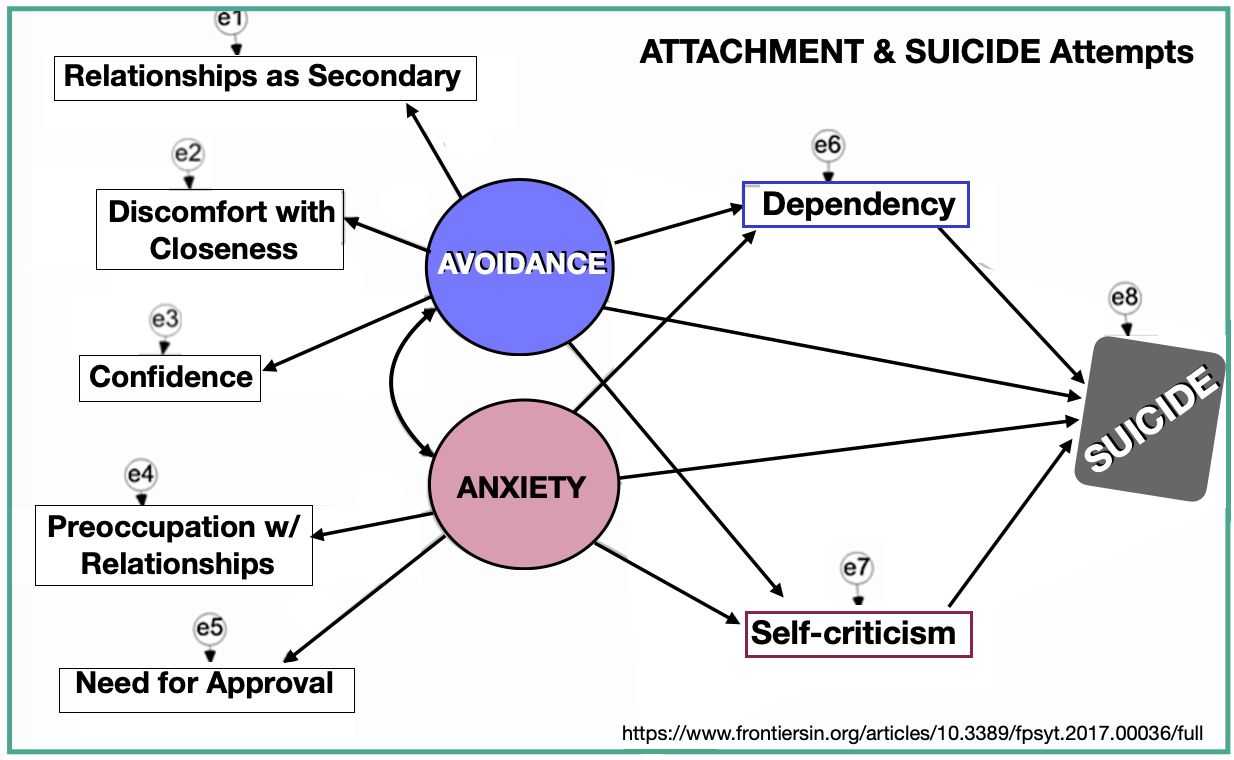
DEPRESSION & SUICIDE attempts based on Attachment deficits from RESEARCH studies in Italy (pub 2017).
MATURE personality is formed by an interweaving of two developmental goals, extended throughout life. In successful growth, individuals usually place more of an emphasis on one of these dimensions without ignoring the other :
a.Interpersonal relatedness (attachment, intimacy) —> which involves forming the capacity for mature, intimate, reciprocal & mutually satisfactory relationships
AND
b. Self-definition (identity, autonomy, achievement) —> which is about developing a realistic, differentiated & integrated identity of the Self (S & I).
Eearly disruption of the development process can result in a rigid, one-sided preoccupation with one style at the expense of the other. And the research suggests that the 2 main weaknesses resulting from an insecure attachment in childhood — > Dependency OR Self-criticism <— create vulnerability to depression & suicidality in adolescents.
🔶 Normal : When Interpersonal Relatedness (a) is the choice, the focus is on a desire for harmonious, supportive & reciprocal relationships.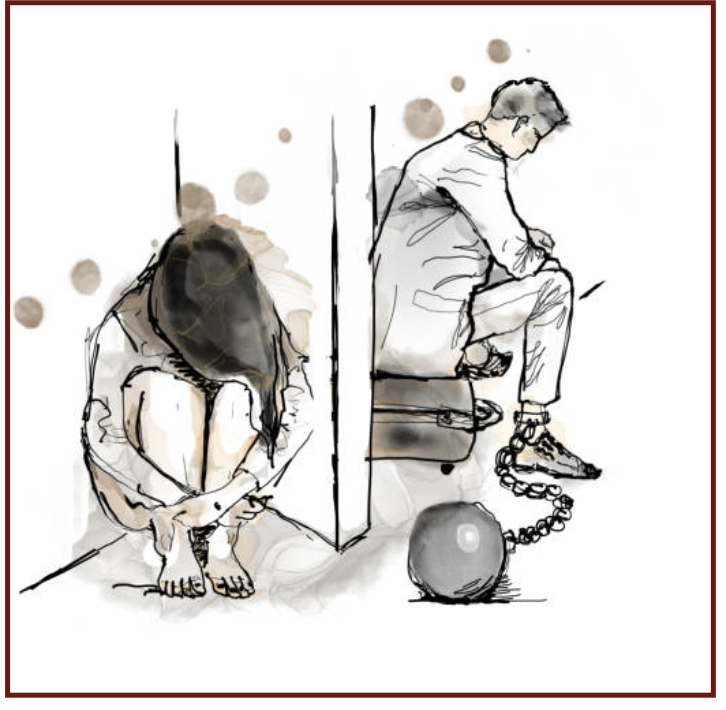
☀︎ Unhealthy : an over-emphasis on the need for connection is the basis of a pathological pattern labeled Dependent. Such people are obsessed with and worried about having closeness, connections & bonding. They’re especially sensitive to separation, loss & abandonment – becoming depressed, feeling helpless & empty.
🔷 Normal : For those who emphasize Self-definition (b), the focus is mainly on individuation, achievements, & identity formation.
☀︎Unhealthy : an over-emphasis on this style is the basis of a pathological attitude labeled Self-criticism.
Especially concerned with perfectionism, these people obsess about experiences they identify as personal failures, leading to shame.
Such highly self-critical types feel guilt & self-blame when they can’t reach their impossible standards, & are particularly prone to depression as a result of those ‘fat;ures’. They have a stronger suicidal intent (i.e., greater wish to die). (Read whole study, URL above.)
«
«
ALSO, suicide gestures differ in the 2 groups, although the risk of suicide is similar for both.
Violato & Arato showed that Preoccupied and Disorganized attachment types were associated with suicidal behavior among adolescents in psychiatric treatment.
Also, Preoccupied and Dismissing attachment predicted suicidality among undergraduates with a history of suicide ideation or attempts
🔸 Dependents generally tend to act with impulsive gestures & attempts. Patients in the study likely made the suicide attempt as a response to an interpersonal stressor, their intention being to let someone / anyone know how distressed they were.
Researchers noted that adult participants with high Dependency scores used methods that made rescue more likely. Since developing Dependency is meant to ensure others’ availability & validation, dying would be the ultimate form of cutting close emotional ties, which they’re terrified of.
🔹 Self-critical types are generally less impulsive, more likely to plan acts of self-harm. These patients’s suicide attempt was made in response to a personal or professional failure, their intention being to escape from the discrepancy between the actual event & their expectations. On the whole their attempt was rated as more lethal than the more dependent patients – ie. having a greater wish to die.
«
«
NEXT : Attachment DYSFUNCTIONS (#2)
 HEAL & GROW for ACoAs