
 PREVIOUS:
SECURE Att. #2
SITEs : “Children’s early social & emotional experiences matter”
◆ Parent-child Interactions Affect Social & Emotional Development
SOURCE of SECURE Attachment
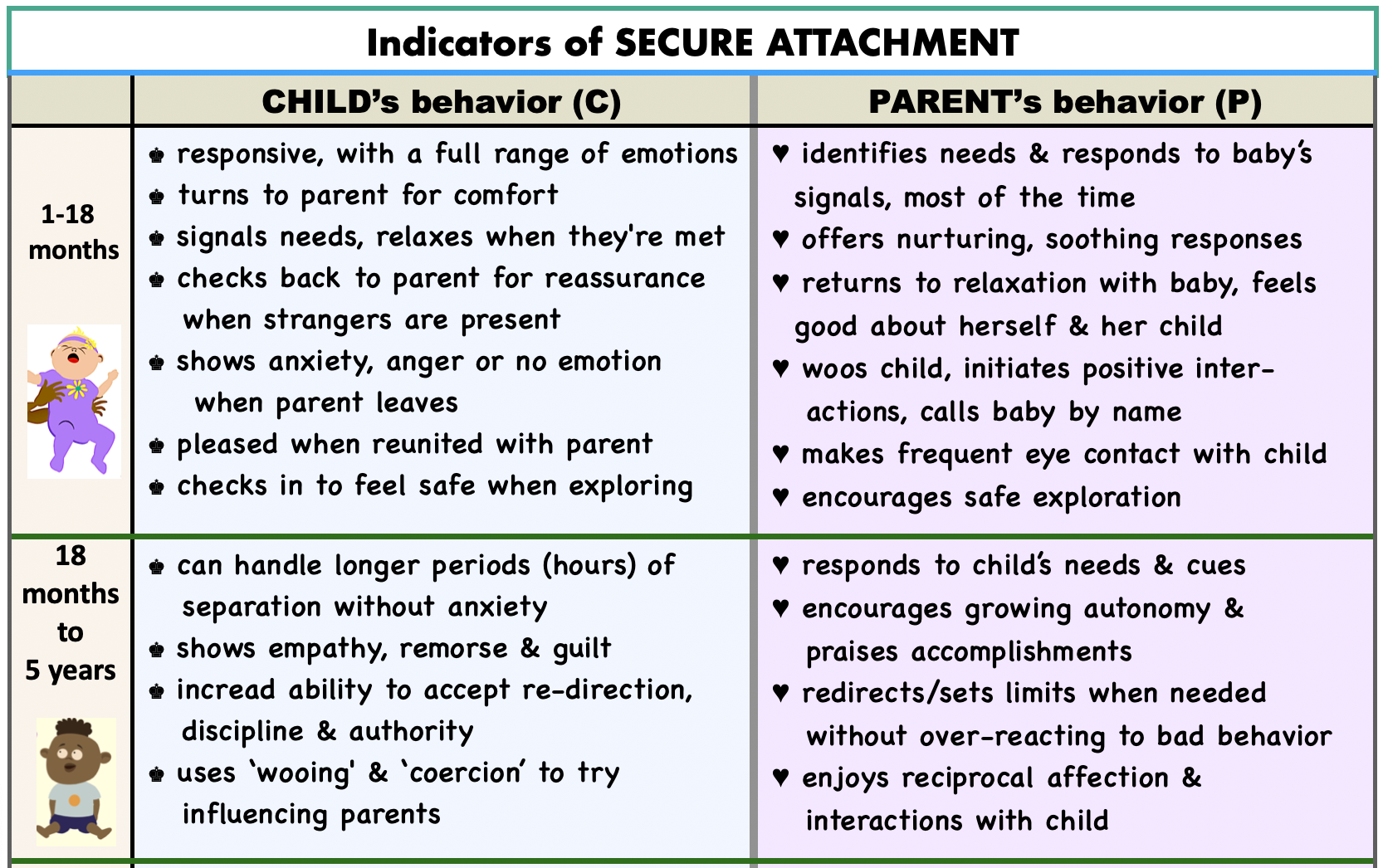
A strong Secure attachment bond develops when mom synchronizes with her baby from the very beginning – by regularly being sensitive to her baby’s need-signals & providing comfort & quiet. (See charts at bottom of post)
Synchronization involves reciprocated mother-child rhythms, matching their mental states & energy levels, alternating between periods of arousal & rest. Attunement is expressed through facial expressions, tone of voice, body gestures, & eye contact.
Healthy mothers synchronize to baby, while unhealthy mothers insist on getting baby synchronized to her own needs. The mother who de-synchronizes with her child seriously damages her child’s attachment circuit.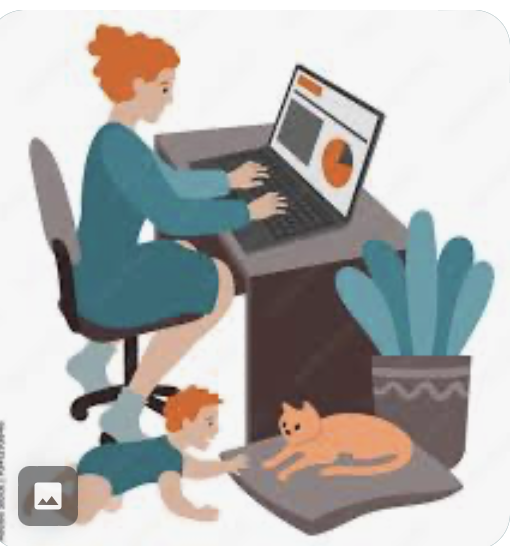
In a stable, loving home, the child intuitively knows it can use the caregiver as a safe base for exploration. Baby shows appropriate distress when the adult leaves, & is comforted when mom returns, which allows it to feel safe enough to then return to exploring its immediate environment. It may be comforted by a stranger, but shows a clear preference for the parent.
NOTE : There’s NO such thing as perfect parenting!
John Bowlby coined the term ‘good-enough mother’ who allows just the right amount of delay in meeting an infant’s needs —-> to encourage both tolerance of waiting AND confidence in ultimate satisfaction – not as deprivation or from neglect!
Studies confirmed his work, that – to have a positive impact on a baby – caregivers need only ‘get it right’ 50% of the time when responding to the child’s need for attachment. (Lehigh U. in PA, USA 2019)
 Because children don’t have fully a developed persona, skills & self-esteem, it is important that the adults in their world actively work to increase their confidence. When kids feel valued, loved, heard, and respected, a positive identity develops based on being treated this way. Most children basically want to have a place in the world, and in the lives of those they love.
⬆️ The STRANGE SITUATION (SS) “Normal”
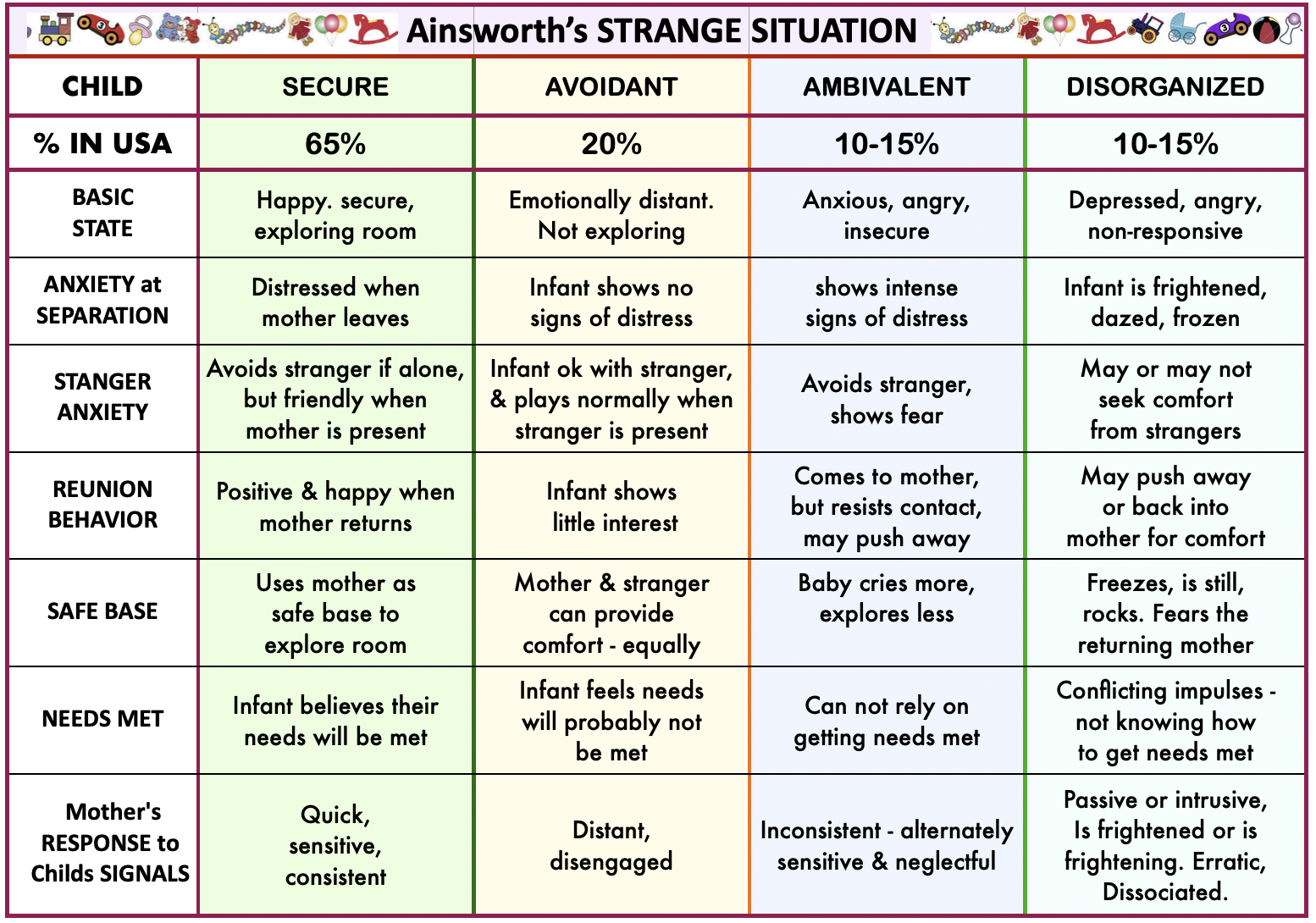
Psychologist Mary Ainsworth (1978) created an experiment in 5 stages to assess the quality of an infant’s attachment to their mother, designed to present children with an unfamiliar, but not overwhelmingly frightening experience
«
«
DEVELOPMENTAL STAGES
In a longitudinal study with 60 infants, researchers Schaffer & Emerson (Glasgow, Scotland) analyzed the types of attachment-relationships infants formed.
Children were observed every 4 weeks in their first 12 months, then again at 18 months.
In NORMAL Circumstances :
1) Asocial stage – usually the first 6 weeks after birth. Newborns tend not to discriminate between people, but do have a preference for humans over non-humans.
The infant’s signals, such as crying or fussing, naturally attract the attention of a caregiver, & the baby’s positive responses encourage the adults to stay close
NOTE : Baby’s EYES & Attachment – Newborns can focus their eyes 7-12 in., just the right distance to make eye contact with mom when being held. This is a basic form of communication for attachment. The infant gazes into mother’s eyes, receiving powerful messages about her emotions & involvement, which influences the baby’s feelings of safety & security…..
2) Indiscriminate stage – from 6 weeks to 6 months. Infants are able to develop trust that the caregiver will respond to their needs. While they still accept care from others, they start distinguishing between familiar & unfamiliar people, responding more positively to the main one, & don’t yet show an aversion to strangers.
3) Specific Attachment– from 7 to 11 months. Babies show a strong attachment & preference for one specific adult & have separation anxiety when apart from this person (usually a parent). Babies also begin to have a fear of strangers at this stage.
4) Multiple Attachments – from around 10-11 months babies are already forming strong emotional bonds with other caregivers, showing an increased interest in father, older siblings, grandparents, friends, & other familiar adults.
«

«
NEXT : Parent-child Att. #2
 HEAL & GROW for ACoAs