
 PREVIOUS: Com. Categories – Content (#1a)
SITEs:
✫ Principles of Communication
⭐︎ Barriers to Communication (w/ Chart)
Study BOOK : “Interplay” – 12 Chapters re Comm. w/ extensive outlines for each
QUOTE: “You can make more friends in two months by becoming interested in other people than you can in two years by trying to get other people interested in you” ~ Dale Carnegie
Ways to CATEGORIZE Communication (comm).
1. Re. CONTENT
PURPOSE : The reason for common professional communications include —> to inform, such as providing good & bad news, to instruct, to request & to persuade. While some communications have a single purpose, others may have a primary or secondary purpose, or combine several. 
CONTENT : This refers to all the written substance, images, audio files, video files…. which make up a communication. After identifying an audience & a purpose, identify specific information to include in the message.
Content can be anecdotes, examples, facts, observations, statistics & testimonials. Ask : Why am I writing / talking about this? What do I want the audience to understand?
EXPs of content can be : a banner ad, blog post, chatbot, event, subject line of email, words in a product description… In all cases, someone identified the need to communicate something (the ‘What’). So someone designed, in the broadest sense of the word, some content (the ‘How’).
Communication has a content dimension which is the information being explicitly discussed, AND a relational dimension which expresses how you feel about the other person.
TEA: The greater the need to express (A) our inner-most opinions (T) & emotions (E), the more we risk of being misunderstood, ridiculed or rejected , so the the harder it is to do. At its best, successful speaking requires knowing what we’re trying to accomplish (the goal), & enough self-confidence to put it across.
To minimize social & personal risks, it’s imperative to move through the levels slowly, in the right order & one at a time, starting with the least personal (phatic), rather than trying to jump from Level 1 to 5 overnight – as ACoAs tend to do!
 CHART ⬅️ mirrors degrees of intimacy (also see posts : ‘Relationship Stages’)
✳️ The normal, socially acceptable way to interact is for participants to match levels, so most people expect others will reciprocate from the same ‘intensity’.
Sharing our most personal ideas & feelings should be reserved for those we’ve known well for some time & trust – which is a function of Attention, Confidence, Commitment, Experience & Time.
So, if anyone else starts out comm. at level 4 or 5, you may have a knee-jerk tendency to match it, sharing too much in return. This is not wise, since the other person is over-disclosing (& then so are you), which suggest they have weak boundaries & are trying to symbiose, & so are not mentally / emotionally ‘safe’. To comm. this way is pseudo-intimacy, & can’t form a healthy bond.
1. CLICHÉ LEVEL – is freely given to everyone. It’s Polite Conversation, that helps put people at ease or just passes the time. The shallowest & least risky (“nice weather, pass the sauce…”)
2. REPORT FACTS about OTHERS – re. info & events, said to people we’ve met more than a few times. It’s sharing about what someone else has said or done (“Did you hear that Fred bought a new car?…”) 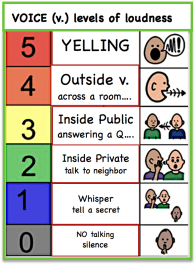
3. Share IDEAS & JUDGMENTS – expresses our thoughts & decisions to anyone around us. Relating opinions lets us check if others are safe to be with (“I like that brand of …..”)
4. Share FEELINGS or EMOTIONS to a trusted few, revealing what’s under our ideas & judgements (#3), telling how we feel about PPT (“I was so happy when…..”)
5. UNGUARDED FREEDOM to be COMPLETELY HONEST with another. When we legitimately self-disclose to 1 other or in a safe group, they reciprocate. We share our deepest dreams, fears, hopes & emotions, because the risk factor is no longer an issue. Each side has proven to be available, caring & reliable, so it’s OK to trust them. (“My deepest secret is….”) From John Powell
NEXT : COMM. Categories – Types (Part 2)
 HEAL & GROW for ACoAs