
 PREVIOUS : GRIF – & the BODY, #3
SITE : ” Existential Therapy and the Search for Meaning After Loss”
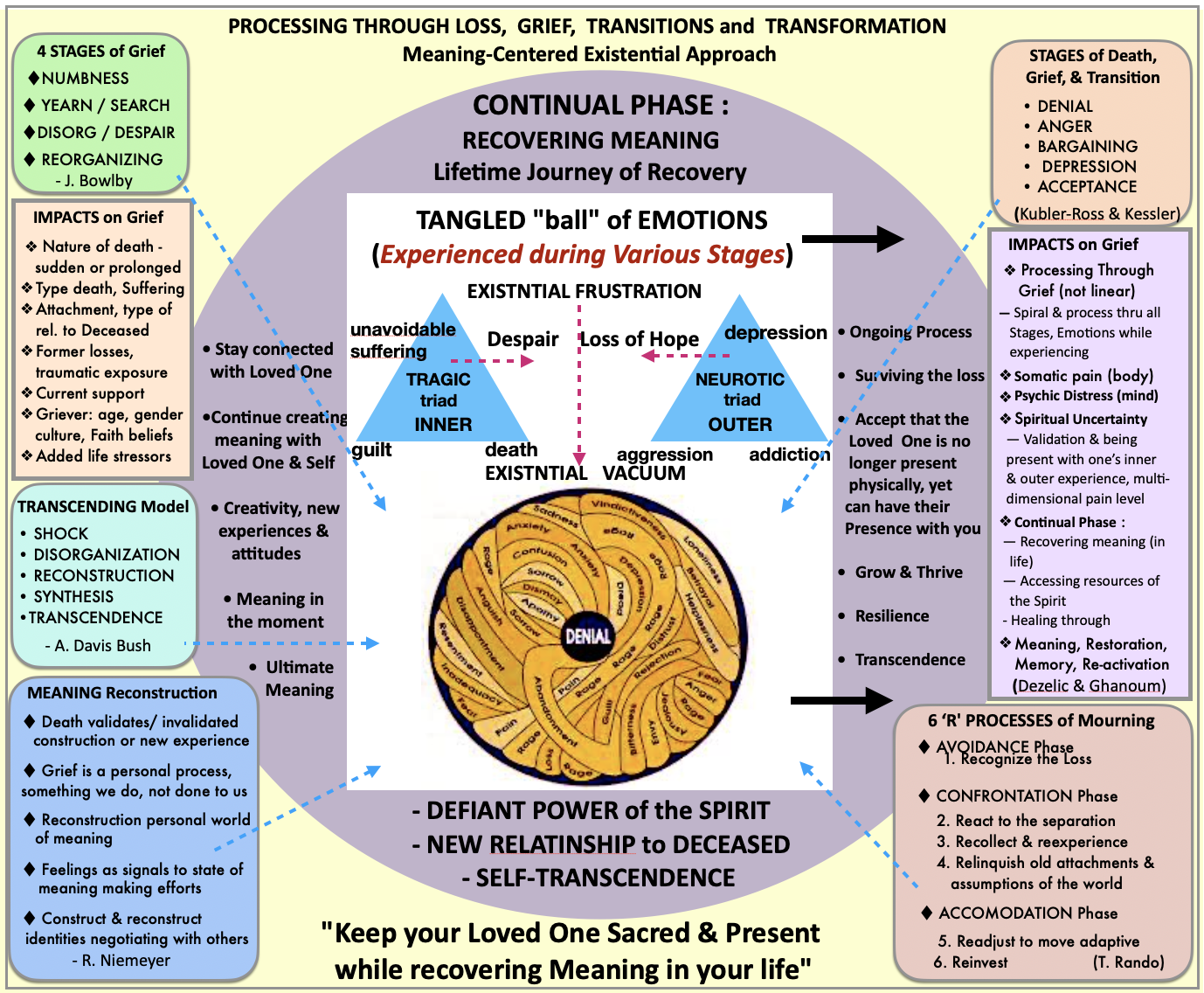
IMAGE : Created by Marie S. Dezelic, Ph.D. and Gabriel Ghanoum, Psy.D., © 2014
GRIEF – the process a bereaved person goes through to absorb the loss after the death of someone special to them – is an individualized process, where no two styles are exactly the same.
DEF : “Existential“ refers to the examination of the human condition, the ‘meaning of life’ & the search for purpose. It explores themes of freedom, choice, & individual responsibility. Can refer to situations that cause deep reflection about one’s existence.
Conceptual Pictograph ⬆️
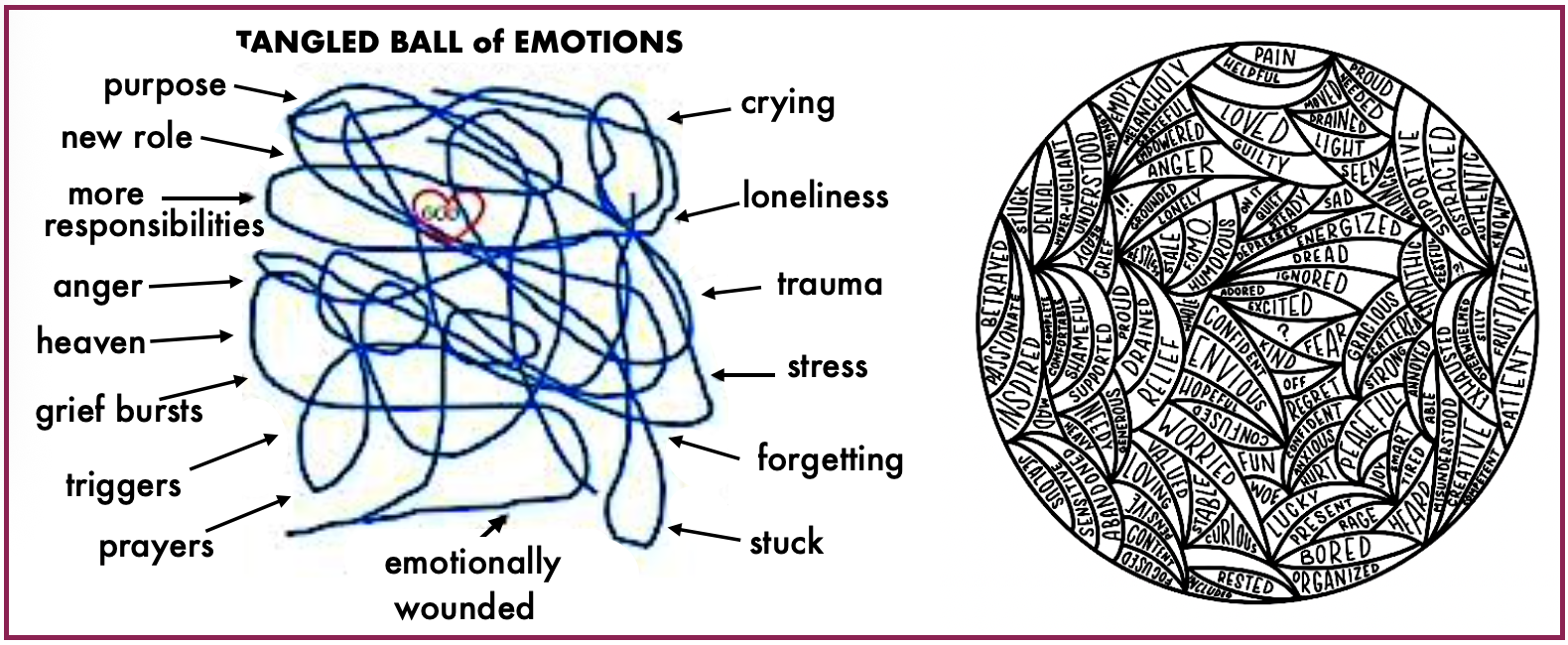
This “Meaning-Centered Model of Grief” was designed to be a concrete tool & handout for clinicians & patients to apply to the grief therapy process. The “Tangled Ball” shows how the many emotions & their layers are experienced via the various healing modelities designed by pioneers in the field of Death & Dying Grief Work.
Viktor Frankl spoke of 2 triads in Existential Analysis Logotherapy, with 3 concepts each.
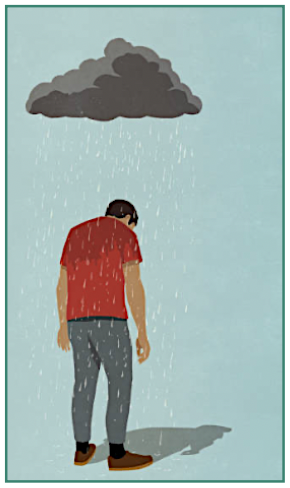 ▶︎ In The Tragic Triad = people in deep sorrow experience:
◎ Unavoidable Suffering, as the death of a loved one, or other trauma
◎ Guilt : the responsibility, fault, or blame because of a situation they’ve been a part of, caused, or has been hurt by
◎ Death: the awareness of, questioning about & despondence they feel when realizing how fleeting life is
▶︎ In The Neurotic Triad—people in despair feel :
◎ Depression: experienced in the griever’s inner world, having lost their will to live
◎ Aggression: an outward expression of violence of internal rage used to try controlling others & their environment. OR rage turned inward, harming themself by self-mutilation or, at the extreme in a suicide attempt
◎ Addiction: wanting to numb their pain & despair by substance abuse or various forms of thrill-seeking, to feel invincible & appear larger-than-life, without considering the consequences.
In the initial stages of grief, the inner experiences & outer expressions of pain represented by the Tangled Ball can lead to Existential Frustration, Despair & Loss of Hope.
And further – combining the griever’s “internal pulling force toward the lost one with their emptiness, boredom, apathy, struggle, & a sense of meaningless existence” – may cause a temporary Existential Vacuum.
The clinician’s work is to be present, validate, support, & help navigate the griever’s internal emotional landscape through the Triads – as they try to “understand” the loss (forming ‘meaning constructions‘ – also used in seeing films). (▼Artwork from SITE )
«
«
Considerations in Grief Work
✭ Age of Griever, Gender = their age & mental development impacts how someone feels, understands & integrates the death into their current experience. Likewise, men & women grieve differently, and approach the process from a different set of acceptable parts of the gender roles they each hold.
✭ Amount of Suffering = if the griever witnessed their loved one suffer for an extended period. If prolonged, the surviver may feel relief afterward, & at a sudden death they’re relieved there wasn’t prolonged suffering
✭ Attachment style, & Nature of Relationship with Deceased = will play a major role in how grief is felt. The griever may use the same style in expressing sorrow, or acting that way may no longer feel comfortable or safe.
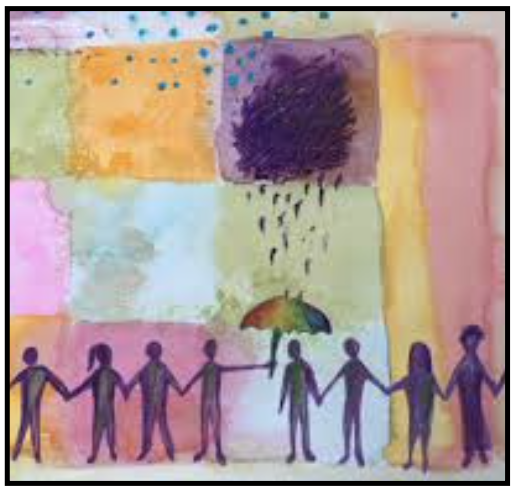 ✭ Current Support Network = the grief experience can be very lonely, as the person may feel no one understands their loss, so outside support can offer some reprieve. (Support options)
✭ Former Losses & Traumatic Exposure = subjected to several losses (family members, spouse, beloved pet) can compound the traumatic response. Or – lessen the impact if they’ve developed coping strategies or have become used to death.
✭ Griever’s Culture, Faith Beliefs = their practices impact the grief process by increasing certain expectations , but can also bring peace & comfort through ceremonies & support.
✭ Nature of the Death = was it sudden, as a tragic accident, suicide or homicide. Or prolonged & expected, as a terminal illness diagnosis
✭ Other Stressors in griever’s Life = include financial constraints, work-related problems, family relationship issues, & their own personal medical complications/disabilities. These will add to feeling overwhelmed which intensifies the grief, leading to chronic or traumatic reactions.
MORE (scroll down) : 1. Processing thru Stages, Spiraling thru Stages, Validating the grief
2. Continual Phase : Recovering Meaning, Resources of the Spirit, Healing thru Meaning, Memory, Restoration & Re-activation.
3. Overview of the Continual phase.
NEXT : GRIEF – & COLORS, #1
 HEAL & GROW for ACoAs