
 PREVIOUS: Emotional Safety – OTHER types
SITE : “Dynamic Healing“ = Polyvagal theory….
FAMILIAR : Given an unsafe childhood home & external environments, many of us struggle with emotional pain that can be overwhelming, & harmful thoughts that cause confusion & despair. In reaction, we try to push it all down — only to have them resurface in unexpected ways that we don’t understand. We feel pulled apart by conflicting needs & attitudes.
1. The Brain’s 3 Emotion Regulation Systems
⚙️ We react to childhood trauma & adult tragedies in disturbing ways – addictions, withdrawal, aggression, ambition, narcissism….. Ironically these responses are not flaws – they’re the brain’s valiant but limited attempts to keep us safe, since they often work against us. 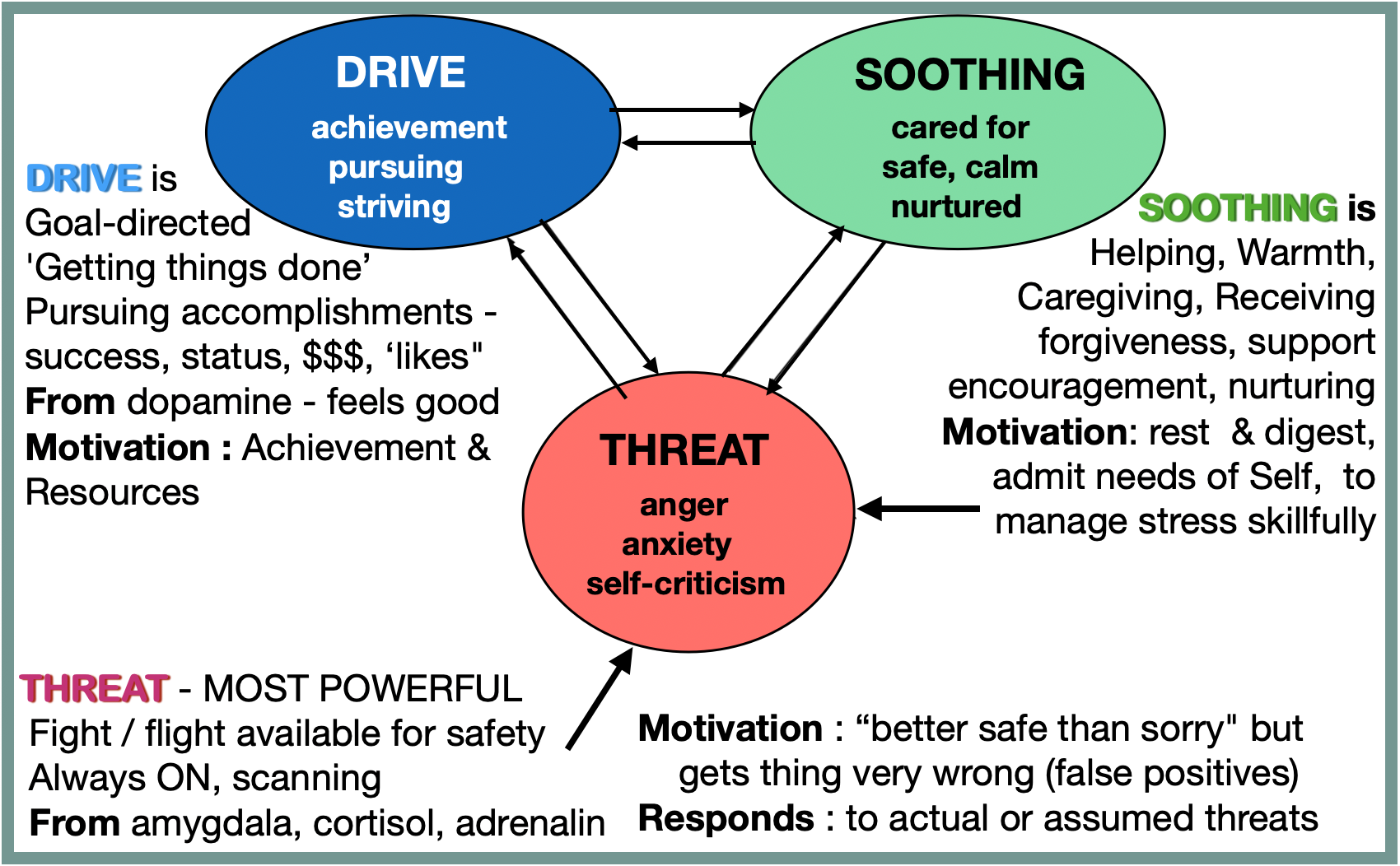
Learning about the brain’s 3 core systems — Threat, Drive, Soothing — can be used for learning to balance one’s thoughts & feelings.
It’s also important to consider our individual personality styles that influence how these systems function.
** NOTE : Site is extensive. Most is valid, but it’s recommended to ignore all explanations based on evolution, now less accepted by the scientific community.
a. Ongoing exposure to toxic stress or trauma in childhood affects brain development, often causing long-term difficulties, making it harder to cope later on
b. Early attachment relationships influences how we treat ourself, & how we relate to others – well into adulthood.
 Both factors affect our Window of Tolerance – the zone of arousal where we function best. (extensive info)
▪︎ When we’re outside that window, we feel anxious, & reactive, or emotionally shut down, even dissociated.
▪︎ Within it, we’re are in a state of balance, which allows for adaptive responses to stress – able to think clearly, stay present, & respond flexibly.
2. Porges’ Polyvagal Theory describes how our autonomic nervous system (ANS) affects safety, trust, & intimacy, through the Social-Engagement System (SES).… It picks up positive signals from others, needed to support us when under stress, with body language, voice quality, & facial expressions. If our SES likes what it sees & hears, it calms us. Since this operates unconsciously, we’re not aware that it is calming, that the SES overrides stress hormones when other people trigger us.
The brain is built to constantly detect & analyze information via our senses – telling us if we’re in a situation that’s safe, dangerous, or life threatening. The amygdala sends out urgent signals when something feels wrong, called neuroception, which sets off reactions meant to protect. Although these signals are usually unconscious, we can learn to be aware of them by observing defense mechanisms the brain mobilizes. 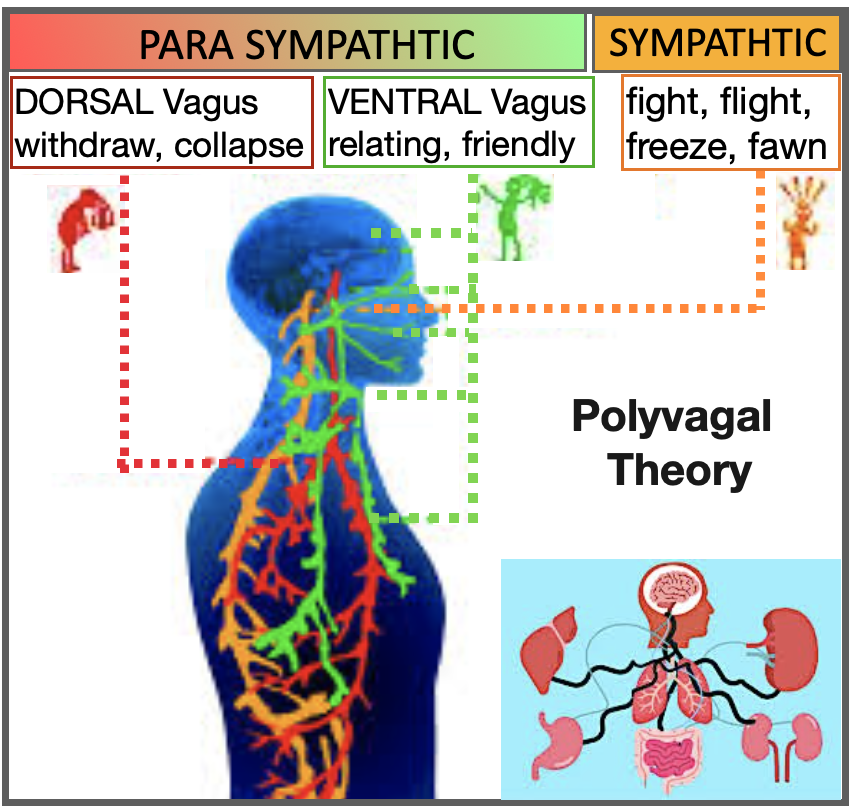
These can help in emergencies, but become overwhelming if we’re on high alert all the time. The prefrontal cortex, responsible for reflection & emotional regulation, then loses much needed influence. Thoughtful decisions are unavailable, replaced by reflex or retreat.
EXP re. a child hearing a parent’s question : In a supportive environment, he/she responds with ease. In a critical one, they will hesitate, scrambling for a safe answer before saying anything. With constant negative repetition, the brain comes to link uncertainty with danger, even when – later on – no immediate threat is present.
3. Traffic Lights
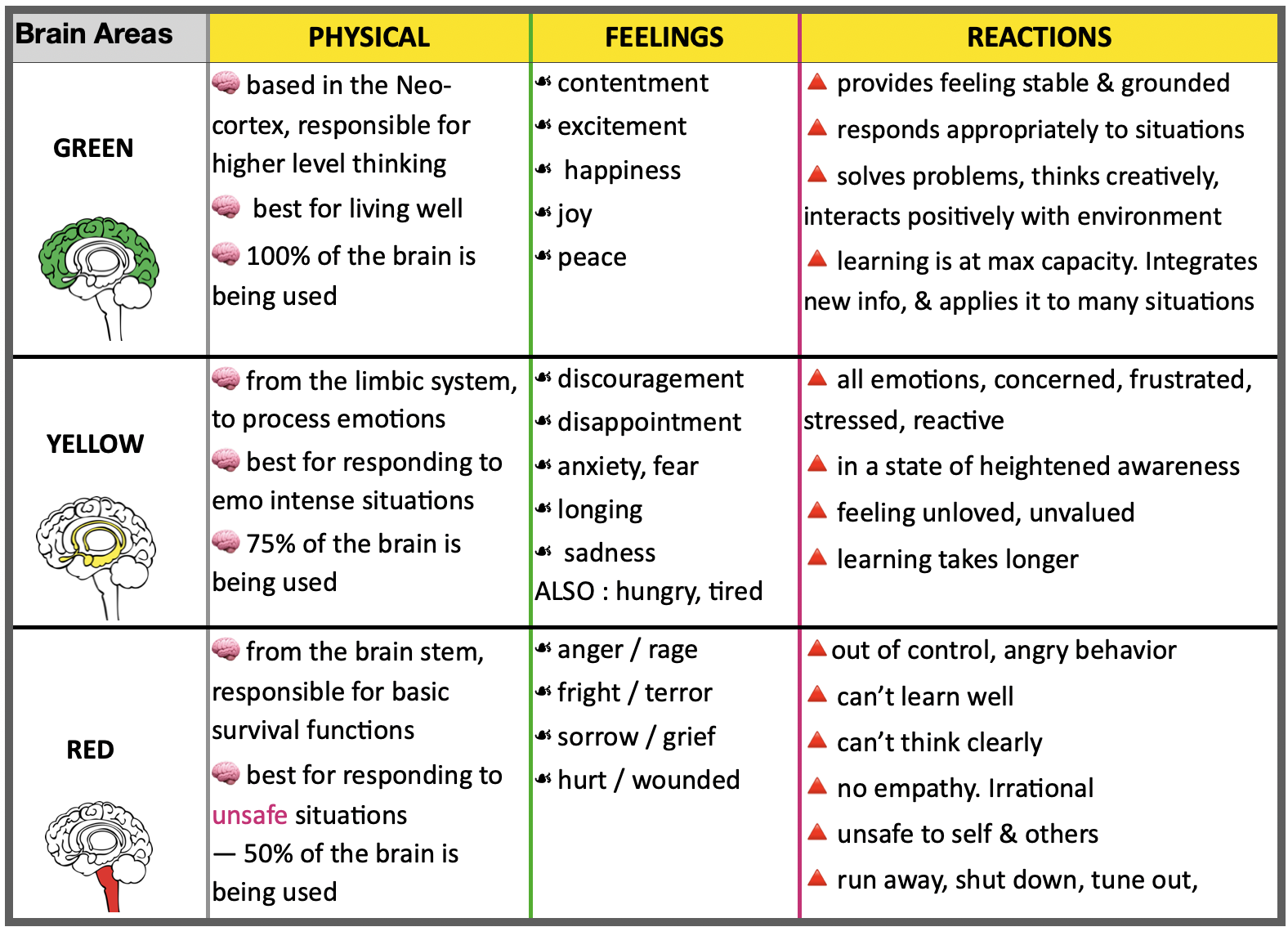
Another way to consider how the brain functions is to imagine it as a traffic light with the standard 3 colors. When our brain lights up one of them, it’s indicating something important that needs paying attention to – to use, ponder or escape.
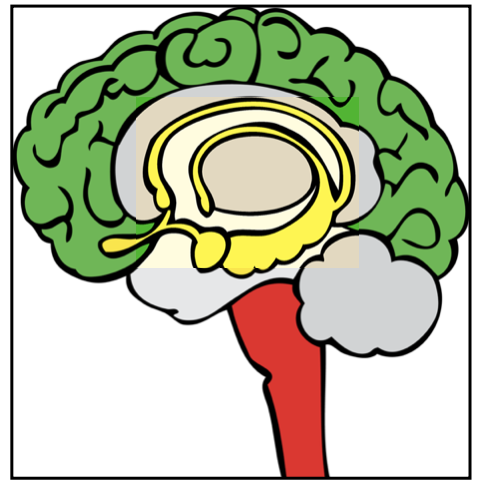 3 Brains : 🟢 GREEN = Neocortex (safe)
🟡 YELLOW = Limbic System
🔴 RED = Brain Stem
When in RED Brain mode – we feel unsafe, ‘abandoned’ in PMES ways. We will try everything we can to feel safe, to get to Yellow Brain territory. But we’re in a double bind : to get to Yellow, we have to feel safe(er) ! and the way ACAs try – is usually counter-productive !
NOTE : Trauma survivors have been numbed out to these signals or are stuck in Red all the time. And “Literalists” like Sensate people may think that factual events are all that matter. Actually, the way we perceive things is far more relevant to our understanding of reality, but its power is not often realized.
Physical safety is not enough to learn or function well. The feeling of being safe (loved, appreciated, valued, heard….) is just as important, if not more so.
«
«
NEXT : Emotional SAFETY & the BODY (#2)
 HEAL & GROW for ACoAs