
 PREVIOUS: TOP-DOWN thinking
💎 SEE Definitions below
2. BOTTOM-UP (B-U) Inductive Perception
This is the reverse of Top-Down – which relies on previous knowledge & experiences to create meaning.
INSTEAD:
B-U processing starts with observing many pieces of concrete reality & extrapolates from them what the big picture is or may be. The stimulus (what we observe) itself shapes our perceptions, without any preconceived ideas, moving from the details of a situation or person —-> to the broad overview or conclusion. (like Dr. WHO)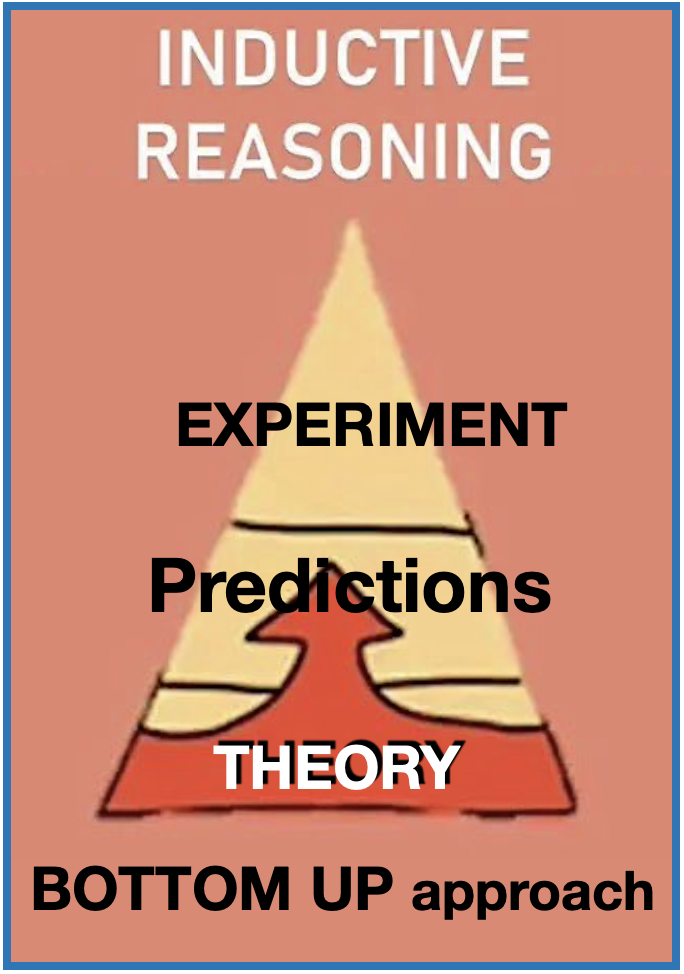
EXP: Looking at many pictures of separate grey leathery body parts, we realize they’re all parts of an elephant.
Sensation & perception are understood solely in terms of environmental stimuli. Rather than depending on learning & context, perception is “what you see is what you get” The 4 stages of sensory processing :
• Reception = Sensory information (sight, sound….), the visual processes and mental expectation which contribute to how we see the world
• Transduction = bottom-up processing breaks down perception into its most basic elements. EXP: if you stub your toe, nerves endings immediately send pain signals to your brain as electro-chemical information
• Transmission = anything in our environment that stands out & grabs our attention (horns, sirens, phone rings, doorbell….)
• Interpretation = B-U attention solves smaller every-day problems EXP: since it has become automatic to check your phone, you won’t ignore a text notification….
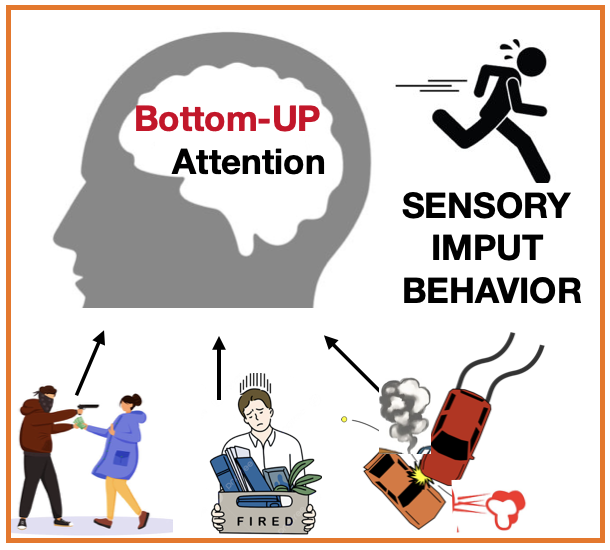 In general – all incoming signals are received in the brain by category, each message deciphered separately in specific regions, such as the parietal lobe.
When we look at something / someone, signals are brought to the retina, & these electrical impulses travel along visual pathways in to the visual cortex. They’re processed to form our visual experience, allowing the mass of information to be interpreted into appropriate action (motor) responses.
The B-U approach tells us that body sensations or feelings are the first to occur. 2 steps are involved : Stimuli received —-> which spark Emotions. Those are controlled & processed mainly at an unconscious level (bottom-up). But we only become gradually aware of emotions after growing & strengthening the thinking brain (top-down).
Because of the emotional aspect, the B-U way of understanding the world is often dismissed as simply anecdotal, without statistical or scientific backing. Actually – it’s how we harness creativity, excel in innovation, improve problem-solving, flexibility & work-place engagement ….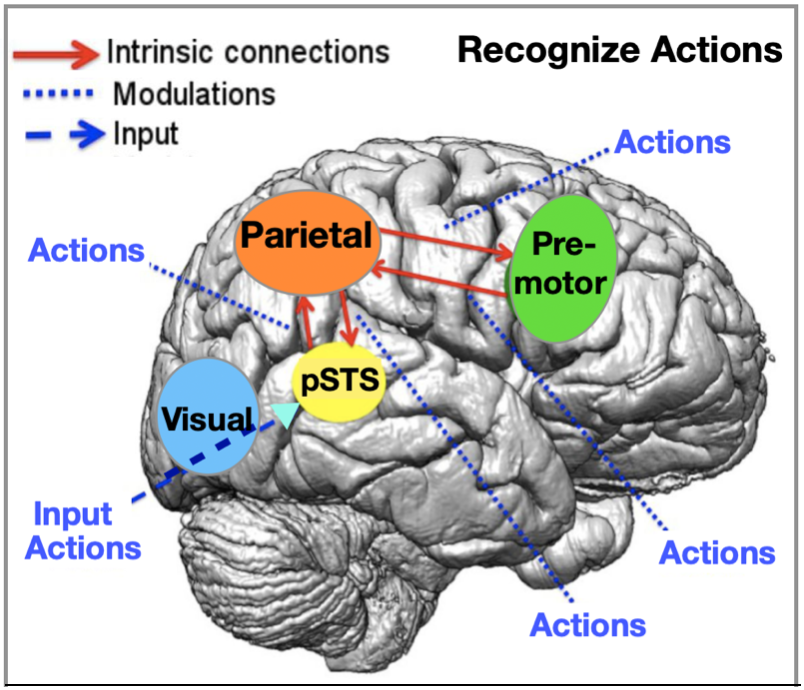
HOWEVER – Because the B-U approach does start from small observations, it can easily open the door to several cognitive biases,
— from Over-estimating the significance of small samples of data
— to Confirmation bias – finding evidence for what you believe, from assumptions made.
Even so – this style is based on actual reality, and the only way to be imaginative, creative, pragmatic. (CHART ⤴️)
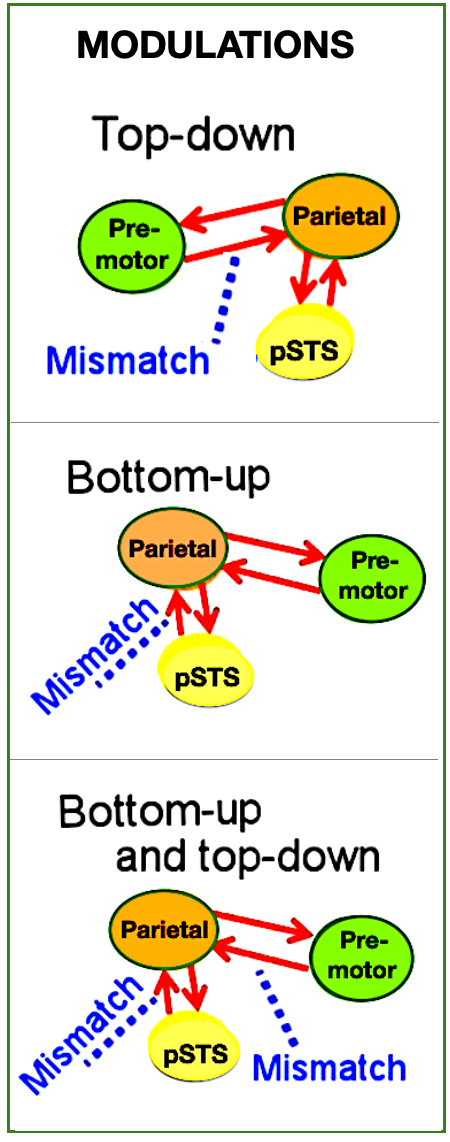 The major benefit of the Bottom-Up Approach is that it integrates the entire brain. It doesn’t just focus on a primal part but the top, bottom, left & right. This is the key to healthy emotion regulation. It allows us to analyze feelings after stabilization & safety have been built. It explains why a person needs to feel safe first before they learn to regulate / manage their responses to stressors.
It’s very hard to reassure someone of their safety when the alarm (amygdala) is blaring – the body is too busy reacting for the brain to think. This fight, flight, freeze, or fawn part of the brain is the first to develop. To prevent this from happening, the lower parts responsible for sensory-motor & survival need to function well before the higher parts can take over.
Actually, models of emotion regulation which emphasize a balance between top-down & bottom-up processing – highlight their mutual influence, while acknowledging that under some conditions, one or the other will exert the strongest regulatory effect.
DEFENITIONS 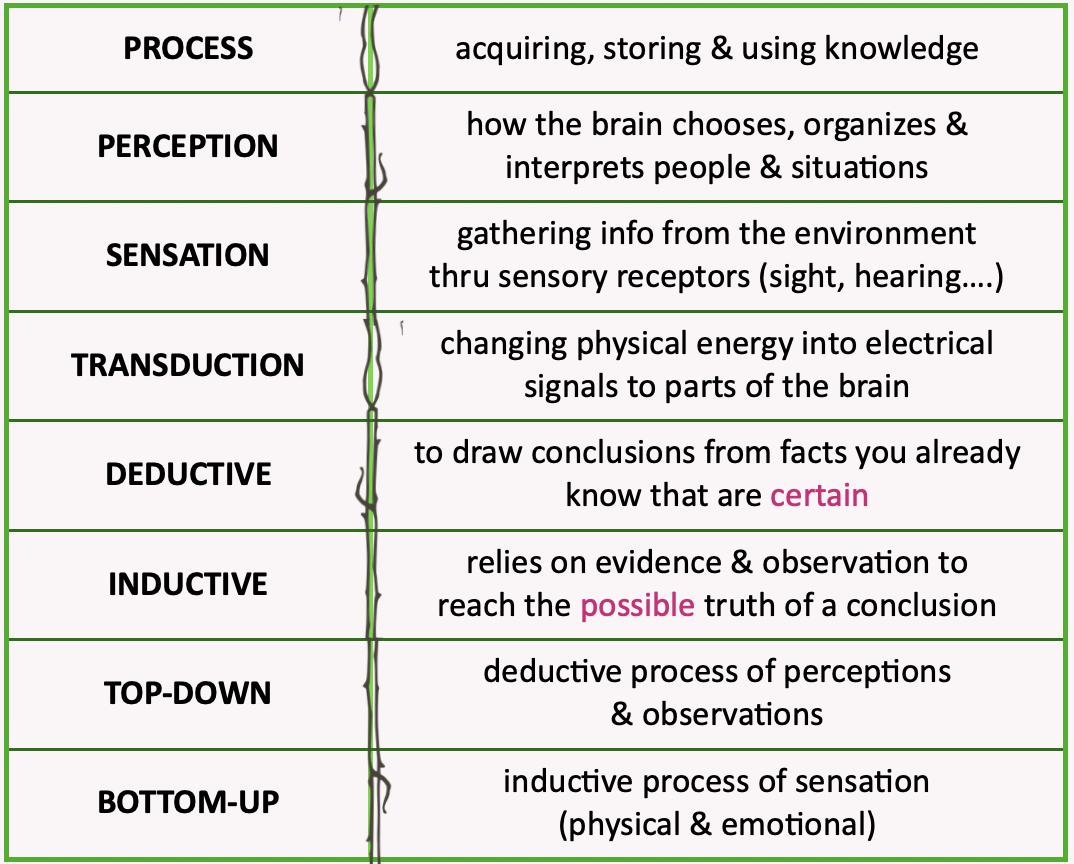 «
«
NEXT : Self-Reg. & Emotions (#1)
 HEAL & GROW for ACoAs