
 PREVIOUS:
Sexuality & PORN
SITE : “Why Your Brain Thinks Food and Sex Are the Same”
As indicated in the previous post (re. Porn) the ways that sexual interactions are conducted (or not) are a marker of a person’s capacity to “embody their body”- to stay connected & tuned in physically – in order to experience pleasurable sensations in the body.
Healthy sexuality is a way to enjoy “living in & through” the body with ‘the Other’, providing a sense of ownership and agency (in charge) during foreplay & intercourse.
However – the body is also a battleground for eating disorders (EDs). A study by Cassioli et al. documented well-known sexual dysfunctions often detected in patients with EDs & their connection to core psycho-pathology. It showed that disorders of embodiment explained the interaction between unhealthy eating behaviors & low sexual desire.
“Body image distortion” is a negative attitude about their weight or shape. Uneasiness towards one’s body has been identified on a continuum in the general population, & found to be associated not only with dysfunctional eating habits, which can include obesity & body dysmorphic disorder, but also social anxiety, schizophrenia, manic-depressive disorders.
An international study of women with ED found that their sexual dysfunction was higher than in the general population. Women with restricting Anorexia Nervosa (AN) – are less likely to have a romantic partner or have engaged in sexual intercourse – than women with Bulimia. However, both EDs are related to :
— lower lifetime body mass index (BMI)
— higher intero-ceptive awareness & trait anxiety
— earlier age of onset of ED, & loss of libido
— decreased sexual desire & increased sexual anxiety
— higher harm avoidance & personal ineffectiveness (powerlessness).
BODY : Aside from genetic, illness & environmental factors, sexual satisfaction in AN sufferers is inversely related to the amount of their caloric restriction, ie. the greater the weight loss, the greater the loss of sexual enjoyment. Along with psychological problems, low libido can also be caused by the physical consequences of hypo-gonadism (either testes or ovaries) of emaciation, proven by an increase in sexual drive with weight restoration.
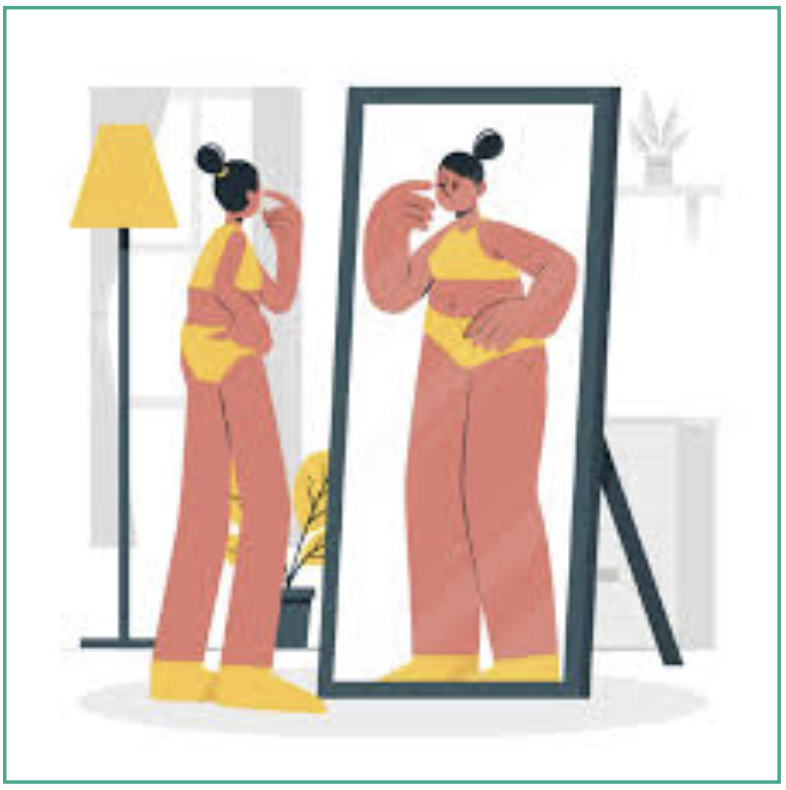 MIND : Evidence of the mind-body connection comes from clinical observations of sexual attitudes & behavior in patients with EDs, with their sexual activity not being “lived from within” but from a third-person perspective.
In these people, Insecure Attachment styles are responsible for being overly self-conscious of their body, which in turn reduces the ability to feel & decipher bodily “signals” such as hunger, dehydration, satiety, fatigue or pain, as well as emotional detachment. (BDD)
During sexual activity, any person may temporarily consider themself an object to be looked at, inspected & desired. This is not usually a problem if they are Securely Attached, but becomes so when an Insecure is plagued by physical dissatisfaction, emotional avoidance & detachment or compulsive control of one’s own body, including “estrangement feelings” toward it & worries about particular body parts, shapes or functions.
 A severe lack of sexual self-esteem can cause a sort of dissociation called “Spectatoring“, a person’s mental fixation on their body &/or performance, while also experiencing themself from a third-person perspective during sexual encounters, disconnected from actual physical
Highly insecure people have a “body-for-the-other” perspective, only as a collection of parts meant to be consumed by others (starting with their parents!). In sexual medicine, self-objectification & women’s tendency toward compulsive self-surveillance (← scroll down) during sexual activity, result in dissociation from the immediate moment, an intense detraction from the sexual experience. (“Bodily alienation & the Gaze” — Scroll to page 69 )
Childhood Sexual Abuse (CSA) & ED
CSA is related to borderline personality traits, severe depression, inter-personal distrust, increased weight gain, impaired sexual functioning & body image distortion, panic attacks, suicidality & somatisation.
(BRAIN Effects of CSA)
CSA is a common risk factor for Bulimia & binge eating – more so than for Anorexia – especially when there are also mental health problems, without indicating the severity of each type.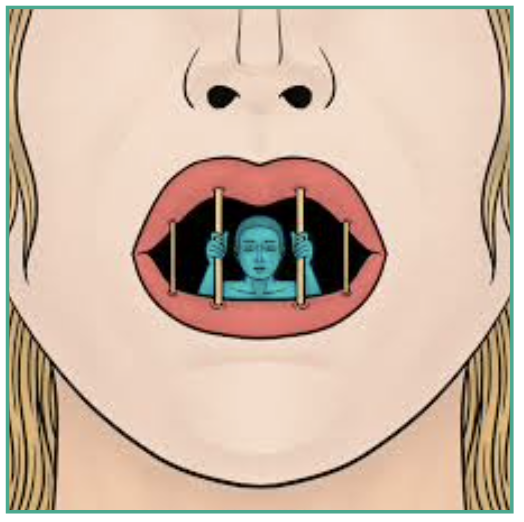
Studies noted that around 30% of ED patients have been sexually abused in childhood (CSA), & that Bodily Dissatisfaction links them – a revulsion toward the body, with worry about one’s shape, size & weight. People who reported childhood molestation scored higher than those molested at any age after adolescence – on tests for negative body-attitudes, such as on the EAT (eating), the BAT (body), & the BIT (Bulimic Investigatory) of Edinburgh.
NEXT : Attachment & ANIMALS, #1
 HEAL & GROW for ACoAs