Ennea-Type : IMPROVE COMMUNICATIONS (#2)

PREVIOUS : Improve Communications (#1)

Type 5: Whether you’re communicating verbally or in writing, try to fill it out a bit more by Including feelings as well as facts & information. Try to withdraw less often & stay engaged with coworkers a little more.

For Managers : Give 5s the time & space they need for themselves, but encourage them to communicate openly with others & maintain relationships.

Conflict Resolution : Try to maintain some emotional stability while arguing. 5s like to keep to the facts of a situation and will detach when emotions get too heated. Walk away from the argument if you are to emotional as you will be unlikely to get a response. Tell them that your feelings are hurt without expecting them to do something about it (they become angry when there are emotional expectations). Don’t let them use knowledge or arrogance as a weapon and remind them you are a person not a robot or computer.
🔰
Type 6: When you communicate, reduce the number of words that indicate fear, anxiety & worry. When describing or explaining a negative task or event, also include positive options or solutions. Manage your anxiety using tools like meditation, so you can keep the ability to make clear, rational decisions.

For Managers : Encourage 6s to face their fears head-on, or help them relax & see the humor in situations

Conflict Resolution : Admit any ulterior motives. Try to stay calm but don’t dismiss them, Find common ground and allay their fears of abandonment or anger. Do not get lost in their arguing circle, if it feels like a marathon walk away. Hold your opinion but don’t be stubborn about seeing their point of view. Do not insult their intelligence or flatter or appease them. Don’t try to win, this will only escalate the argument. Don’t tell a 6 to calm down.
🔰
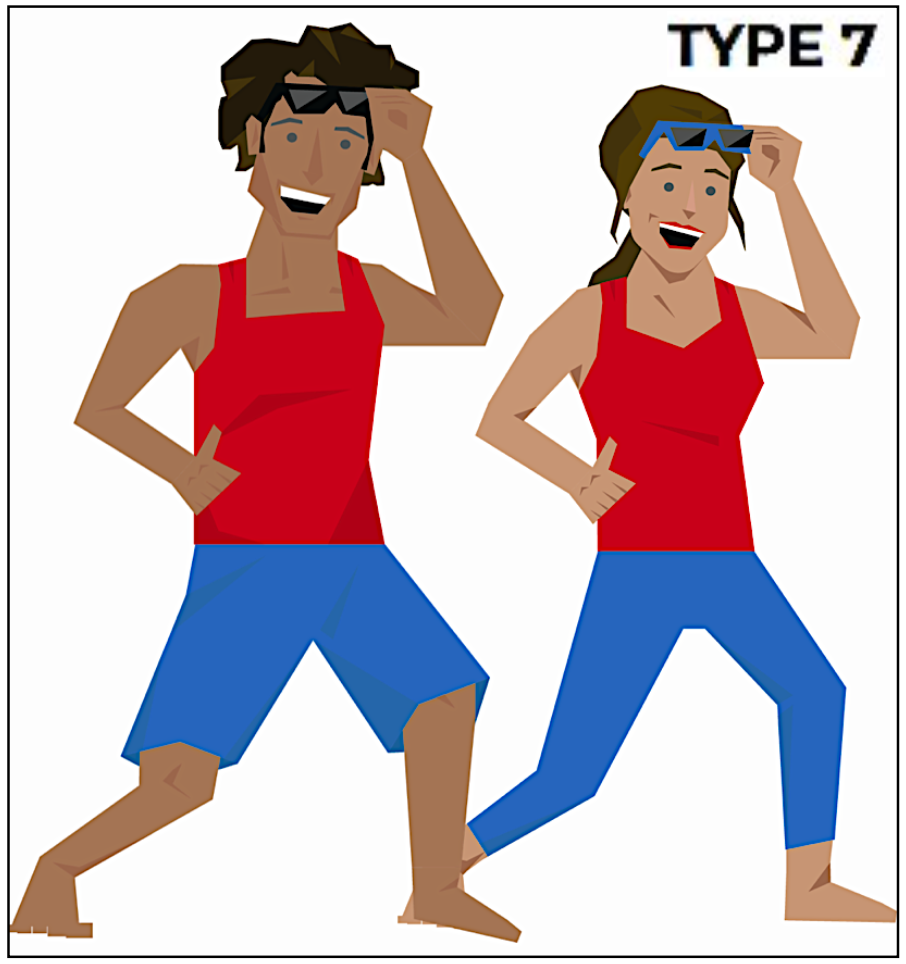
Type 7: Practice attentive listening, & resist the urge to interrupt. Focus on what others are telling you about themselves. Work on balancing your positive outlook with moderate, realistic, even negative possibilities – to be prepared.

For Managers : Help 7s achieve a balance between idealism & practicality, without dampening their enthusiasm & passion. Encourage them to take their good ideas to completion.

Conflict Resolution : Try to allow them their space but hold them to a time when the conflict can be resolved, 7s will flee at difficulty and let them know how this affects your relationship.

If they try to leave ask them to set aside time for you to discuss it (5s like this too). Don’t harp too much on what they are doing wrong or they’ll shut down. Don’t sugar coat things but try to reframe things so they can take in the information without feeling too threatened.
🔰
Type 8: Be a bit warmer & more personal with coworkers, & less formal with supervisors. Start communications with a friendly greeting. Listen more, practice patience & restrain your urge to lead every conversation & meeting.
For Managers : Teach 8s not to use anger as a weapon. Show them constant care in order to teach them empathy by example

Conflict Resolution : Stand your ground and do not waiver in your opinion. They want someone who can hold their own against them. 8s will spar with people they love to test their strength.
Try to set ground rules in an argument with an 8 and don’t be afraid to let them know if they hurt your feelings (this often surprises them). Try not to react to their intimidation tactics but don’t egg them on either.
🔰
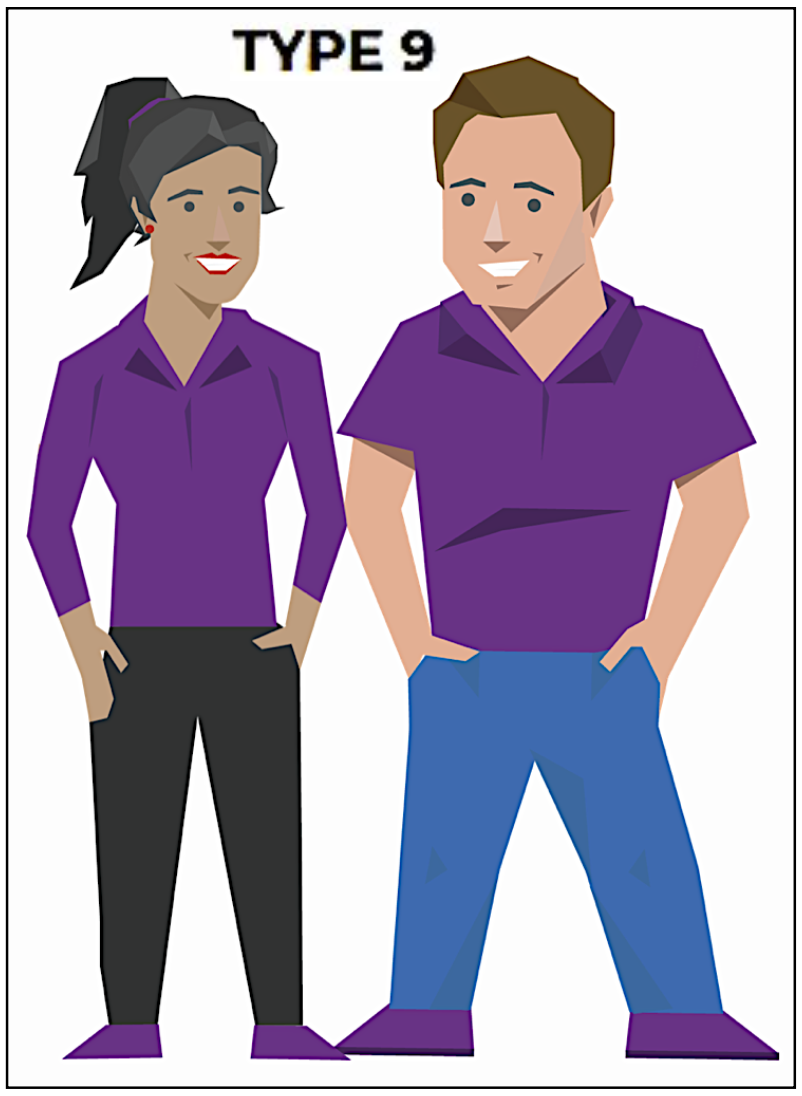
Type 9: Admit to yourself what you think & feel. Then you can be more direct & take a clear stand on issues. If you disagree or don’t want to do something, say that directly to the relevant person. Learn healthy ways to deal with conflict – as a way to achieve harmony.

For Managers – Help 9s create structure in their life, so they can focus better on their priorities. Encourage them to take healthy risks.

Conflict Resolution : Don’t attack aggressively or take a blaming tone, they will tune you out. Try to acknowledge that they want to find a point of agreement between the two of you.

9s will be afraid of your anger & may become stubborn or withdraw when you begin to show your anger. Assure them that your anger doesn’t mean that you don’t like/love them anymore (unless of course you don’t) but that it’s important to resolve this issue.
🔰
NEXT : Ennea – contrasting types
Ennea-Type : IMPROVE COMMUNICATIONS (#1)


PREVIOUS : Ennea-type Communication at WORK (Part 2)


Employee communication styles differ a lot based on where a person’s puts their attention. What might make one person impatient & frustrated in a working relationship will be required, even imperative to someone else. It’s important to remember that there is no ‘better’ or ‘worse’ Ennea-type or communication style. Diversity is key, because that helps make the best teams.

How to IMPROVE Your Communication 

Type 1 Try to lead conversations with a positive observation, & close them on a positive note. Practice active listening. Ask others about their ideas & how they get things done – which might be different from how you would. You’ll build trust when you genuinely try to understand & accept others.

For Managers : Encourage 1s to be less critical of themselves & negative about others. Invite them to share responsibilities or delegate. Teach them to accept what can’t be changed

Conflict Resolution : To prevent escalation, don’t say they’re wrong, incorrect, or bad. Instead – acknowledge you heard their opinion, while holding your ground. Help them see how they’re expressing anger, & being hurtful. Remember that 1s have a fear of their own anger.
🔰
Type 2: It’s fine that you love to form personal connections, but don’t lose your objectivity. Stay focused on work topics rather than someone’s personal life. Practice emotional boundaries (disengagement) to make the most of your work time & minimize people-pleasing, as it can lead to mixed messages.

For Managers : Help 2s let go of the need to fix everyone’s problems & sorrows. Encourage them to prioritize their own needs, rather than always putting everyone else first

Conflict Resolution : Assure the 2 that their efforts are valued & appreciate, but their actions are their own choice. Remind the 2 that you want them to take care of themselves, because their anger often comes from the false belief that they have to take care of others in order to deserve love & acceptance. Acknowledge their feelings, but don’t react to tantrums.
🔰
Type 3: Slow down! It’s legitimate & beneficial for everyone if you take a few minutes at the beginning of a conversation to connect on a human level. You’ll get more out of meetings if you do. Work on managing your impatience with others, using practical tools like taking long deep breaths, when you start getting frustrated.

For Managers : To help 3s grow, show them that they have value as an individual, not just as a productive employee.

Conflict Resolution : Set aside a pre-determined amount of time to discuss problems. Don’t allow them to smooth things over with a promise to change or apologies for ‘not knowing’. Appreciate the hard work they put in, but emphasize the important of relationships. Encourage expression of emotions rather than “just the facts”, which is the communication tool they us to avoid feeling too much.

🔰
Type 4: Practice leaning into logic & rationally based information – to balance your natural alignment with emotions. Try to stay engaged with others – even in activities & conversations you feel are trivial, boring & mundane. Listen attentively. When you speak, try not to use the word “I.”

For Managers : Give 4s a safe space to express their emotions, but teach them to balance extremes. Help them see the impact their actions have on others.

Conflict Resolution : Don’t try to have a completely rational discussion without any emotional content – they won’t be listening. Recognize their intuitive insight, while still sticking to your own personal truth.

4s like to tell other people everything they’re feeling, & they’re usually on the right track. BUT don’t let their histrionics or emotional outbursts drive you away. Take a time-out if necessary so that everyone’s emotions can calm down. Let the 4 know if you’ve been hurt too, & that your feelings are just as important as theirs.
🔰
NEXT : 

Ennea-type Communication at WORK (Part 2)


PREVIOUS : Communication at WORK (Part 1)


WORK STYLE Communication
Type 1-5 (in Part 1)

Type 6
As a Six – your communication style tends to be caring, compassionate, & engaged – witty & warm. You’re excellent at considering & assessing options which you express thoughtfully to your teammates. It’s also true, however, that you believe you must figure things out on your own.

Carrying the weight of that (unrealistic) responsibility can make you anxious & doubt yourself, so it harder to inspire confidence in others.
The challenge is to remember that you’re not actually alone – you’re a part of a team. Find people you trust to use as an accurate barometer of you ideas, when you need reassurance.

📢 Colleagues: If you work with a Six, remember that the more secure they feel, the more relaxed their thinking will be. Avoid putting them on the spot without warning or time to prepare (they need to reflect & balance all possibilities). Whenever possible, help them believe that they’re supported by the team, & that it’s not all on them to make things happen.

Type 7
As a Seven – your communication style is often described as energetic, optimistic & enthusiastic! You have a gift for generative thinking, for envisioning & opening up possibilities. Some of your challenges are about needing to follow through & fill in details.

Also, your preference for starting things (projects, ideas…) can frustrate people who are more methodical or who like to go “deep.” To these team members you can seem scattered or unfocused, like a hummingbird.
Watch for signs that you overwhelm others with so many possibilities. Check to see if you’re connected to colleagues even when you each have different responsibilities & strengths. If not, slow down.

📢 Colleagues: If you work with a Seven, try to embrace the joyful energy of their unbridled curiosity. Look for ways to channel it so it serves the group. Partner a 7 with teammates who are good at putting their ideas into form, rather than expecting the 7 to do it alone. 7s usually shy away from difficult topics, so let them know that negativity isn’t always bad, & when dealt with thoughtfully, it can eventually lead to clarity & agreement.

Type 8
As an Eight – your communication tends to be honest, direct, & assertive. You have a reputation for being generous & loyal to people on your teams. You can be a fierce advocate, & winning your praise can feel like winning the lottery. It’s also true that your commitment to directness can come across as brusque, demanding, even intimidating, which can make teammates retreat to feel safe.

📢 Colleagues: If you work with an Eight, remember that they value directness & welcome being challenged – because it shows where they stand. They appreciate coworkers who can join with them                                                                                                to debate /discuss/ problem-solve honestly. So, take a risk to be bold & straightforward. Chances are you’ll be met with enthusiasm & find new ways to collaborate.

Type 9
As a Nine, your communication style tends to be calming & inclusive. You naturally avoid conflict & choose your written or spoken words carefully, so you don’t offend anyone. Your gift of seeing all perspectives makes you a natural mediator on any team, smoothing out misunderstandings & building connections.

Your challenge is to prepare how well you communicate needs & ideas, so people are clear about where you stand. If you find yourself running on & on, or accommodating each member of your audience, check in with yourself to make sure you have ‘permission’ to say what you really mean. Are it clear, or just trying to be acceptable to your audience? Take the risk of being declarative: “Here’s what I think.”

📢 Colleagues: If you work with a Nine, let them know you really want to understand what they feel or think. Help them “bottom line”it if they’re rambling on about all possible parts of an issue. Gently ask, “What do you think it means?” or, “What do you believe we should do?” Help them trust the creative potential in having courageous conversations about hard topics. Conflict can be very scary, but it doesn’t need be destructive.

NEXT : Improve Communications (#2)