
 PREVIOUS : P.M.E.S. & Self-Care (S-C)
SITE :
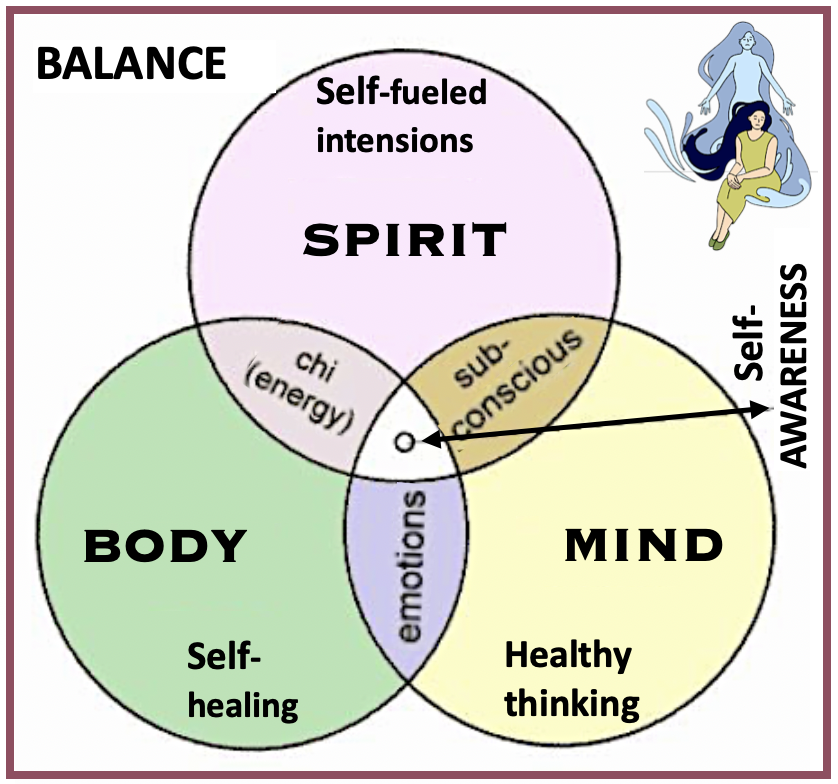
STUDIES show that spirituality has many positive influences on our life. One such identifies spirituality by 5 factors :
🔆 Becoming = the progress that one makes throughout life
🔆 Connection = with oneself, other people, & a supreme or higher power such as God or the Universe
🔆 Meaning = what one gives importance & significance to
🔆 Transcendence = experiences that go beyond what seem “normal”
🔆 Value = what one gives value to
 ☺︎ “Meaning” refers to the significance or interpretation of something – what it basically represents or signifies. it’s a way to identify the inherent good something possesses, & that matters if it can be satisfying all by itself. (Research in the Journal of Personality & Social Psychology)
A UK study led by Vlad Costin defined meaning as : “providing us with the sense that our lives matter, that they make sense & are more than the sum of our seconds, days & years. ….. It is the web of connections, understanding & interpretations that help us comprehend our experience, & formulate plans directing our energies to the achievement of our desired future.”
☺︎ “Values ” are the fundamental beliefs & personal qualities that guide or motivate our attitudes & actions. Values bring meaning to our life, the things we care deeply about & the basis for the choices we make. They indicate the way we treat ourself & others, & our interaction with the world around us. They are not things we achieve or possess, but more like directions we take in order to be a good person & have a worthwhile existence. (More….).
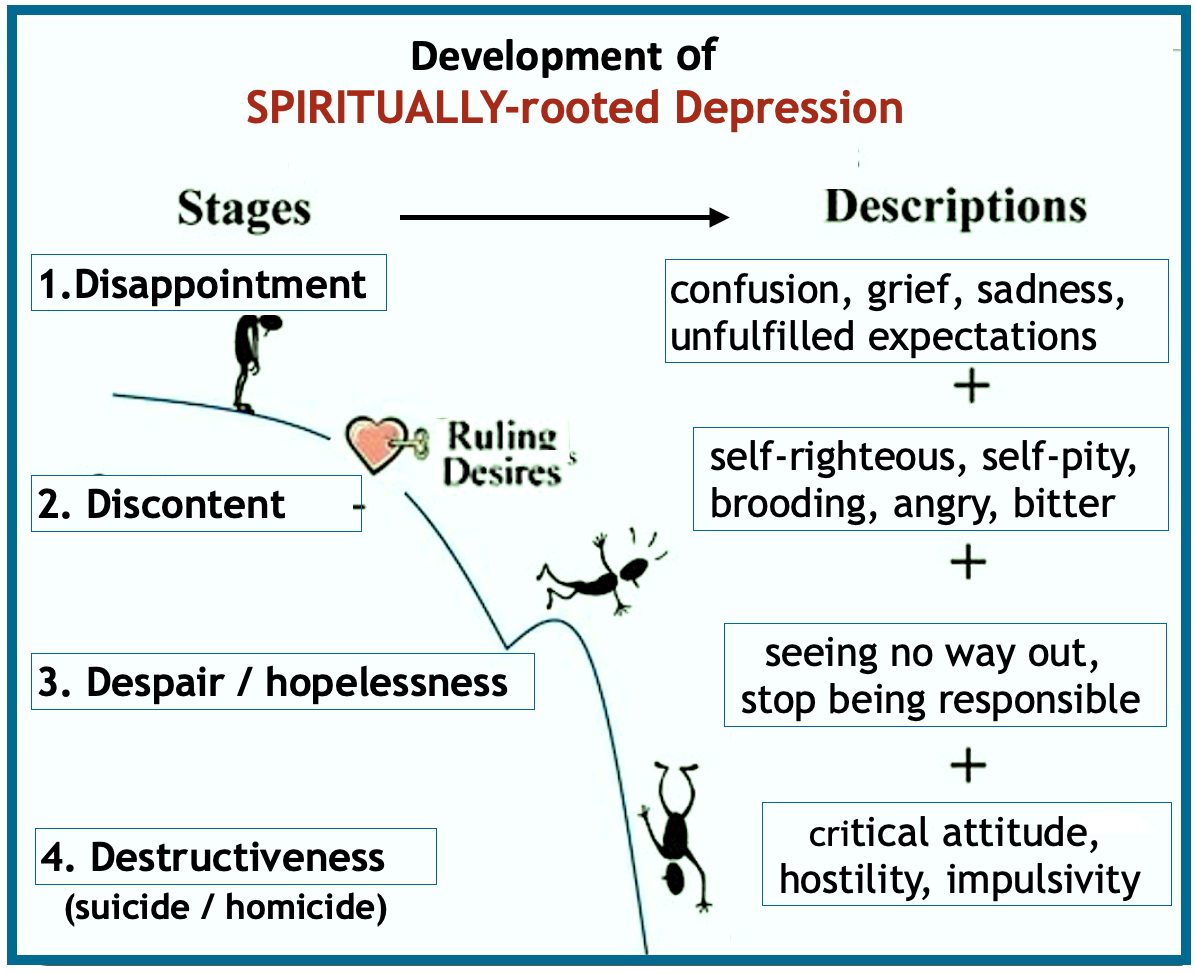
However, in relation to these 5 factors, there is no universally accepted definition. So when a person experiences a loss of faith or connection to God or a Higher Power, it can look different for each person. Also, clinical depression can morph into spiritual depression, overlapping, which results in a loss of joy about one’s life. This combination can suggest mental health issues, such as having debilitating depressive disorder (lasting 2 weeks or more, occurring nearly every day).
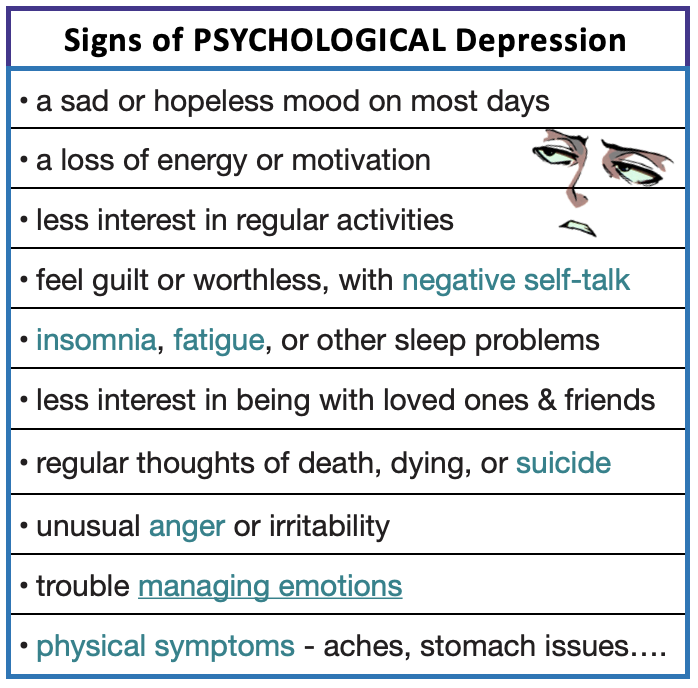 1. Psychological depression is a mood disorder that causes a persistent feeling of sadness & loss of interest – trouble doing normal day-to-day activities, & sometimes feeling that life isn’t worth living. But it’s not just a bout of the blues, not a weakness & one can’t simply “snap out” of it.
⬇️ CHART shows association between environmental & genetic risk factors – for the onset of depression in adolescence – cause by the brain-derived neurotrophic factor (BDNF) . Relative BDNF levels peak in early adolescence & gradually decrease with age.
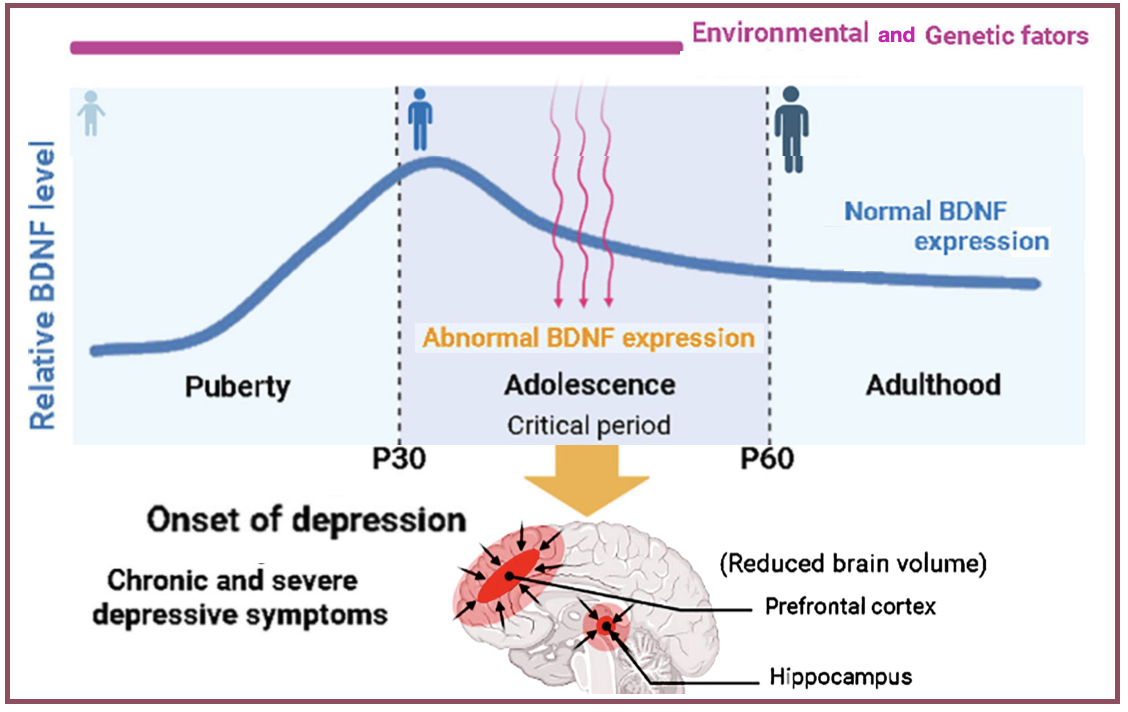 Abnormal BDNF expression due to genetic & environmental factors during adolescence may trigger onset of depression, leading to chronic & severe symptoms, with a risk of having a smaller prefrontal cortex & hippocampus, which can cause susceptibility to mood disorders.
Symptoms may include sadness, irritability, feeling worthless, negative thoughts, anger, poor performance or poor attendance at school, feeling misunderstood & extremely sensitive, using recreational drugs or alcohol, eating or sleeping too much, self-harm, loss of interest in normal activities, and avoidance of social interaction.
Depression in Seniors : It’s not a normal part of aging, so should never be taken lightly. Unfortunately, it often goes undiagnosed & untreated, since many can be reluctant to seek help. Symptoms are similar to those at any age, but can also include:
♦︎ Memory difficulties or personality changes
♦︎ More overall physical aches, pain or fatigue
♦︎ Sleep problems &/or loss of interest in sex
♦︎ Wanting to stay at home, rather than to socialize or do new things
♦︎ Suicidal thinking or feeling, especially in older men
♥︎ Biological differences. People with depression appear to have physical changes in their brains structures
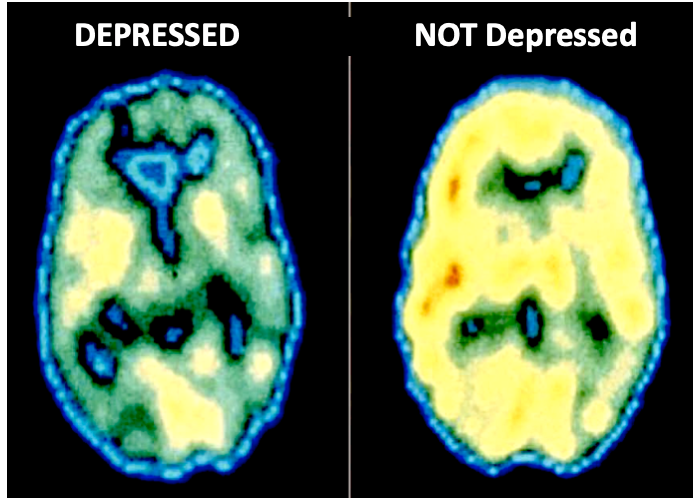 ♥︎ Brain chemistry. Neurotransmitters are naturally occurring chemicals that likely play a role in depression. Research indicates that changes in their function & effect — how they interact with neuro-circuits involved in maintaining mood stability — play a significant role in causing depression & its treatment
♥︎ Hormones. Changes in the body’s balance of hormones may be involved in causing or triggering depression. This can happen with pregnancy & the weeks or months after delivery (postpartum). Or from menopause, physical health problems such as thyroid disease ….
♥︎ Inherited traits – genetics. Depression is more common in people whose blood relatives also have this condition. (MORE info….)
♥︎ Life factors, including major loss, constant stress, trauma, painful
NEXT : 2. SPIRITUAL Depression, Part 2
 HEAL & GROW for ACoAs