
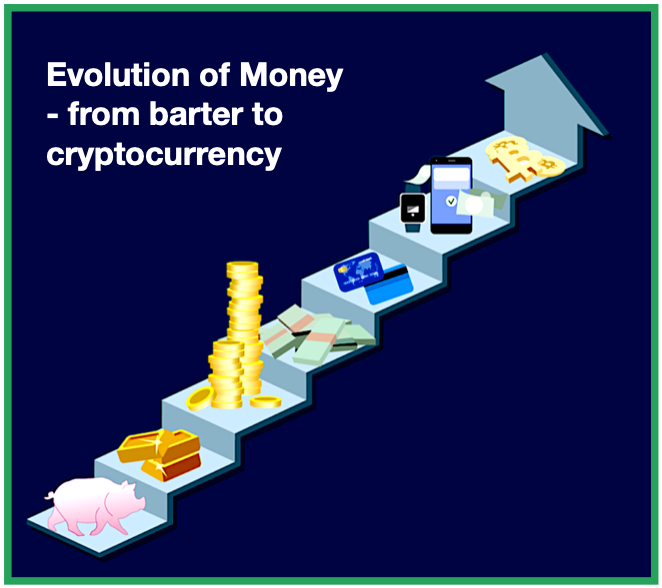
 PREVIOUS : MM – Intro, #3
SITE : • Tragic Money” – from ancient Greek literature & tragedy plays.
💲 💲 💲
In early societies, survival was based on being the strongest & swiftest. But over thousands of years, money has become a substitute for strength & speed. People no longer compete directly for basic needs, but indirectly to purchase food, shelter …..
Because the ancient origins of economic systems precede written history, it has not been possible to trace the true origin of the invention of money. The use of barter-like methods may date back to at least 100,000 years ago, although there is no evidence of a society that relied primarily on barter. Historians believe metal objects were first used as money as early as 5,000 B.C. Non-monetary societies operated largely by debt & gift economy. When barter did occur, it was usually between complete strangers or potential enemies.
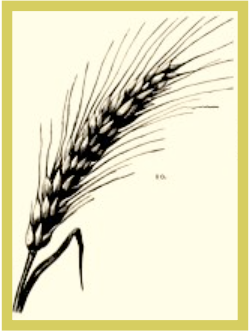 Many cultures around the world eventually developed the use of commodity money. The first usage of the term came from Mesopotamia circa 3000 BC, with a shekel as a unit of weight, which relied on approx. 160 grains of barley. Their accounting documents – in the monetary system sense – showed lists of expenditures & goods received & traded.
Commodities are basic items used by almost everyone – including salt, tea, cattle & seeds. Using these items as money alleviated some of the problems of bartering. However, commodities weren’t always easy to transport , as many were perishable or difficult to store. 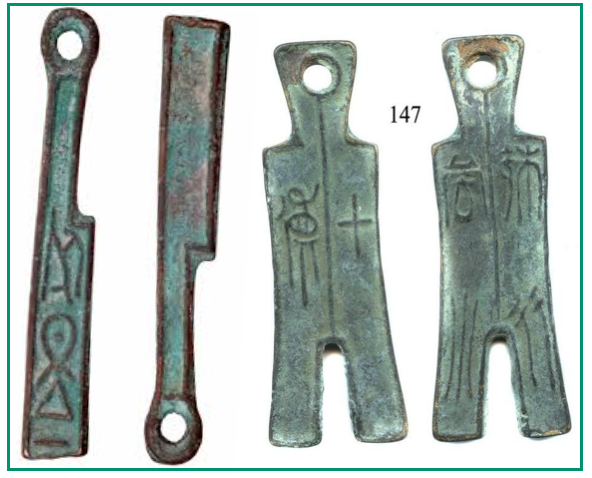
KNIFE-shaped commodity money were produced by various governments & kingdoms in ancient China about 2500 years ago, & circulated in China between 600 & 200 B.C. during the Zhou dynasty. They seem to have evolved in parallel with the spade money (12 different types) in the north-east of China. from 1045 to 256 B.C.
Societies in the Americas, Asia, Africa & Australia used shell The use of shells in trade began as direct commodity exchange, the shells having use-value as body ornamentation.
Metal objects were first used as money as early as 5,000 B.C. According to Herodotus, the Lydians (ancient Turkey) were the first people to introduce gold & silver coins, the first stamped coins minted around 650 to 600 BC. 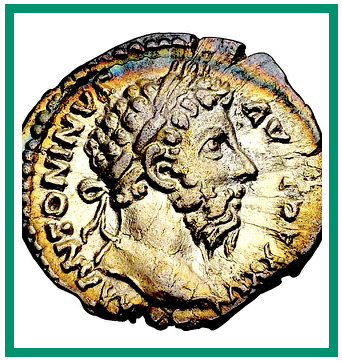
Historical evidence indicates that money has taken 2 main forms, divided into money of exchange (tangible media of exchange made from clay, leather, paper, bamboo, metal…..) & money of account (debits & credits on ledgers).
The history of accounting shows that “money of account” pre-dates the use of coinage by several thousand years. Money as a unit of account was invented when the unquantifiable obligation “I owe you one” transformed into the quantifiable notion of “I owe you one unit of something”.
TALLY – As “money of account” depends on the ability to record a count, the tally stick was a significant development. Tallies have had many uses, such as messaging & scheduling, especially in financial & legal transactions, to the point of being currency.
It was an ancient memory aid used to record & document numbers, quantities & messages. They first appear during the Upper Palaeolithic as animal bones carved with notches (notable example = Ishango Bone).
Historical reference is made by Pliny the Elder (AD 23–79) about the best wood to use for tallies, & by Marco Polo (1254–1324) who mentions the use of the tally in China.
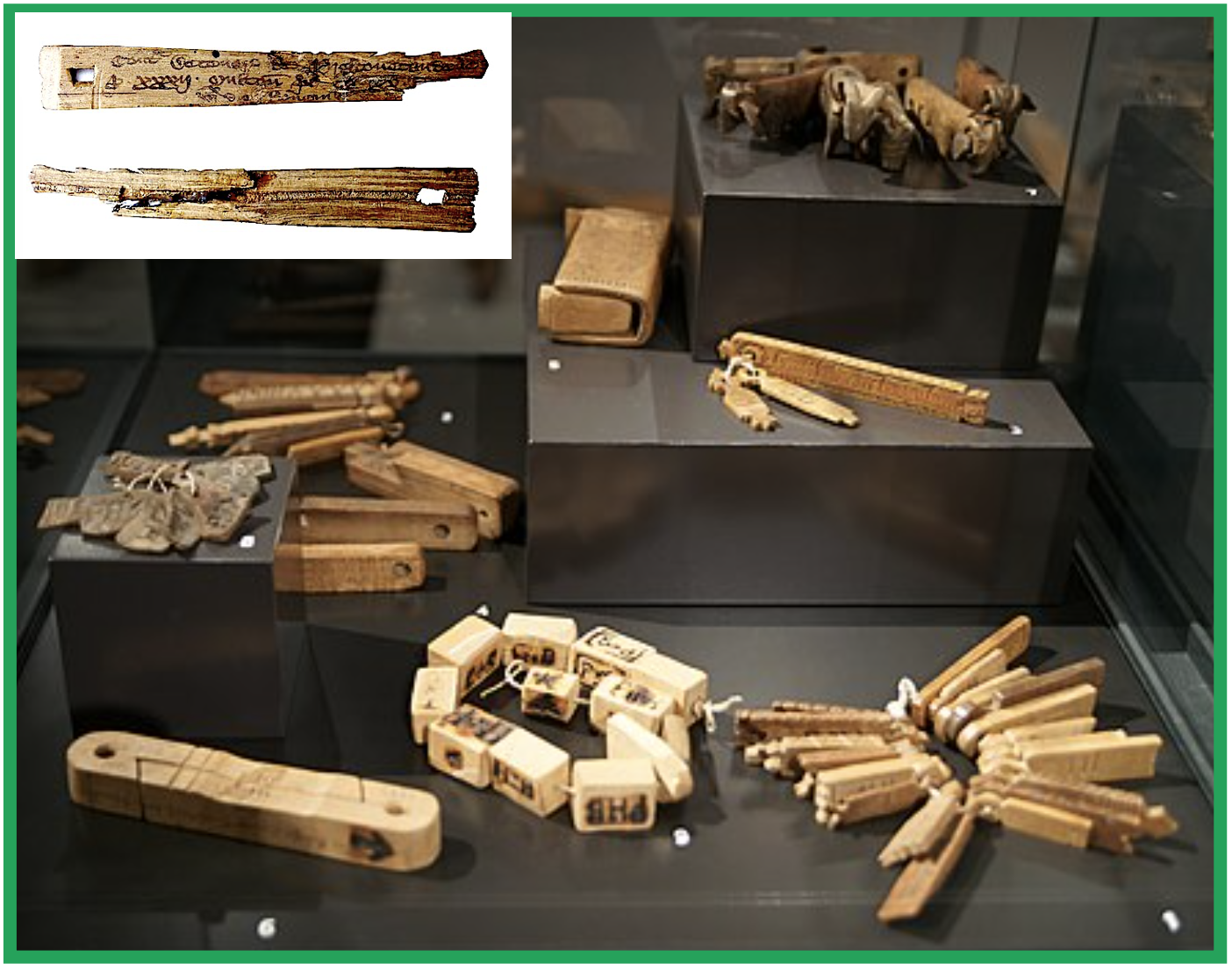
INSET : Medieval English split tally stick (⬇️ front & back) – notched & inscribed to record a debt owed to the rural dean of Preston Candover in Hampshire – of a tithe of 20d each on 32 sheep, amounting to a total sum of £2 13s. 4d (UK).
MANY types: Single & split tallies from the Swiss Alps, 18th to early 20th cent.
 «
«
There are two principal forms : the single & the split tally. A comparable example of this primitive counting device can be found in various types of prayer beads…..The split tally became a prevalent technique in medieval Europe to document bilateral exchanges & debts – a time when there was a scarcity of coinage & widespread illiteracy. (MORE….)
NEXT : MM – Money ORIGINS, Part 1
 HEAL & GROW for ACoAs