
 PREVIOUS : WHY we Need to CRY – Part 3
HUMOR : “20 Reasons To Cry”
Crying & Your Skin
Crying is essential for eye health.
As it turns out, practicing certain habits both during & after crying can make a difference in how your skin reacts.
Everyone’s crying style is different, but it’s not uncommon to have mild facial irritation after a good crying spell. One reason is that tears are isotonic (close to the normal saline used in intravenous (IV) fluids). Tears have a pH of 7, which is higher than in our skin – 5.5 or 6. Because of this difference – while short-term crying is not harmful – long-term exposure to tears can cause more irritation & changes in skin hydration, which can lead to wrinkles.
“pH” refers to “potential hydrogen”, the level of acid & alkaline base in a substance, on a scale of 0 to 14, from most acidic to most basic. Both drinking water & human blood have a neutral pH, around 7. 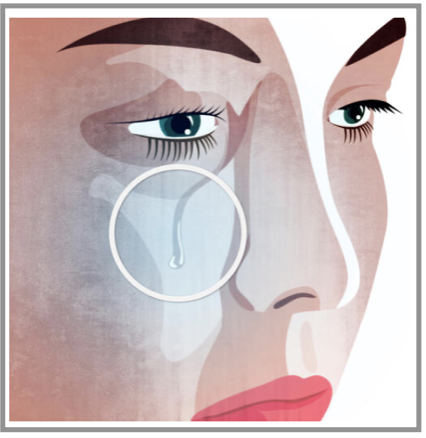
Shedding tears has an effect on your entire face. When crying, the blood vessels around the eyes, face & nose become dilated with increased blood flow, leading to swelling, puffiness & redness.
Afterward, to reduce irritation, help re-constrict blood vessels & reduce dehydration from loss of electrolytes, wash your face with cold water or apply a cold compresses over eyelids. Apply a moisturizer with squalene, ceramides, or hyaluronic acid. Always pat gently, never rub!
Some very easy, inexpensive ways to treat the skin around the eyes : A slice of potato & a cucumber can help relieve swelling & reduce dark circles under the eyes. Start by applying the cucumber slices to your eyes for 5 minutes. Then, replace them with potato slices for 5 minutes. Repeat 2-3x. Cucumbers contain powerful antioxidants that reduce irritation, and potatoes contain an enzyme called catecholase that helps lighten skin.
Crying for No (obvious)
Crying is normal in certain stressful situations. But frequently tearing up without an immediate cause may be a sign of a serious underlying condition. If you’re crying every day during normal activities, you may have postpartum or general depression with excessive feelings of guilt or shame, & /or thoughts of suicide or death. 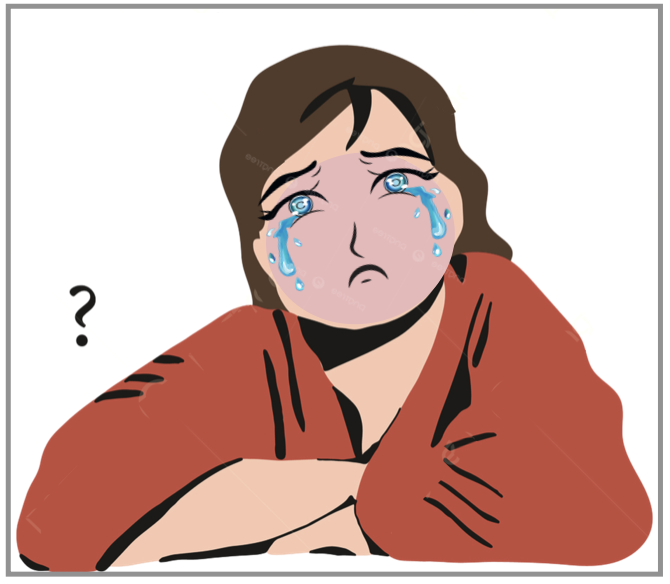
If you consider self-harm or act on the compulsion, call your local emergency services. In the US, the National Suicide Prevention Lifeline is #988.
More rarely, other causes of uncontrollable tears include pathological laughing & crying which can come with Alzheimer’s disease, stroke, or other brain diseases.
When OTHERS Cry
If someone starts to cry in front of you, you may feel uncomfortable & either try to cheer them up, or have a negative reaction. If you let it show, you can make the crier feel weak, embarrassed, or misunderstood, even though may not mean to be unkind.
Instead – these are APPROPRIATE ways to RESPOND :
✴︎ Simply acknowledge their sadness & embarrassment, being compassionate about their feelings
✴︎ Respect their tears. Show you care by letting them release their pain – without interfering
✴︎ Don’t talk too much, or not at all. Give them time to organize their thoughts. Don’t rush to offer advice – ever – & hold space for them to process feelings
✴︎ When they’re ready to talk, let them tell you about what’s going on without commenting. Be patient as you listen to why they cried & how they feel now
✴︎✴︎ Accept the way they respond. Don’t tell the how they should feel or push them to feel a different way !
Studies show that people with secure relationship attachments are more comfortable showing emotion. They may cry in normal & healthy settings, while those with insecure relationship attachments may cry at inappropriate times.
Those with clingy or dependent styles (anxious-preoccupied) cry more often & people who are avoidant & withholding in close relationships – are less likely to cry, trying hard to avoid tears.
Some people generally cry less than others, which can be appropriate for them, as they may express emotions in other ways, while still having healthy outlets for dealing with physical or emotional pain.
NEXT : Self-Regulating – CHILDREN
 HEAL & GROW for ACoAs