
 PREVIOUS : Sexuality (c)
SITE :
Sex is part of a positive pattern of attachment
SECURELY attached people are able to regulate their emotions & recognize that their needs are valid & worth investing in.
They also can read other people’s intentions well, to tell if they’re emotionally & physically safe as a sexual partner.
Yet – even if there is a mutual attraction, & the conclusion is that the other person is ‘kosher’, Secures are able & willing to delay gratification, having clear boundaries.
The purpose is to get to know the potential sex-partner first, to be sure their 1st impressions were right, & form a connection on a mental & emotional level, not just physical.
Then – because secures have good self-esteem, they’re able to communicate their sexual needs with honest & respectful conversations.
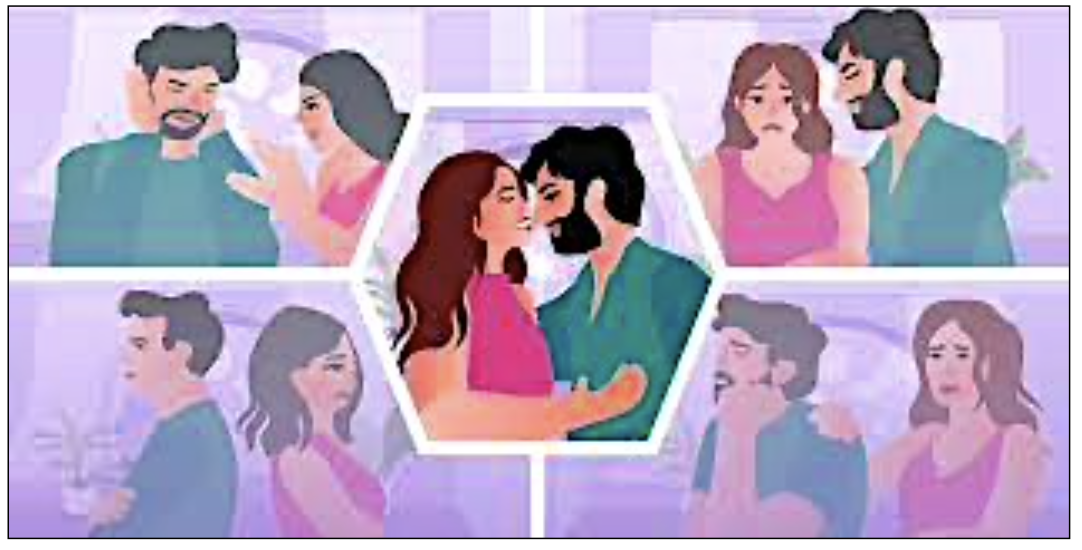
Secure Sex – This is when a couple feels safer with each other, less afraid of rejection or disconnection. When outside the bedroom they know their partner will show up & be there, accept them & have their back, ways of expressing **intimacy,
With emotional security, partners help defend each other from threat (a safe harbor). They respect their differences and the need for separateness (not experienced as a form of rejection). They’re happy to encourage each other to express their individual purpose, work, or calling in life (a secure base ).
**Intimacy, known as-partner engagement, is usually thought of as deep, meaningful love making – pillow talk, eye gazing, intense kissing, sensual touching….
But it’s much more than just romantic closeness. To be true intimacy —> it has to start with each person being emotionally vulnerable & transparent, in context, which does not imply sexual activity. so can be in a close friendships, when mentoring, and of course with ones parents & children.
Secure sex is physically & emotionally satisfying , so constant newness (positions or partners) is/are not needed nor demanded to be content.
At the same time – knowing that their partner is accessible, responsive & engaged, the freer they are to enjoy sexual experiences. The couple feels safe to play, safe to ask for what they want, & safe to enjoy just being sexual with each other without the need for constant reassurance.
Being able to read & understand each other during sex is part of arousal. This guarantees Synchrony Sex – at least most of the time – where love & connection combine joyfully with physical pleasure.
This emotional attachment is one of the things that makes the human brain so special. It’s how we develop trust to build relationships, so we can experience safety as well as pleasure. We’re wired to connect, to mirror each other’s desires, and to act on the signals we subconsciously send to & receive from each other.
That’s why it’s said that sex starts with brain activity. But your partner (probably) can’t read your mind, that’s why it’s important to keep an open dialogue about your sex life &.ask for what you want in bed .
TRUST and sexual pleasure go hand in hand. Whether you’re having sex with a committed partner, a fun fling, or somewhere in between, there’s no doubt that the dynamic between you two plays a huge role in how much you’re getting from your sex life.
When you have a deep level of trust with someone, you can be at ease with your partner, so there’s a different level of relaxation that also adds to enjoyment. But trust isn’t an instant thing. It takes time to build it up to the level that’s needed to experience the kind of pleasure that you’d like to.
And we can’t ignore the reality – that in heterosexual relationships women orgasm less than men – called the Pleasure Gap. (Audio book)
The female body usually needs a feeling of fundamental trust & safety to fully open & relax.
And while sex isn’t all about orgasms, they sure are nice. Not only do they feel great, but it’s a lot easier to get there when you have a lot of trust in the person you’re having sex with.
Deep trust in relationships builds organically, but it can also be cultivated through conscious action. (How to build trust)
NEXT : Attachment & Sexuality, #2
 HEAL & GROW for ACoAs