
 PREVIOUS : Pro-social Domain
SITE : LIST of
Blogs & Practice Resources
CAREGIVER = usually the mother, but may be a substitute.
DEF : Co-regulation (Co -reg) is how children develop the ability to soothe & manage scary emotions or painful sensations – through a healthy attachment to nurturing & reliable primary caregivers.
Basically – it’s when a loving adult is able to figure out what a child in emotional distress needs during a stressful incident – that will calm the child or help it calm itself.
 EXP : A warm, gentle presence & tone of voice, verbally acknowledging distress, acting in ways that soften the upset, & in a structured environment providing emotional & physical safety
Our biology is wired for connection. The autonomic nervous system (ANS) plays a crucial role in co-regulation, making it possible to tune in to others’ emotional states, & vice versa. It’s a continual interactive growth process formed by healthy experiences that lead to well-being – rewriting the story of trauma into one of resilience. It expands our capacity to handle intense & complex feelings, especially shame & grief.
CHILDHOOD : Co-reg is called “caregiver-guided dyadic regulation”, a critical precursor to emotional self-regulation. The most effective way for an infant to cope with distress is to look for help from a caregiver. Sensitive, reliable responses from the mother can show the infant that emotional distress IS manageable, either with her direct comfort, or developed during consistent interactions with her.
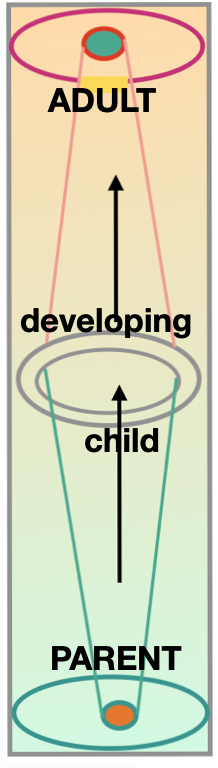 Early co-reg is initiated & maintained by the parent, who makes the effort to soothe the child’s emotional distress. ** To be successful, the adult’s responses have to be adjusted to closely fit the infant reactions when stressed, which will encourage it to behave in way that suit its personality. Over time the co-reg becomes more even & more indirect, as children develop their own ways to emotionally self-regulate.
The adults are still willing & available to help with distress when needed, but not over-involved. As the child grows, healthy parents give them space to manage their own style, add suggestions for co-reg improvement, & eventually may have abstract talks about a variety of emotional experiences & appropriate responses.
Emotions are often contagious, whether a person is upset or calm. So before a parent or trusted adult can help a child, they need to understand & own their own emotional limitations & resilience . Recognizing how they’re feeling & being able to actively regulate their own emotions at difficult moments – will allow children to copy those self-comforting skills.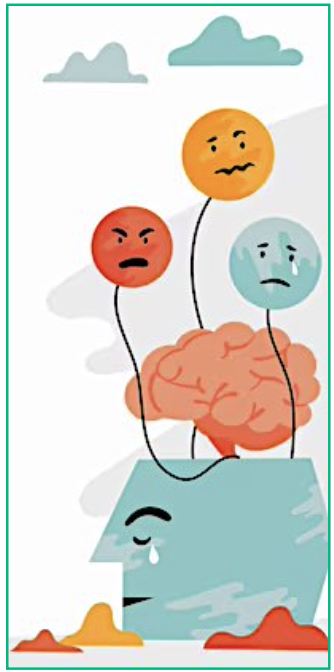
Benefits : Co-regulation teaches kids inner & outer tools to handle stress. Through warm, responsive interactions, caregivers help young people learn better ways to manage their emotions during inevitable upsets & challenges of life. This incorporates all the Executive Functions needed to express the True Self.
ADULTHOOD – DEF : “A bi-directional linkage of oscillating emotional channels between partners, which contributes to emotional stability for both”.
▶︎ ie : the mutual exchange of comfort, support & understanding, a process of interactions with a trusted “other” which help regulate our emotional & physiological states.
Here the strength of co-regulation is based on categories of attachment – those early experiences with family that become internalized, which guide a person’s expectations of & behaviors in future close relationships.
Some differences from the childhood process:
1. adult co-reg is a form of reciprocity between partners, so that the responsibility to regulate each other is more or less equal
2. it’s more likely to include physical measurements, based on reward systems (oxytocin, opioids), strongly activated by sexual contact
3. it’s a continuous, dynamic process as each participant repeatedly regulates the feelings & behavior of the other – not an exchange of limited or occasional experiences. 
Generally – it’s the interactive process by which caring adults :
(1) maintain warm supportive relationships
(2) promote self-reg through coaching, modeling & feedback
(3) develop supportive environments. Co-reg works best when these processes are matchedto individuals or groups by age, fit their values & goals, & are flexible according to the demands of a situation.
EXP : ✥ Romantic relationships : partners supporting each other emotionally through joy, stress & ‘mormal’ challenges – to encourage a deeper understanding & connection
✥ Friendships : sharing experiences, offering empathy & supporting each other through life’s ups & down
✥ Work : colleagues supporting each other emotionally to reduce work-related stress, by acknowledging feelings, collaborating on projects, or celebrating successes.
NEXT : Self-regulation & Children
 HEAL & GROW for ACoAs