
PREVIOUS : Self-regulation – Theory
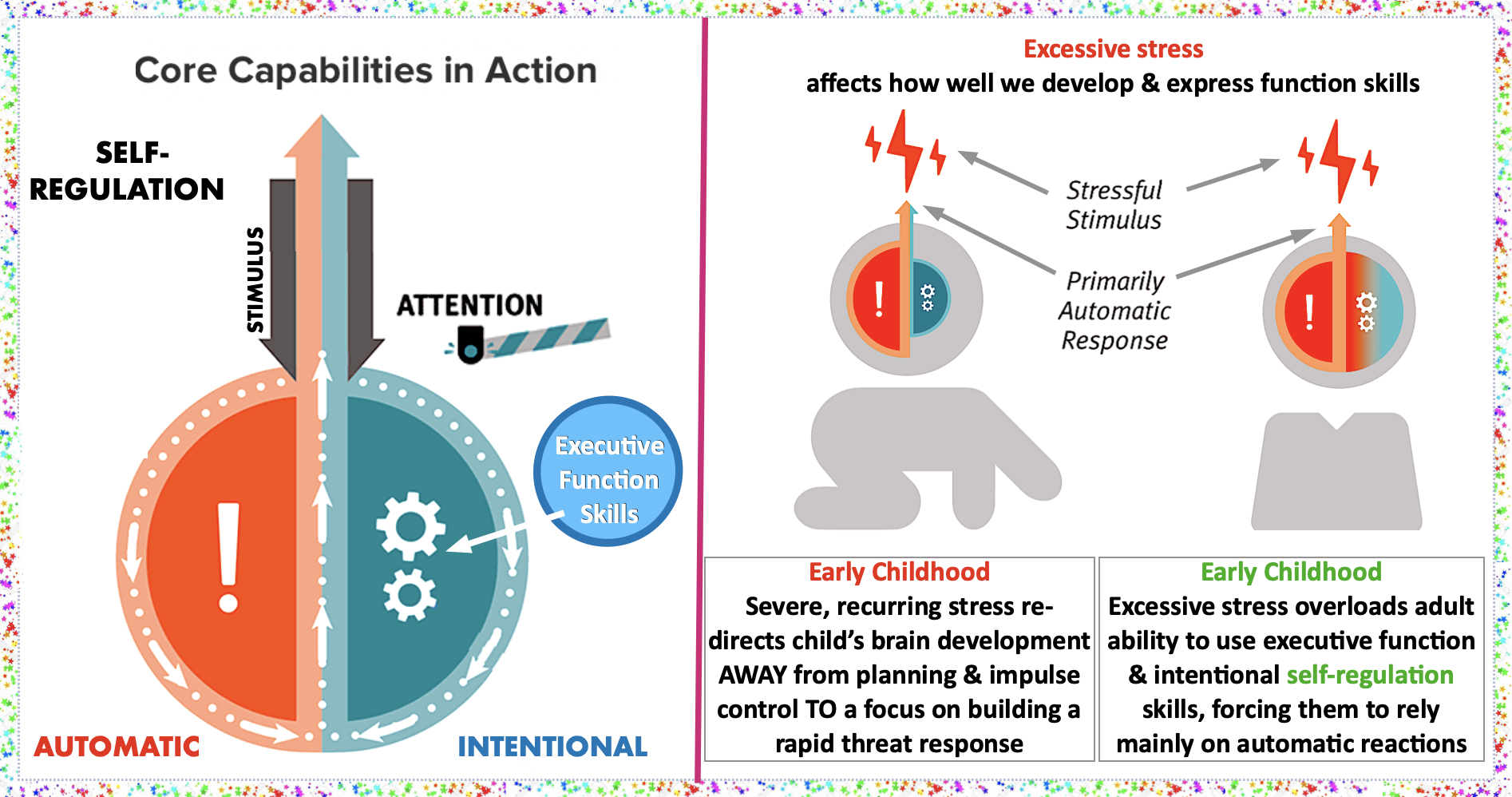
DIAGRAMS ⬆️ from “Develop Executive Function & Self-Regulation Skills“
SITE : 6 Scientifically Proven Ways To Boost Your Self-Control
Core CAPABILITIES
In the brain, self-regulation (S-R) includes 2 types of responses:
🔸Automatic = rapid, impulse-directed (“fight or flight”), needed for urgent or threatening situations, AND
🔹Intentional = conscious, deliberate, proactive, used to achieve goals.
Our brain has distinct mechanisms for knowing ourself, knowing how others respond to us, detecting threats from within the social group, & regulating actions in order to avoid being excluded from those groups. Adults need specific abilities to succeed in life & support the successful development of the next generation.
Neuroscience & psychology research indicate these include, but are not limited to:
▫️ awareness, ▫️ focus, ▫️ planning,▫️ cognitive flexibility –—> which maintain or shift our attention in response to different demands, or apply different rules in different settings (ability to revise plans in the face of obstacles, setbacks, new information or mistakes)
▫️ self-control —-> ability to set priorities & resist impulsive actions or responses 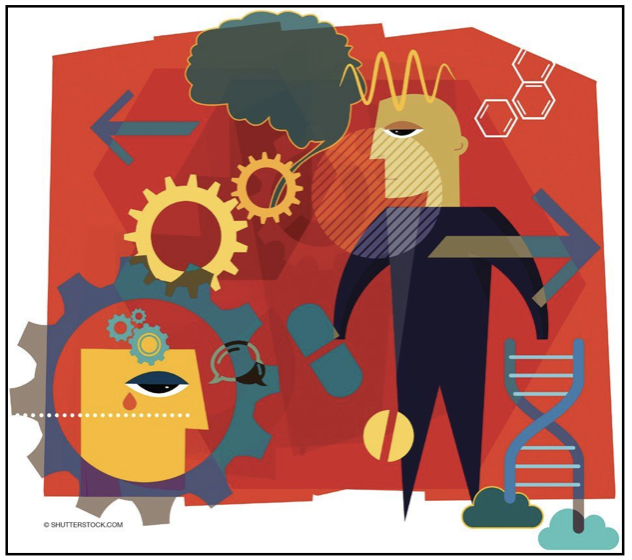
As adults, they help us to get & keep a job, provide responsive care for children, manage a household, & contribute productively to the community.
When such skills have not developed as they should, or are compromised by ongoing stressors, individuals & communities pay the price in physical, social & financial health (MORE….15 pgs. from a Harvard study)
To scientists, these Capabilities are part of self-regulation & executive functioning. Integrating them requires communication between the prefrontal cortex & other brain areas which are devoted to different mental functions. These parts connect up over time & with the right experiences, become progressively more efficient.
The 3 main areas of the PFC (pre-frontal cortex) that are particularly important to self-regulatory functioning are ventromedial PFC (vMPFC) including orbitofrontal cortex, lateral PFC, and ACC. Damage to these areas have shown the various ways such patients can’t regulate themself – they become aggressive, antisocial, or laugh inappropriately, are hypersexual or excessively overeat.
The ACC (anterior cingulate cortex) is known to be crucial for self-regulation from neuro-imaging & electro-physiology studies. When damaged, common symptoms are general apathy, a depleted emotional capacity, & trouble carrying out goal-oriented activities.
Attention is the critical gate-keeper to trigger intentional S-R. It’s ‘staying awake’, opposite of dissociated in-attention = having & using a sustained focus on specific things inside & around us. Also the capacity to stay focused on a situation or task – in spite of distractions, fatigue, or boredom. 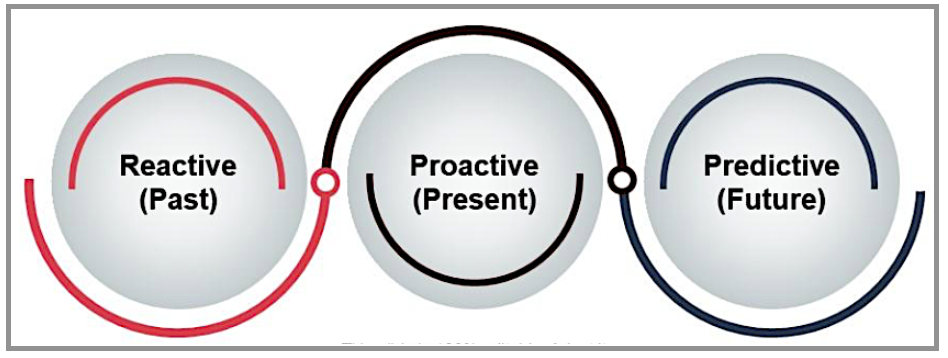
FIRST the brain must recognize that a current situation (the stimulus) requires a response
THEN – the brain’s automatic self-regulation system (ASRS) immediately launches a rapid-fire cycle of interacting neuro-transmitters, paying attention to the stimulus that’s presented.
NEXT – the intentional self-regulation system (ISRS) must act fast to determine what needs attention & prioritizing. It also quickly sends a signal to the ASRS to identify whether the initial response to the stimulus is the right one, or more careful thought / action is required.
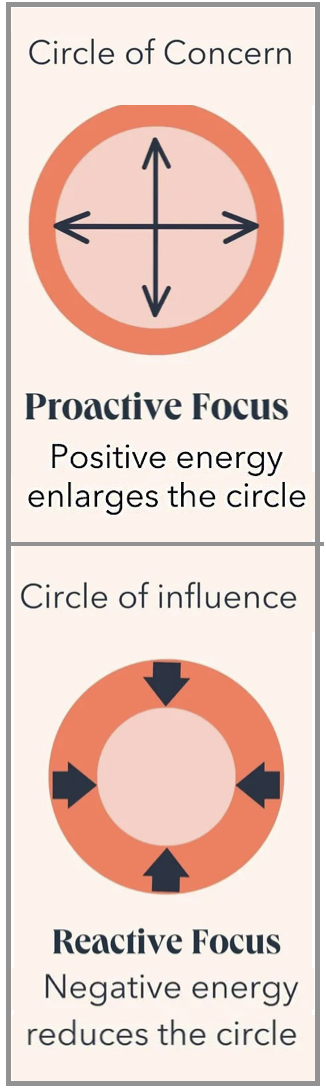 This cycle moves on a continuum between Reactive / impulsive behavior at one end <——> to Pro-active / goal-directed behavior at the other.
🎯 The Pro-active system relies on fluid intelligence (current ability to reason & deal with complex info) to connect the dots of various moving parts of a situation, & come up with a streamlined game plan.
⚙️ The Reactive system scrambles to reorient itself when the brain is caught off guard & needs to quickly problem-solve in a seemingly new situation.
Both are important adaptations to the person’s early environment, since quick responses are helpful when faced with immediate or constant threats. But when longer-term goals are more important than immediate concerns, proactive action-choices taking precedence.
This is because it continually generates predictions (“what ifs) that anticipate future needs relevant to accomplishing goals. Comparisons between options are made from basic information quickly extracted from available input, linking it with images that exist in the person’s memory.
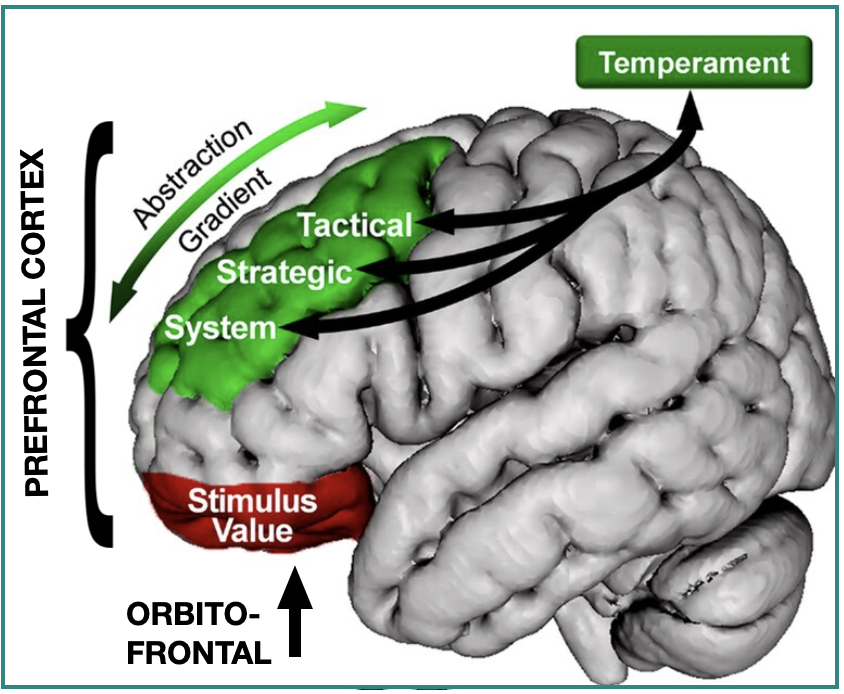
Self-regulation involves a balance between the orbitofrontal cortex – brain regions that represent the reward, importance & emotional value of a stimulus and prefrontal areas that provide our highest cognitive abilities – concentration, decision making, insight, judgment, planning, and the ability to retrieve memories. That balance is a vital part of being able to use our core capabilities – awareness, flexibility, focus & self-control.
NEXT : S-R &
 HEAL & GROW for ACoAs