
 PREVIOUS : Sex & EDs
⬅️ “Average pet owner” ARTIST : Opinion Cartoonist. sarafang@umich.edu.
PET LOVERS
Many Americans & other people around the world would find it hard to imagine a life without pets. And although the numbers & types vary across countries & cultures, dogs & cats are definitely the most popular. In the USA alone = DOGS – about 90 million, CATs – 94 million.
The question of whether animals can become attachment figures for their owners has been raised in multiple studies addressing different categories of age, from children to senior owners. Literature indicates that animals are often a source of emotional support or loyal companions, while the loss of a pet causes grief reactions similar to the pain of losing a loved person
Human attachment to pets is helped by our :
— parenting behavior (caretaking skills & willingness)
— a general level of empathy toward animals (empathy = the ability to perceive, identify & share in another being’s emotional state)
— matching owner & pet personality & needs
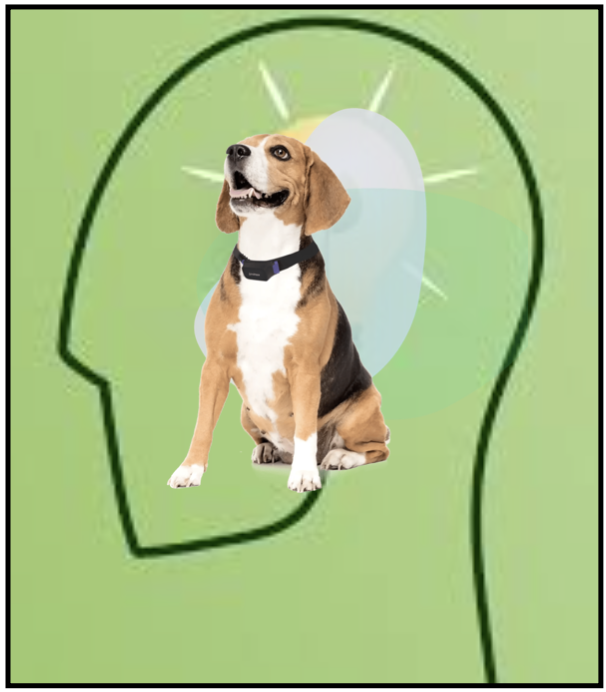
Several pet characteristics are a strong reason for our attachment bond to them, such as —> direct physical contact with our body, their responsiveness, involvement & affection. Even picturing a pet can function as a source of comfort & support for the owner, alleviating some distress.
Ironically, pet-keeping is considered a paradox in terms of the costs of caring for animals vs. the fitness-related benefits to humans such as for survival & reproduction.
Human attachment style is related to our mental health, with a secure attachment providing the best version. Interestingly, studies are clear that humans with an Insecure style form a particularly strong emotional bond with companion animals, considered part of a mental health burden** in :
— Anxiety / dependence = a greater fear of being rejected & unloved, OR
— Avoidance = lower comfort with depending on or trusting in others
** burden — having pronounced symptoms of mental disorders & distress
Extensive studies indicate that pet preference, as well as attachment style, seem to partly be influenced by the amount of “theory of mind”** people attribute to animals – & more to dogs than cats.
** theory of mind = Mentalizing, Mind-reading. Having a functional theory of mind is considered crucial for success in everyday social interactions. IT IS :
— the capacity to mentally represent thoughts, beliefs, & desires, regardless of circumstances
— the ability to explain, predict & interpret behavior by attributing beliefs, desires, intentions, & emotions to oneself and to other people, AND that those may be different from one’s own
— is used when analyzing, judging, & inferring others‘ behaviors.
REVIEW
Bowlby’s (1982) defined attachment as a lasting psychological connectedness between two living beings, and that —
— the function of the attachment figure is that of a “safe haven” – to reduce distress & increase emotional comfort & balance, &
— the role of the attachment figure is that of a “secure base” – to foster personal development, exploration, risk taking for growth, & goal achievement
Attachments characteristics:
1. proximity-seeking in times of perceived distress, to cope & self-regulate
2. the availability & responsiveness of partners, with beneficial effects on our emotional state, self-image, behavior in close relationships
3. the temporary or permanent lack of availability, as well as the loss of the attachment figure which generates intense distress.
1. Attachment security is an internalized mental picture of attachment figures as responsive, available in hard times, fostered resilience & good mental health, high-quality relationships, proper emotional self-regulation, & social adjustment in adolescence & adulthood.
2. Attachment insecurity comes from a history of family abuse, neglect & rejection, resulting in vulnerability to mental / emotional disorders. It’s expressed as a lack of trust in the availability & constancy of relationships. Often, such people feel safer with animals than with their insecurely attached human.
a. Anxiety in human-animal attachment has been connected to higher emotional distress — poorer mental health, ambivalence, pervasive worry for the integrity”** of the animal, doubt regarding owner’s worth for ownership & a higher tendency for pathological grief (**Integrity – not genetically modified)
b. Avoidance in human-animal attachment has been connected with lower emotional distress, a relative indifference toward the animal’s integrity and needs, a lower level of trust & negative expectations in the animal, & a tendency to distance oneself from it.
NEXT :Attachment & Animals, #2
 HEAL & GROW for ACoAs