
 PREVIOUS: Attachment & the BODY, #1
SPACIAL ORIENTATION
DEF : the natural ability to keep our body orientation &/or posture in relation to the surrounding environment (physical space) at rest & in motion.
To reach for a remembered object, one must hold an internal spatial image of its location, either relative to some ego-centric (body-fixed) frame of reference such as the eyes, head, or shoulder, OR some allo-centric (world-fixed) frame of reference such as a stable visual landmark. These form 2 general ways self-image is evaluated & invested in (putting effort into oneself)
REMINDER from Part 1 : 🔺 to develop a secure attachment style, a child needs to be able to visualize physical experiences & emotions with parents. 🔻 This is less likely to happen if those experiences are traumatic – from neglect & abuse .
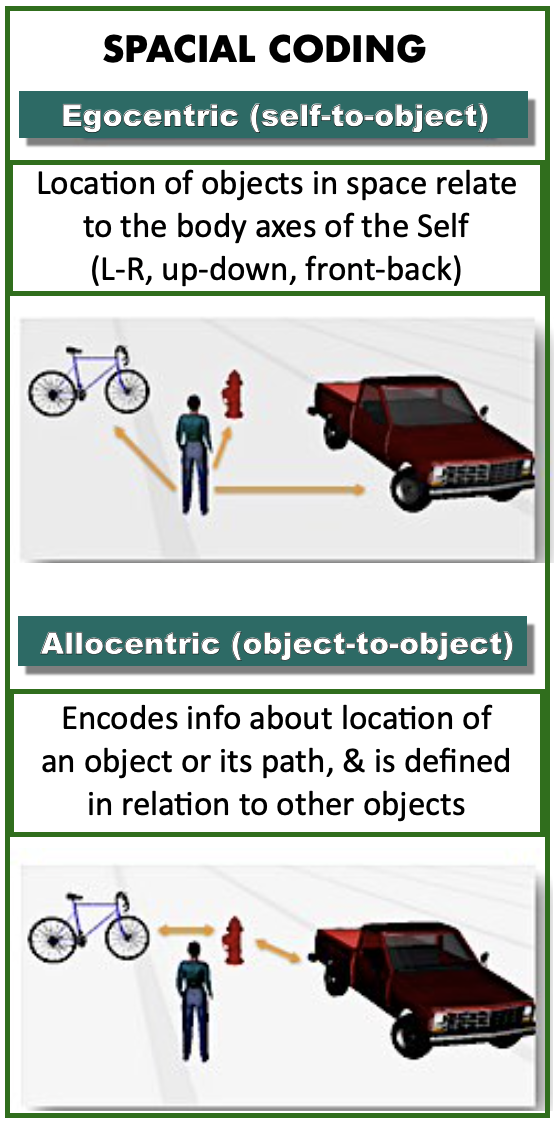 🕺🏼Ego-centric : √ Self-location = depends on our own position & point of view. It’s the body as first-person experience – involving kinesthetic, optic & vestibular brain systems – the neural activity in the temporo-parietal junction
It’s the ability to point or reach, gathering information from turns, directions, distances, speed…..
Also the emotions coming from our understanding of & fantasies about the body, its parts & function. (Ego = SELF)
🌍 Allo-centric : √ Body ownership = the body as object in the physical world, relative to surrounding objects, those external sources that have a direct influence on our self-image.
It’s gathered from reference points based on one’s location at the moment. It relies on remembering & recognizing objects that are or were around us which progressively forms a mental image about a place or location. From the ventral premotor cortex. (Allo = Different, Other)
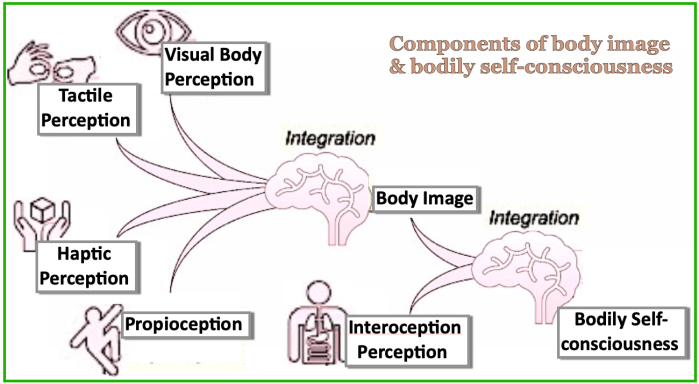
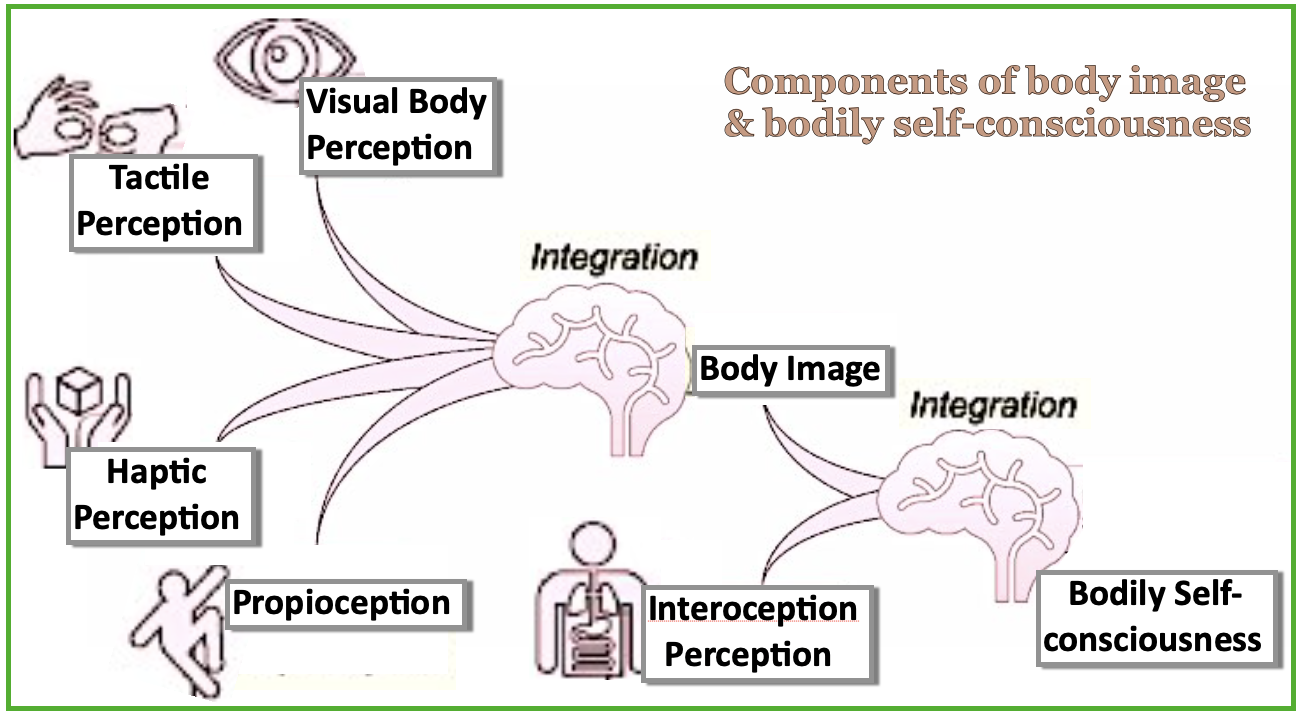
To experience ourself in physical space correctly involves integrating different sensory inputs, formed in distinct neural substrates.
IMP: When the integration of these 2 spacial coding systems is not allowed to develop normally or is distorted for some reason, it locks the person in to the allo-centric version of his body. The Allocentric Lock Theory (ALT) indicates that the ego-centric position is impaired in people with eating disorders (ED), who are not able to absorb sensory inputs from both.
For them, ego-centric body messages – which depend on our position & point of view – are not available to provide the allo-centric sense of self with updated information about our physical relationship to the world. This prevents processing any further body-related experience.
While the allo-centric component is not impaired directly, lack of new info from contrasting ego-centric parietal images creates an incorrect opinion of how we move through space (the brain region which interprets input from other parts of the body),
ED symptoms indicate a deficit in this integration. This can lead to a distorted body image, contributing to the development & maintenance of eating disorders
Attachment theory & EDs
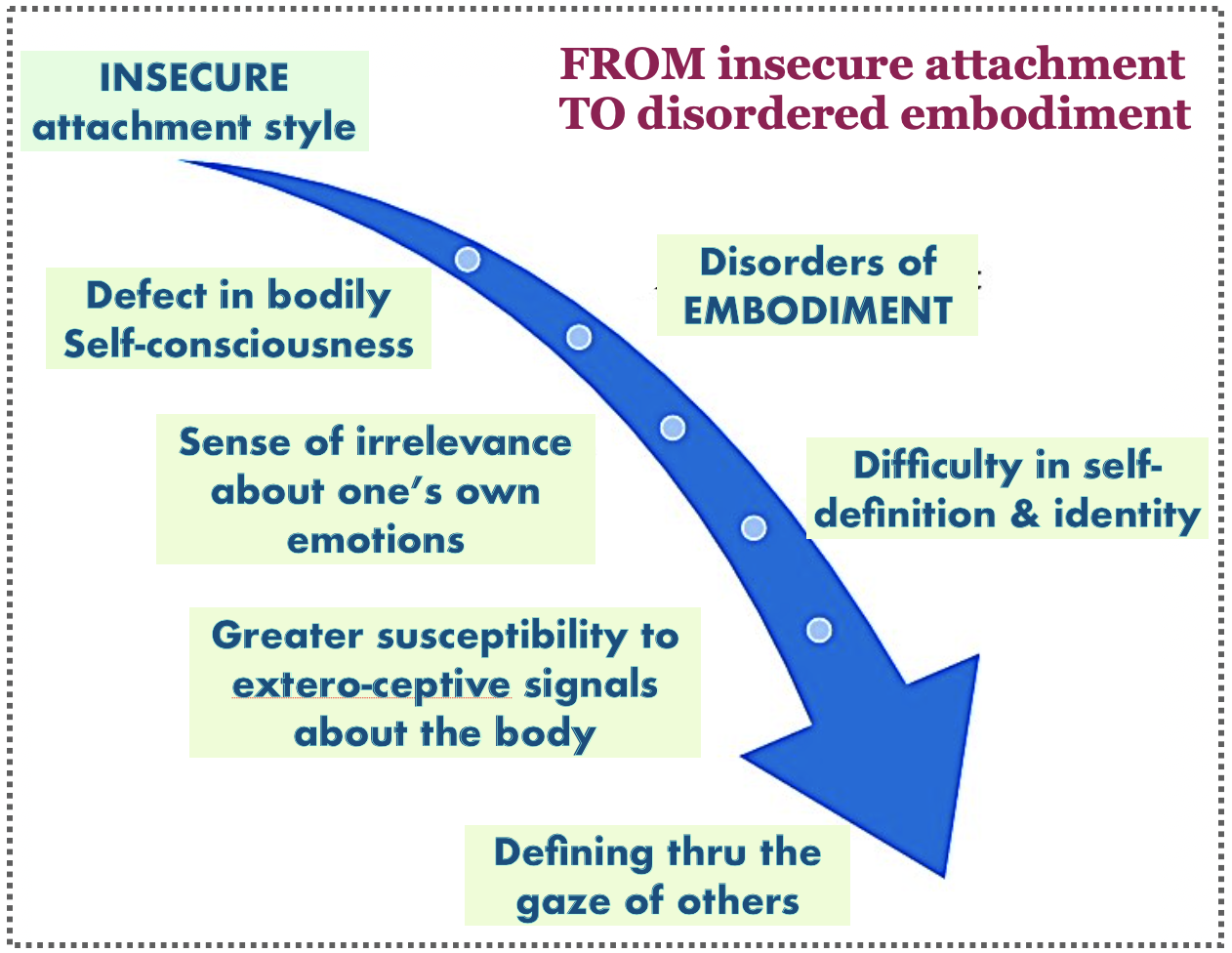 In patients with EDs, the self-reported insecure attachment style may be responsible for abnormal bodily self-consciousness (like looking in a fun-house mirror) or disordered embodiment (missing an internal perspective), which in turn —-> reduces emotion recognition & the ability to feel & decipher bodily “signals” such as hunger, satiety, fatigue or emotional feelings.
EXP : emotional stress can trigger emotional eating.
🔼 FIGURE : The downward curve in the pathogenetic trajectory is made up of the steps of the dysfunctional coping strategy, where — insecurely attached people who are vulnerable to EDs — define themself based on being seen by “the other”, rather than from an internal “pictured” sense of their body.
The Allocentric Lock Hypothesis fits with clinical observations that EDs onset is usually around adolescence, when there’s a gradual shift from being literal to thinking more in the abstract. It’s when there can be a matching balance between ego-centric & allo-centric experiences, based on abstract knowledge, beliefs & attitudes about the body as an object from the third-person perspective. 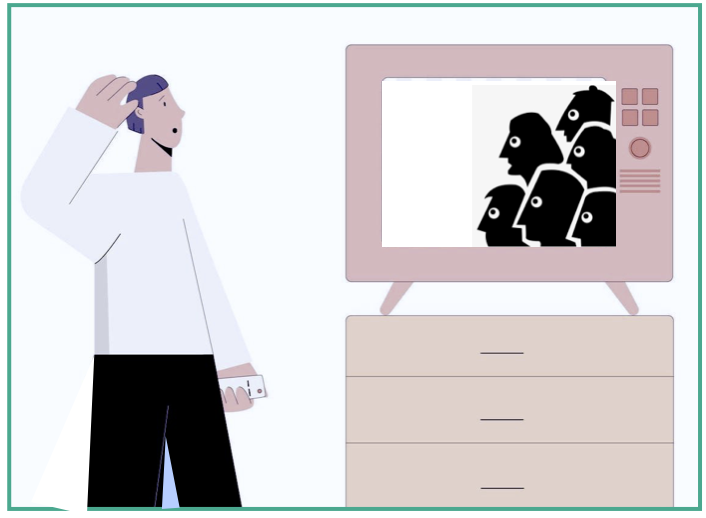
However, adolescents vulnerable to ED’s psycho-pathology are trapped in the allo-centric representation of the body. Their negative self-image is fed by extreme sensitivity to what they feel is a disapproving gaze & hurtful remarks from others.
The body is not experienced as a direct, first-person reality, but an entity that exists only as something viewed from outside of themself -.so that they only exist in the eyes of ‘the other’ who becomes the mirror to see themself in. (More….)
NEXT : Attachment, Food & the Body, #3
 HEAL & GROW for ACoAs