
 PREVIOUS : Body – DEFINITIONS
↗️ CHART : Nested hierarchy of Self and its trauma
NOTE: See Definitions post to understand confusing or new terms.
INTRO : The BODY is our instrument for moving thru the world.
In the first months of human life, attachment needs are first & foremost the needs of the body, which are supposed to be satisfied by the responses of the primary caregiver (m0m).
Physical & mental development are inseparable, so the way the body is invested**, how it’s experienced in the earliest moments of life —> will determine the way we will go through our life – mentally, physically & spiritual.
** Body Investment is a person’s feelings & attitudes about their body, the level of care & protection they show it, & their comfort about being touched by other people.
 The development of an internal safe base formed by positive attachment relationships – begins with the body’s contact with ‘the other’s’ body – which provides the feeling of safety to manage all early threatening experiences.
Absorbing this experience of security allows the child to build this shelter for themself. Insecure attachment (avoidant or ambivalent) causes an internal picture of a “false bodily self”.
Because the mother’s face is the first psychological mirror the baby absorbs, what it reflects is the child’s reality. Crucial – the kind of mirroring** she provides will form the child’s Body Image – which is central to Self-concept, with important consequences for mental functioning.
** Mirroring : the way parents consciously or subconsciously reflect back the emotions, needs or aspirations of the child, which validates, accepts, & shows them love.**
If the mother is lovingly responsive, the baby experiences pleasure in the attachment relationship. Her ability to be attentive, sensitive & spontaneous underlies the development of the child’s mentalization, which includes emotions.
Then a memory trace is formed in the baby’s brain that connects the bodily experience with the image of the positive feelings transmitted by the mother. This creates a mental representation of the pleasurable emotion corresponding to the bodily experience.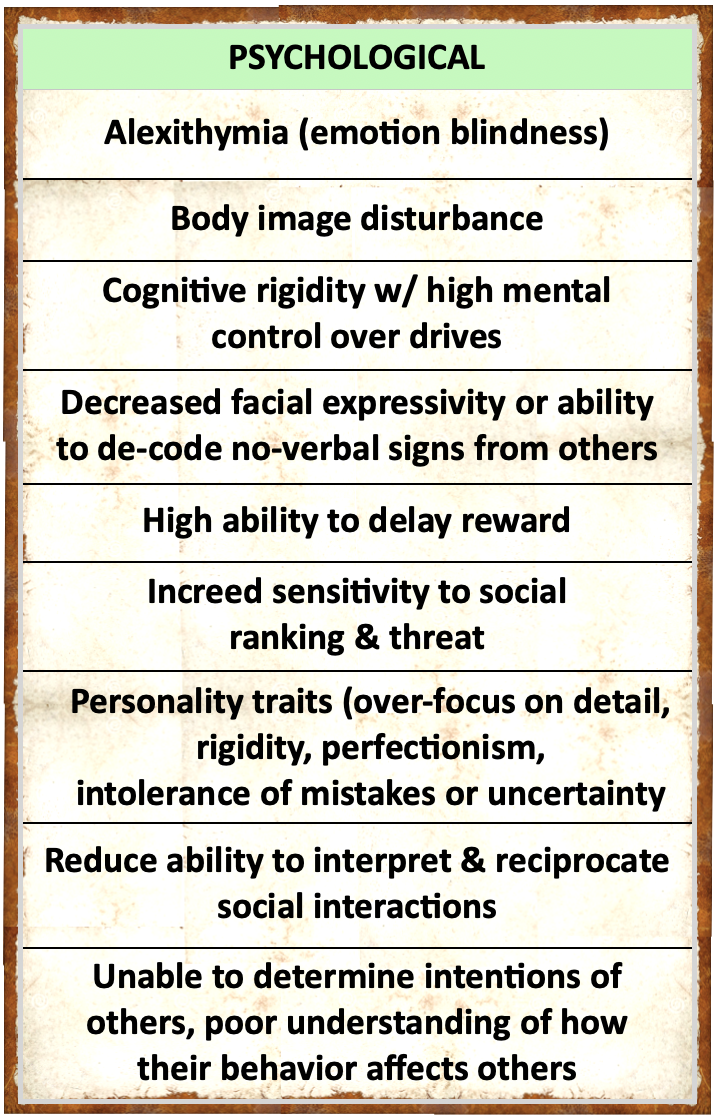
♻️ Attachment Trauma : When there is a lack of resonance between the signals given by the child (I need you) and the answers given by the attachment figure (I’m not available / I don’t care), the potential reciprocity & pleasure of the relationship are missing.
Trauma always involves loss. These losses may be very real & literal, such as the loss of a loved one, or be more symbolic, such as the loss of identity, meaning, or hope. Traumatic experiences affect not only the ability to connect & to feel emotions, but also the ability to think symbolically – in pictures. (⬅️ Some adult trauma results)
Whether loss is real or symbolic – when irreversible separation cannot be mourned (emotionally), & traumas cannot be represented (visualized), we make our body THE problem (leading to distorted eating, over-exercising, unnecessary cosmetic surgery….)
When the attachment relationship is based in the trauma of being rejected or ignored by Mother, the child experiences emotional deadness / emptiness. This prevents them from being able to :
💭 form a whole, accurate picture of what actually happened with the parent (confusion, denial)
💭 construct dialogue, internally & externally, using words to share experiences with “another who can tolerate & retain what is heard” (therapist, BFF, healer, minister….) .
The lack of symbolic capacity gradually reduces the ability of the child to know & see themself as a separate entity & the entity who is the source of their own actions (to be efficacious). They’re left wondering “Who am I?”
If ‘Self-agency” is weak or unavailable, it’s more likely that the body will be used to express what cannot be represented directly. Eventually this original lack makes it hard to transform the old version of Self into something new = “violating the recycling capacity” needed for recovery & growth.
Without the ability to mentally image & process painful experiences, emotions are unloaded into & then communicated through the body —-> making it possible to ‘speak’ the sorrow there are no words for, expressed instead as physical symptoms (clenched jaw, tight muscles, headaches, back pain, eyesight problems, IBS….).
“What the mind suppresses, the body expresses.” Attachment trauma may also cause a greater susceptibility to stress, difficulty regulating emotions, dependency, trouble with attention, sexual acting out & mental illnesses.
NEXT : Attachment & Body, #2
 HEAL & GROW for ACoAs