

PREVIOUS: Attachment, EDs & the BODY (#2)
BODY IMAGE
There is a one–body–one–person rule with 2 assumptions:
— a body is an individual entity circumscribed by the skin, which makes it an ideal vessel or ‘material carrier’ for the Person.
— a Person is a biographical entity who moves with their body between a variety of situations, but both person & body stay basically the same over time, independent of contexts.
Body image is a person’s experience of the physical self & is important for both psychological development & quality of life.
It can be thought of as a positive, energetic, constantly changing mental picture of the bodily self. The bodily self and body image grows out of the original attachment relationship through maternal mirroring, being in tune with & responding sensitively to the child’s signals.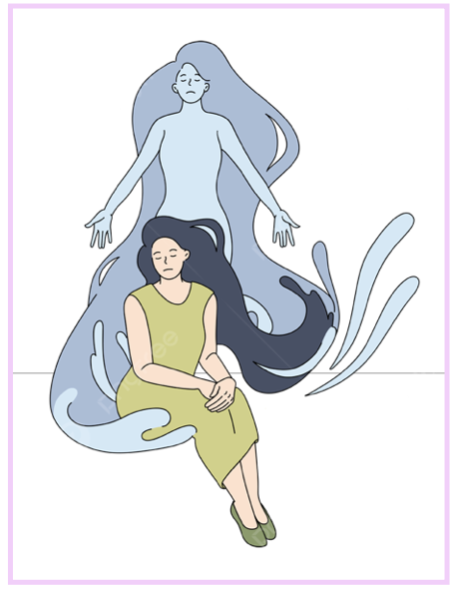
The idea of ‘body image’ is made up of :
(1) the person’s perceptions / ideas of their body
(2) interpretations of & attitudes re. those perceptions
(3) visible behaviors in response to them
Appearance orientation indicates how invested one is in how they look People who pay too much attention (psychologically) to their appearance are over-sensitive to physical symptoms, & anxious about gaining weight.
The stronger the focus, the more it’s about wanting to mentally (& physically – if possible) reunite with the – real or fantasy – image of the lost mother, to achieve synchronicity and reciprocity in their inner world.
Compulsive ED behaviors try to create an “ideal appearance that will now guarantee the love & desire of the other” (mother, lover) at least in their own mind.
A negative body image can result in harmful psycho-social outcomes for both genders. It can effect competence in social & occupational functioning, causing a poor quality of life, with low self-esteem, depression, social anxiety, sexual dysfunction, suicidal tendencies, substance abuse, & self-harm.
It’s also a key element in the development of eating disorders. Although EDs are related to physical needs & actions of the body, (the behavioral dimension) , they are used as compensation, to hide feelings of anger, fear, vulnerability, inadequacy or helplessness.
«
«
Research on body image identifies three sources of environmental stressors : parents, peers and media. Family is the usual environment where physical & psychological development occur, so family dynamics play an important role in body image development. Missing an emotionally safe connection with mom, the unhappy child will form a stronger investment in the bodily self (Part 1)
Memories of traumatic experiences, which are often body-related, may lead to rejection or withdrawal from the body.People struggling with a negative body image are at a higher risk of developing Mood disorders, Relationship problems, & Self-harm tendencies
Attachment trauma is any experience that instinctively signals a threat to breaking the child’s original Relationship-with-mom, or a danger to the Self. It’s a very real experience of Irreversible Separation. And Disorganized Attachment represents the impossibility of the child feeling secure & protected.
❇️ In Recovery, developing a sense of intimacy with a safe figure of attachment is the solution to relieving fear.
⚠️ SIDEBAR : However, the opportunity to correct body image distortions requires finally feeling unspoken abandonment experiences from childhood. But there is powerful resistance to re-experiencing those accumulated & suppressed emotions about being traumatized by Mom. ⚠️
The basis of disorganization is the fear of attachment, which can show up i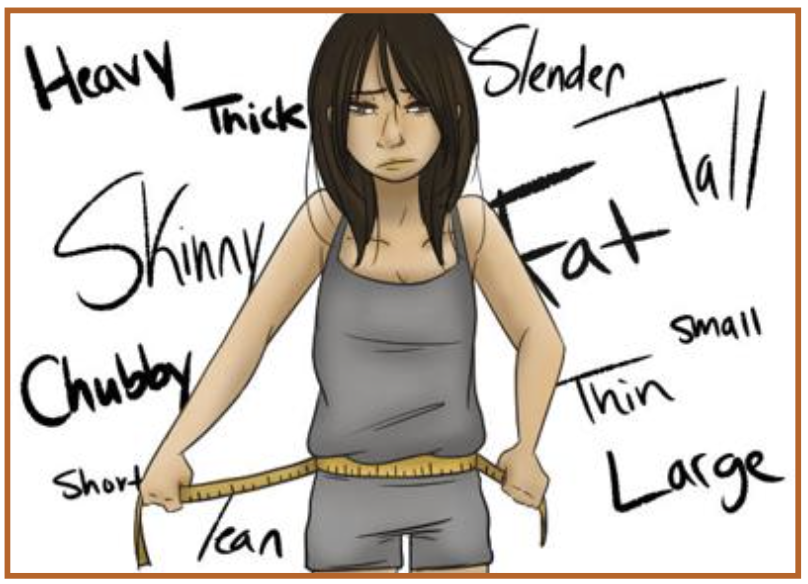 n a more tangible way as problematizing the body, in several ways:
– worry about their physical health & actions that try to controlling it
– anxiety about weight gain, which leads to dieting
– behaviors aimed at improving appearance.
CAUSE : They did not originally get relief of physical & mental sensations from Mother, which would have allowed them to process distressing emotions (fear, frustration, anger) through her words & actions to desomatize them, meaning —-> to not get trapped in the nerves, tissues & organs of the body.
SENSORY PROCESSING Disorder (SPD)
The inability to use information from the body. When the brain’s processing ability is disordered it can’t do its most important job of organizing incoming sensory messages.
SPD profoundly harms a person’s emotional, physical, social, and/or psychological well-being. Also, research has found a link between SP problems & some eating disorders.
SPD is an umbrella term to cover a variety of neurological disabilities. (Extensive Info) See also “33 Signs of SPD”
NEXT : Attachment, EDs & the BODY (#3)
 HEAL & GROW for ACoAs